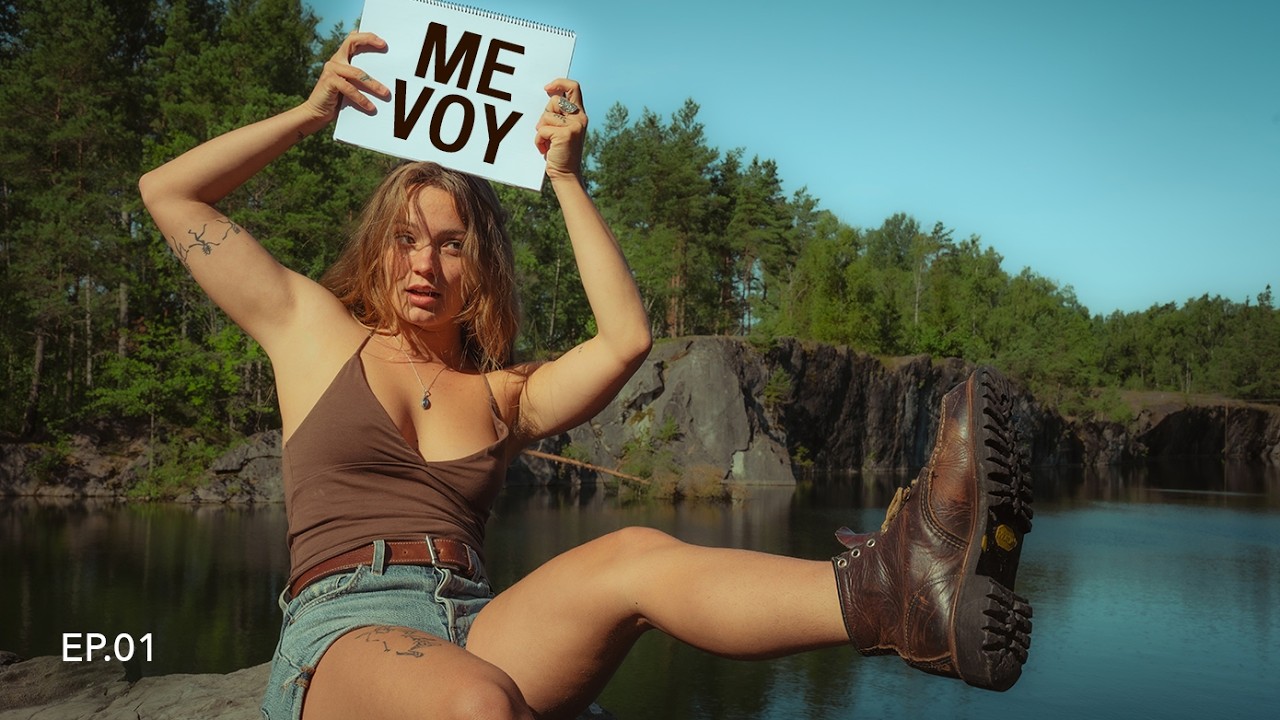
Altair is 24 years old, standing in a Swedish forest in the rain, very much awake before she wanted to be, and about to open what she calls ‘an uncomfortable melon’ about money. She has spent four years living close to nature, built a career as a self-taught audiovisual storyteller, and just bought a plane ticket on a hunch that her plan would have progressed by the time the flight departed. The hunch paid off, barely. She is in Sweden. The 4×4 camper van she wants to buy and convert is not yet hers, and the honest reason why is the whole point of this first episode.
The real cost of a life built on freedom
Altair has been honest with her audience before about what a non-conventional life actually requires, and here she goes further than most creators dare. The economic price, she explains, shifts dramatically depending on where you place your priorities. Around 80 percent of the experiences she documents came through collaborations and exchanges rather than cash, a philosophy that brought her and her traveling companion Gonzalo to Sweden in the first place, where they met Alexandra Saidida and worked on her ranch. Two years later, Altair is back at that same ranch, the friendship intact, the welcome still open.
But she is equally clear about the symbolic cost, the one that does not show up in a spreadsheet. ‘A veces simplemente duele vivir en un constante hola y adiós,’ she says quietly, which translates to: sometimes it simply hurts to live in a constant hello and goodbye. She has asked herself more than once whether the life is worth continuing. Her current answer is yes, as long as there is purpose. That condition matters to her.
For income, she works entirely from social media right now: brand campaigns that involve filming, editing, writing, and content management for companies. She is less than a year into taking advertising work seriously. A small campaign might gross 3,000 euros, but after a 20 percent management commission, 21 percent VAT, and roughly 20 to 25 percent income tax, she is left with about half. Every remaining euro goes back into travel and production equipment.
Why content creators can wait six months to get paid
The structural reason she cannot yet afford the van sits in the payment timeline of the industry. Brands pay creators at 90 days from invoice. By the time a campaign is agreed, produced, approved, invoiced, and settled, Altair calculates the real gap can stretch to six months between doing the work and receiving the money. The van she wants is waiting on that delay, not on her ambition.
To manage the uncertainty, she built her own financial system from scratch: six separate bank accounts, each with a fixed purpose. One covers subsistence expenses only: food, fuel, gym, essential subscriptions. One is for small treats, fed by a tiny percentage of every payment received, linked to a dedicated card. One handles production costs. One acts as a buffer, designed to cover subsistence if income stops or to absorb an unexpected repair bill. One holds VAT and income tax payments untouched until quarterly filings. The sixth is a savings account with no attached card, currently designated entirely for the van, topped up silently by a rounding system that redirects small change from every transaction in her other accounts.
Hacienda, Spain’s tax authority, also returned a meaningful sum from a previous year that went badly. That refund is now sitting inside the system, parceled into its correct accounts. Even so, she says cheerfully, it is not yet enough for the chassis.
The plan is to buy the van by autumn.
A horse named Maurice, very insistent
Somewhere between the forest walk and the finance breakdown, a horse named Maurice keeps nudging his way into the frame, apparently unimpressed by the budget discussion.
Altair’s target date is autumn, and she says there is still plenty to do before then, starting with an adventure in the next episode that she admits is going to force her to face something that frightens her. The Swedish forest, at least, is already paid for.