
https://www.youtube.com/watch?v=4F29wo8BD-8
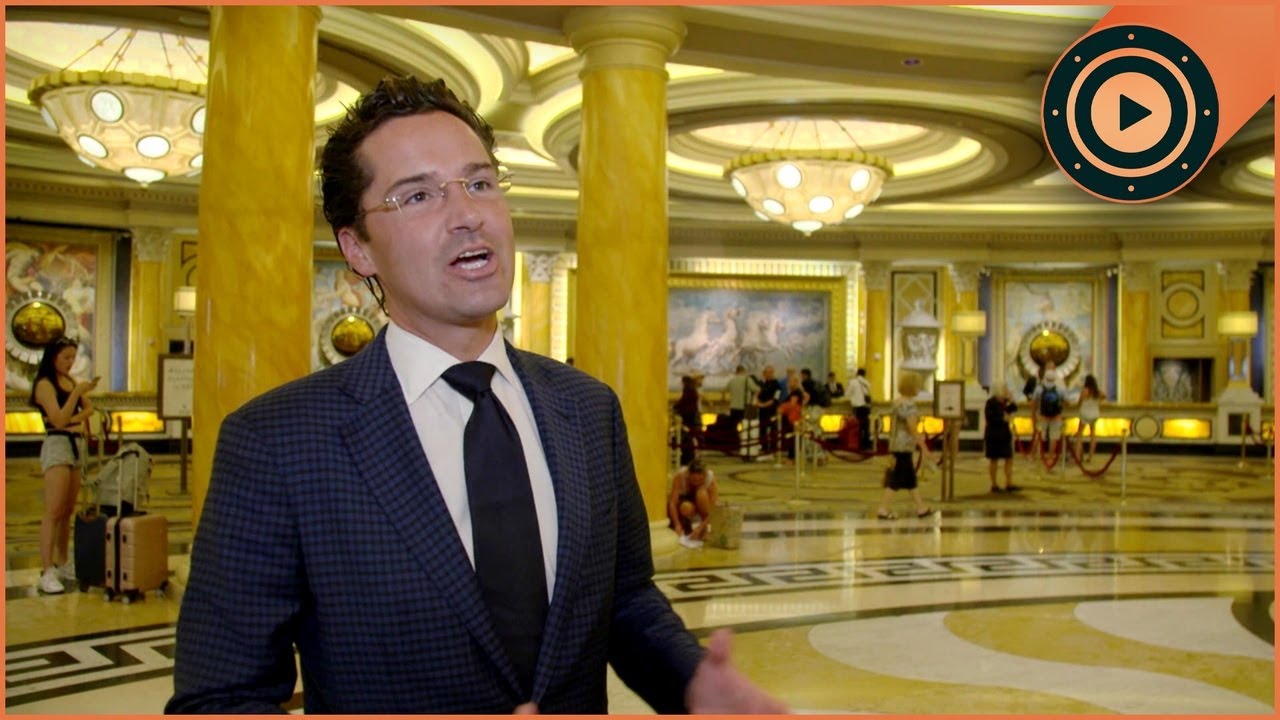
Benny Figgins remembers the exact moment Frank Sinatra sat down at his blackjack table. The man arrived with two or three guys flanking him, took his seat, and Figgins kept his cool. For roughly two hours, Sinatra played, smiled, and eventually lost. Then he got up and left. Figgins has been dealing cards on that same casino floor since Caesars Palace opened in 1966, and that memory sits alongside ones of Sammy Davis Jr., Diana Ross, and others who passed through across six decades. That kind of living institutional knowledge is exactly why a room with 200,000 hotels in the world still has one that pulls ahead of every other name on the strip.
Caesars Palace is not the biggest story in Las Vegas. It is the original story, the one that forced every hotel that came after it to stop being ordinary.
A gambler who hated the Flamingo built something better
Jay Sarno arrived in Las Vegas on a junket and decided the Flamingo was the most boring place he had ever seen. Rather than leave a complaint, he stayed and drew up plans. His inspiration was a Hollywood-filtered fantasy of ancient Rome, marble and fountains and opulence, combined with the deep immersive theming Walt Disney had pioneered at Disneyland. The goal was not historical accuracy. As one historian who spoke about the property put it, ordinary people did not want authenticity. They wanted the appearance of luxury, and they wanted to have fun.
After nearly two years of construction, Sarno opened Caesars Palace on August 5, 1966, having spent $24 million to build it and blown the last million on the opening party. The invitations were large scrolls delivered in person by actors dressed as Roman centurions, who would knock on doors across the country and read the summons aloud. Planes were chartered when airline strikes threatened to ground the high rollers Sarno had specifically targeted. Over three days, 1,800 guests drank 50,000 glasses of champagne, feasted on filet mignon and lobster, and listened to Andy Williams perform. The event reportedly set a US record for the largest single purchase of caviar for one event. The governor attended. The whole thing was, by multiple accounts, completely surreal.
Right out of the gate, Caesars became the place. If you were staying somewhere else, it was only because you could not get a room there.
The motorcycle jump that may have invented fake news
One of the most consequential moments in the hotel’s early history happened at the fountains out front. A small-time stuntman named Robert Craig Knievel talked Sarno into letting him jump his motorcycle over the fountains, a distance of 141 feet, nearly double the largest jump Knievel had ever attempted. He cleared the fountains but mistimed the landing. Sarno’s son, who was nine years old and watching from the portico with his father and brother, was rushed to the hospital in the aftermath.
What followed was a masterclass in fabricated spectacle. Sarno moved through the hospital, pulling aside anyone pushing a cart, handing each person a hundred dollars with instructions: if the press asks, say Knievel is in a coma, touch and go, might not make it till morning. The real condition was not life-threatening. The press ran with the dramatic version. Both Knievel and Caesars Palace became household names overnight.
Sarno’s son reflected on it plainly: ‘They both were showmen. They both were gamblers. They kind of were kindred souls in a lot of ways.’
What it actually takes to run the place today
The resort now covers 85 acres, up from the original 34. Six hotel towers house nearly 4,000 rooms. There are 15 restaurants, nine bars and clubs, a vast concert venue, and a 24-hour casino with almost 2,000 gaming positions. Over 6,200 staff keep it moving.
For the highest tier of guests, there are 14 secret villas, each costing an average of $15 million to build, featuring custom eight-foot-by-eight-foot emperor beds with 17 pillows and handmade Italian linen. A room like that runs $35,000 a night. Pre-arrival setup for a major celebrity can take eight to ten hours. One guest required a specific type of chip available only at a Chinese market in downtown Los Angeles. A butler was sent on a flight to retrieve it. Room service bills of $70,000 to $90,000 are not unusual.
At the buffet that replaced the original Bacchanal dining room, 120 cooks and 11 lead chefs serve roughly 3,000 guests a day, going through more than 12,000 pounds of crab legs daily.
Sarno sold the hotel in 1969 for $60 million, the equivalent of over $400 million today. He went on to open Circus Circus and made plans for more, but kept gambling at Caesars regularly. His family noted that you could not really tell he had sold the place. He died in 1984 in a suite at the hotel he created.
The dealer who found more than a table to work at
Benny Figgins, one of two remaining original 1966 staff members still on the floor, was asked which person he encountered across his entire career left the deepest impression.
He did not name Sinatra.
‘The most important person I met here was my wife,’ he said. ‘I met a lot of celebrities and they was good, but the most important was my wife.’ He spotted her walking past the casino floor and, as he put it, his eye clinked over there.
The Dome Casino, original from the 1966 opening, is still running. Figgins is still dealing. Caesars Palace, the hotel that Jay Sarno built because he was bored at the Flamingo, is still standing at the center of the strip, with six towers visible every morning from the front drive.