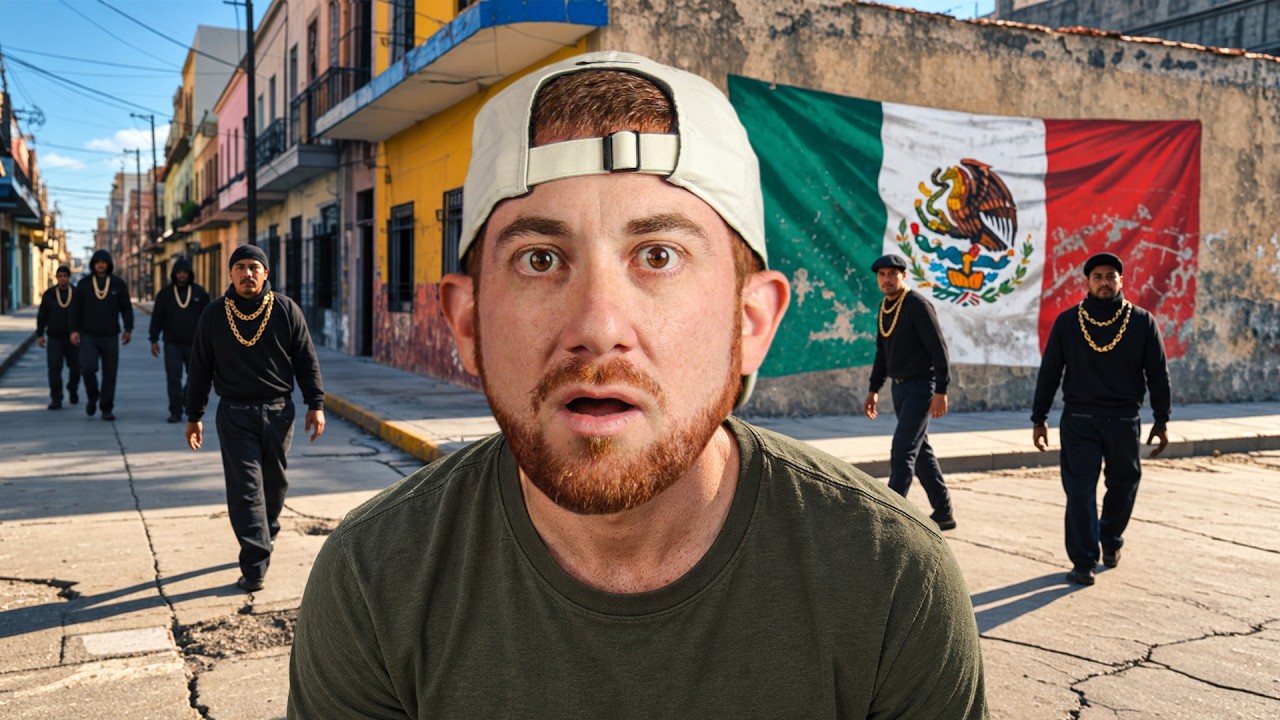
Drew Binsky stopped at the edge of Tepito and felt his stomach tighten. Even his contact, a man born and raised inside this 72-block neighborhood in the heart of Mexico City, had told him plainly: don’t come in here solo, or you could be in serious trouble. The warning was not theater. Police reportedly avoid the area, cartels run its commerce, and people have been hurt for pointing a camera in the wrong direction. Yet Binsky walked in anyway, alongside Fede Vigiovani, who he describes as ‘literally like Mr. Beast famous in Spanish-speaking countries,’ and a local guide named Christian, the kind of contact who makes the difference between a visit and a mistake.
The woman who has lived in the same house for 87 years
The streets were almost too quiet when they entered. Then a small old woman appeared outside her home. Her name was Maria Elena, and she had lived in the same house for 87 years. She invited them inside without hesitation. The kitchen and bedroom shared a single cramped footprint. A shower fashioned from a faucet and a rag hung overhead. Religious imagery covered every surface, crosses and figures of Jesus tucked into corners alongside angel-faced dolls she called ‘angel kids.’ A tenant rented a back room from her and sold second-hand clothes from it for 10 pesos per piece, a small income she had quietly arranged for herself. The entire house smelled of dogs and dry kibble. Binsky stood in the middle of it and admitted he did not know what to say.
Her resilience, though, was not unusual for Tepito. The neighborhood’s relationship with toughness is structural. At the park, an outdoor gym runs on improvised concrete weights, slabs cast into rough dumbbells that most visitors cannot budge. One man training there had broken his hand in a street fight when his fist connected with someone’s face. He had been sparring with the same boxing coach for seven years. Julio Cesar Chavez, Binsky’s guide explained, came from places like this. The sport is not recreation here; it is a survival vocabulary.
What the neighborhood actually wants outsiders to know
A man who has lived in Tepito for 56 years stopped to talk. He was not interested in confirming the headlines. ‘This is all rumors,’ he said when asked about the neighborhood’s reputation. ‘Peace, love and peace.’ He acknowledged seeing things no one should see, including a body on the street, shot. But he kept coming back to the same point: the worst thing about living in Tepito is the way people outside of it talk about it.
Binsky visited a holy death altar on the first day of a month, when locals gather in large numbers to pray among skeletons and offerings. He passed tent encampments built from mattresses propped against walls. He entered two more family homes, both small enough to cross in a few steps, both fitted with enormous flat-screen televisions. In one of them, seven people live together and one of them was watching Fede’s own content on that screen as the two of them walked through the front door.
According to the source, 70 percent of the counterfeit and illegally copied products consumed in Mexico pass through Tepito’s markets, from pirated goods to fake sneakers moving through stalls that look, at a glance, like any other clothing market.
Christian, whose laugh is tattooed on his neck
Christian’s tattoo reads ‘Ha ha ha ha ha,’ letters inked across his skin in plain block text, a kind of permanent annotation on a man who navigates one of the world’s most notorious neighborhoods by knowing exactly who he is inside it. He walked Binsky through alleyways that felt like a maze, past a man dumpster diving with his pants half down and hauling what he found over his shoulder, past a tiny cafe where people ate calmly in the middle of the afternoon.
The neighborhood Binsky left behind was not the one described in the warnings his parents texted him before he arrived. It was crowded and complicated and genuinely risky in certain moments and hours. But the people who live there, the 87-year-old woman renting out a back room, the 56-year resident asking for peace, the family watching YouTube on a wall-sized TV in a house the size of a parking space, were carrying on with an ordinary stubbornness that no outside headline has ever quite managed to capture.