At 4:15 in the morning, two headlamps blink on at Curry Village and begin moving toward a trailhead still three-quarters of a mile away. Half Dome is 8.2 miles beyond that, and the mountain does not ease you in. Every year, thousands of people attempt this hike, and not everyone makes it to the top. The ones who do pull themselves up two steel cables on a granite slope so steep that it stops most hikers cold the moment they lay eyes on it. This is what that day looks like, from the first dark step to the last one.
The long climb before the climb even starts
The Mist Trail section opens the hike, a stone-staircase ascent toward Vernal Falls that earns its name at first light. By 5:30, the summit of Vernal Falls is underfoot, already four miles and one waterfall behind. The trail flattens briefly past the Emerald Pool before the second push toward Nevada Falls begins. That section is steep and exposed to full sun by mid-morning, and hikers coming back down were already complaining about the heat. At the top of Nevada Falls, reached at 6:30, the view opens onto a waterfall that runs close to 600 feet, with the first real sightline to Half Dome itself out in the distance. This is also the location of the last maintained restroom on the entire route.
A flat half-mile along a river leads into Little Yosemite Valley, the last reliable water source before the summit push. One hiker arrived carrying a Starbucks pink drink and squeeze fruit pouches, which prompted the assessment from his hiking partner: ‘I’m surprised you’re going to make it to the top.’ He did. The pair nearly ran out of water regardless, and the advice that follows from that experience is direct: filter as much as you can here, especially on a hot day, because there is nothing beyond this point.
By 7:00, the sun was fully up and the temperature was already climbing. The previous day in the valley had hit close to 95 degrees, which was the reason the 4:15 start existed at all. The goal was to summit by 9:30 and be descending before the afternoon heat peaked.
Subdome, cables, and the part the photos do not prepare you for
The forested switchback section between Little Yosemite Valley and the base of the Subdome runs a little under three miles and gains roughly 1,700 feet. It is less a physical wall than a mental one. The Subdome appears to be close for far longer than it actually is, and the trees thin out only when the work is nearly done.
Subdome itself is where the permit rangers wait, and where the hike’s real character announces itself. Less than two-tenths of a mile, 400 feet of elevation, no cables, significant drop-offs on both sides, and granite stairs that occasionally give way to just granite. As one observer put it on the trail, ‘on the subdome, conversations stop, pace slows, and everyone settles into their own private negotiation with the mountain.’
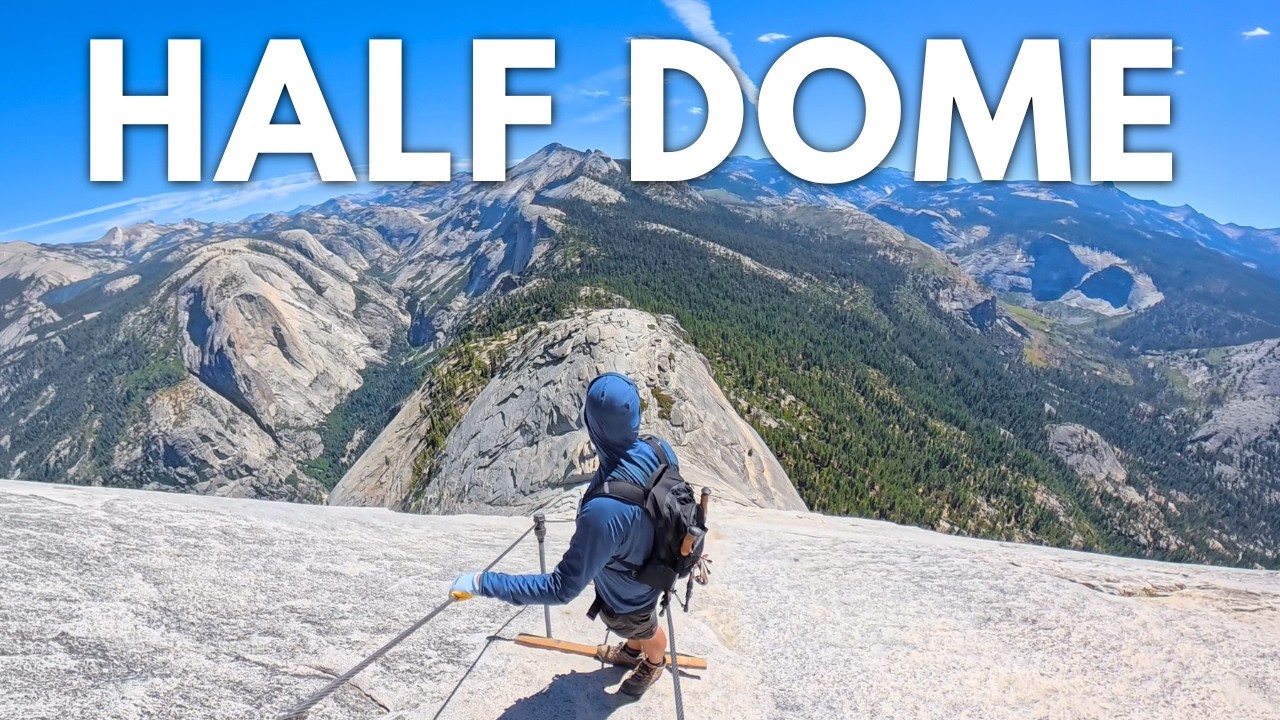
The cables begin at the top of the Subdome. Two steel cables anchored into granite by steel poles, with wooden boards spaced roughly every ten feet as footholds, running approximately 400 feet up a slope that averages around a 45-degree angle. Gloves are not optional. The ascent requires as much arm strength as leg strength, pulling up hand over hand while the valley drops away on both sides. A traffic jam on the cables can mean long waits at those wooden-board footholds, and on this particular August morning, hikers who had also tried to beat the heat arrived at the same time. Two people on the cables were visibly sick from anxiety. The summit was reached at 11:00, six and a half hours after leaving Curry Village.
The top of Half Dome sits at 8,836 feet. The summit platform is roughly the size of a football field, with unobstructed views across the full length of Yosemite Valley. Watch the backpack: small animals on the summit are fast and experienced. The descent took 35 minutes on the cables alone, going backwards, interrupted by a significant traffic jam around the halfway point.
Back at Little Yosemite Valley, the pair stopped for 30 minutes, put their feet in the water, and refilled everything. At the top of Nevada Falls, the trail choice is either the John Muir Trail back down, which is easier on the knees but a mile and a half longer, or the Mist Trail, which is harder on the knees but shorter and, after 4:00 on a Saturday in August, nearly empty. The mist trail option won. The shuttle appeared at the trailhead at exactly the right moment. Dinner was a chicken sandwich at the bar, and the day’s step count landed at 44,000.
Five things worth knowing before you go
Permits are required and run on a lottery system that opens roughly three months in advance, with a separate two-day-out option. Start before sunrise and bring a headlamp. Bring gloves for the cables: a cheap hardware-store pair is enough, and the difference on the granite is significant. Pack more water than seems necessary and carry a filter, because most people will need to refill at least once. And know the turn-around point before you leave. The cables are not mandatory. The mountain will still be there, and getting yourself into a dangerous position on a 45-degree granite slope is not the point of going.
That last piece of advice carries some personal weight. On the first attempt at this hike, 14 years earlier, the same hiker reached the top of the Subdome and stopped. The cables looked impossible. A hiking partner named Amy, who had come all the way up with him, exhausted and already determined never to do the hike again, told him he should go to the top. He made it only because she pushed him.
The cable base, just before the first step up
At the bottom of the Half Dome cables, a pair of worn work gloves sits ready, and the granite rises at its full angle above. Nobody speaks.
Fourteen years between the two summits, same cables, same slope, same granite boards spaced ten feet apart. The second time still sketchy. The view from the top still unlike almost anything else.