Rick Steves has lost entire tour groups inside St. Peter’s Basilica. The building is 600 feet long, bathed in sunbeams, and its ornamental cherubs dwarf a full-grown adult. It is the kind of place that makes a professional guide with decades of Rome visits pause and simply stare. That disorienting scale is Rome in miniature: a city so dense with centuries of human ambition, faith, and daily life that even the experts get swallowed by it.
Where 2,000 years of history share a street corner
Rome announces itself in layers before a visitor has oriented a single landmark. Ancient Roman grandeur sits beside Renaissance splendor, which gives way to baroque ornamentation, which spills into a neighborhood market where a chef is picking out artichokes for tonight’s menu. In its glory days, the word Rome did not mean a city. It meant everything Romans considered the civilized world.
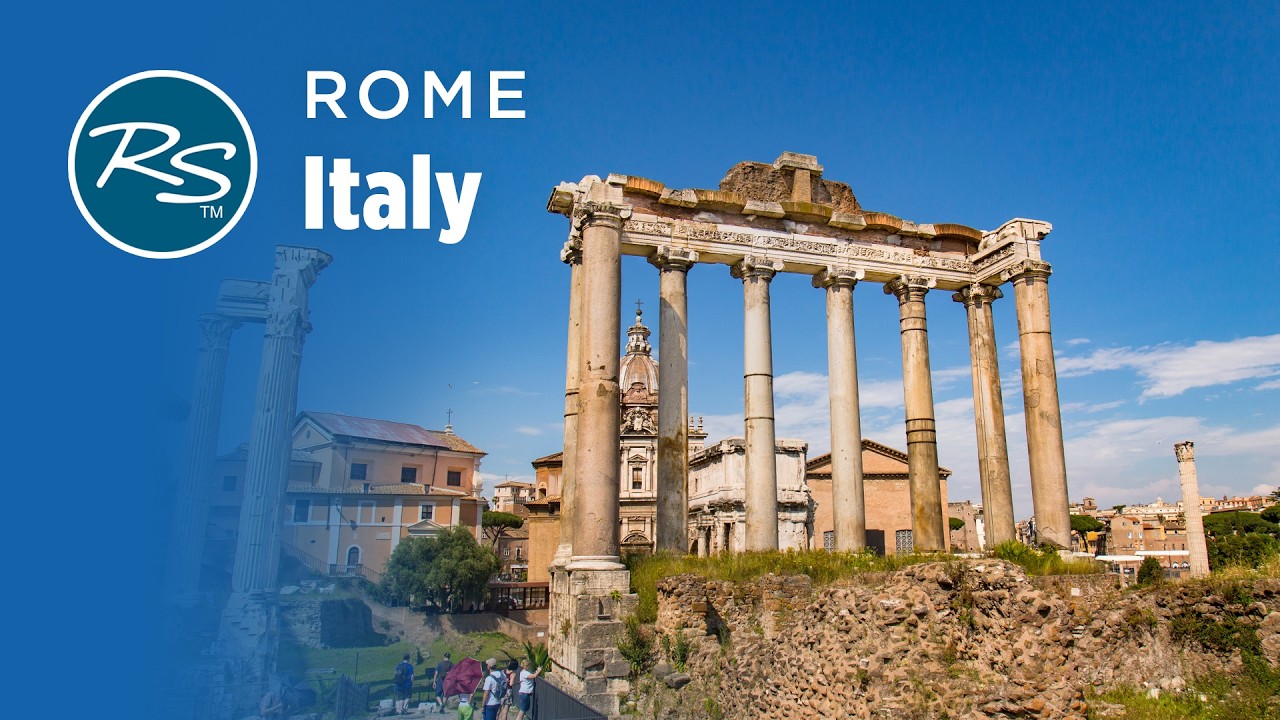
The Colosseum carries the memory of ancient pageantry. Trajan’s Column was built to boost imperial egos. The Pantheon, with what Steves calls his favorite skylight anywhere, a single oculus open to the sky, inspired builders across future centuries to attempt domes of their own. Steps away, pilgrims have been scaling the Scala Santa on their knees for 1,700 years, believing Jesus climbed those same stairs on the day of his condemnation.
Pop into almost any Roman church and every inch is covered in baroque-style ornamentation: spiral columns framing scenes that seem to move, cupids turning somersaults across painted ceilings, and plaster skies cracking open into light. The Vatican Museum runs through miles of hallways lined with tapestries, frescoes, and ancient statues before arriving at the Sistine Chapel and Michelangelo’s ceiling.
When the market clears and the street lamps come on
Rome’s Campo de’ Fiori, literally the field of flowers, runs two distinct lives in a single day. In the morning it is a fragrant working market where what is seasonal shapes what local chefs will serve that night. On a May visit, the stalls carry puntarelle, asparagus, and artichokes. By dark, the produce is packed away, the social street lamps turn on, and the square becomes something else entirely.
A short walk from Campo de’ Fiori threads through Rome’s best evening geography. Piazza Navona runs as a carnival 365 nights a year, its oblong shape inherited from a long-vanished ancient stadium, its present entertainment limited to browsing and flirting around Bernini’s famous fountain. Just down the street, the floodlit Pantheon looms over the 21st century as though it is still trying to tell its story, while also providing a backdrop for diners eating outside beneath it.
The Trevi Fountain, a baroque avalanche dating from the 1700s, closes the night walk. Steves does not treat the coin toss as a tourist cliche. ‘Every year I go through the ritual,’ he said, ‘and it works.’
The guide who keeps coming back
A coin tossed over the shoulder at the Trevi Fountain.
Rome in May means puntarelle and artichokes at the Campo de’ Fiori in the morning, baroque cherubs overhead by afternoon, and Bernini’s fountain flickering under lamplight after dark. For a city that has been doing this for two millennia, the promise of return does not sound so far-fetched.