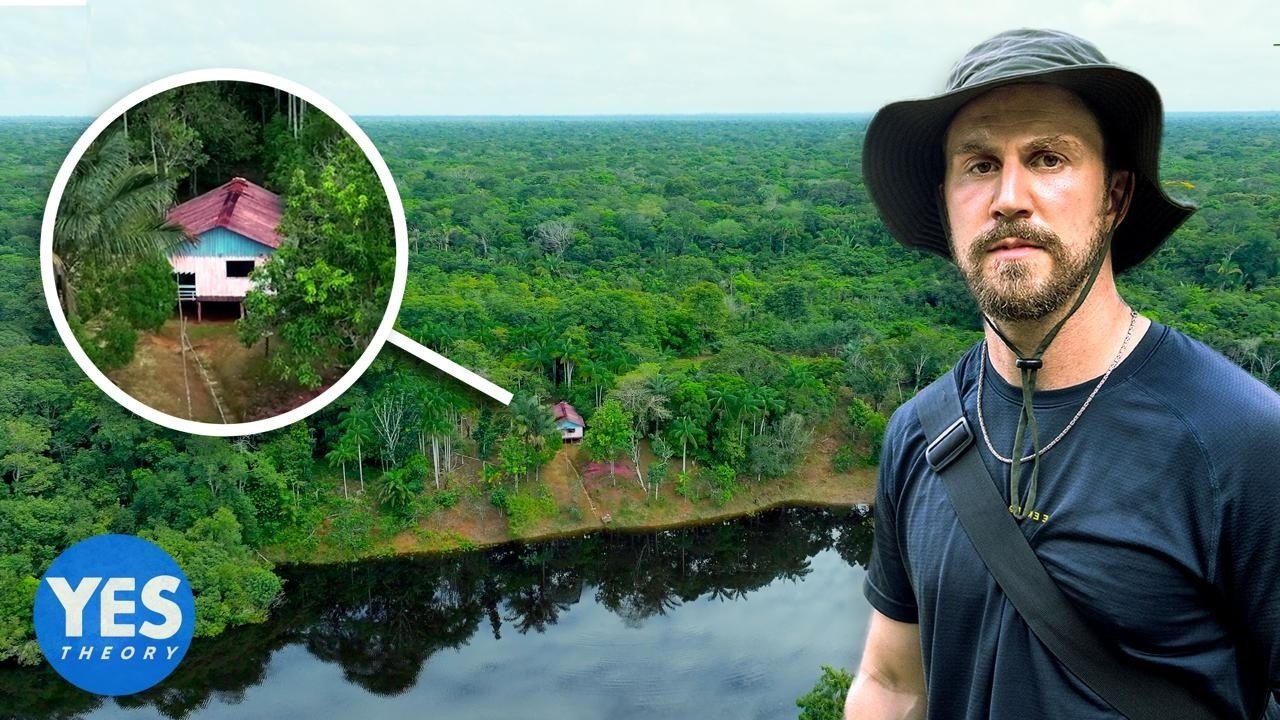
Chico had been hunting wild pig three days before anyone arrived, preserving the meat in salt because he has no electricity, no refrigerator, and no way to know exactly when the visitors would come. He knew they were coming. He just did not know when. That detail, the hunted pig salted and waiting in a jungle home at the far end of a river system so remote that fewer than two million people live across an area larger than all of Western Europe, is the detail that makes Chico’s life real rather than mythological. For most people, the Amazon is an abstraction. For Chico, it has been home, and the only home, for 38 years.
Two months of searching and six guides sent into the jungle
The search started with a question Stefan put to the group: did anyone think a person was actually surviving alone in the Amazon? The team sent six different guides across several regions, navigating down forgotten rivers and remote forests, and came close to nothing. Then a connection through a BBC journalist led to someone who had heard of someone living far down a network of rivers by themselves. That chain of secondhand knowledge eventually pointed to the Rio Juma, and to a man whose existence was known in the region mostly because his was the last house, the one at the end where no one else had settled.
The journey in took more than 24 hours across multiple forms of transport, including a slow riverboat that became home for three days, or possibly more. Their guide was Dudu, a man who grew up in a village of about ten houses with no electricity and no radio, where the nearest neighbor lived a two-day boat trip away. He left at 18, escaped by jumping into a boat one morning before his father could stop him, and eventually appeared in an American tropical fish magazine. Full page. ‘Not in this paper, but in a magazine,’ he told his father when he went back.
The final stretch through low, flooded passages in near darkness forced them to anchor short of Chico’s land and sleep on the boat. At 6:30 the next morning, they set out for the last hour.
Brazil nuts planted 38 years ago, harvested for the first time this year
Chico’s clearing is not jungle. It looks like jungle. Every tree was planted by him: 1,500 Brazil nut trees, plus mango and other fruit trees, a forest of food he built himself over decades. The Brazil nuts take so long to bear fruit that almost no one bothers planting them. Chico planted his 38 years ago and collected from them for the first time this year. Dudu put it directly: ‘He doesn’t care about time.’
He drinks rainwater he collects himself. He hunts with the same shotgun he has used on three jaguars over his years there. He uses a slingshot loaded with Brazilian walnuts. He has dogs. He has no bank account. A man recently appeared claiming to have bought the land and told Chico he would have to move. Nobody knew who the land had been bought from.
Over a meal of wild pig salted three days earlier and cow stomach cooked with beans, Dudu translated the part of Chico’s story that explained why a person ends up somewhere like this. ‘Living alone is more like a penalty for him, punishing himself,’ Dudu said quietly. ‘I did something wrong and I have to pay.’ What exactly, the source does not say.
The group left him enough money to buy one generator, possibly two. Frankie, the boat driver whose father first told him about Chico when he was a child, promised to come back and check on him.
The pig salted and waiting in the dark
On the morning they left, Chico came to say goodbye. What he said at the very end, nobody was entirely sure. Then he went back inside, and the river swallowed the sound of the boat engine, and he was on his own again.
The wild pig had been waiting in salt for three days before anyone arrived. He had planted the trees that feed him 38 years before he could eat from them. Somewhere at the end of the Rio Juma, both of those facts are simply the rhythm of an ordinary week.