At 5:00 a.m. on a dark Vancouver morning, the crew of a well-traveled bus rolled toward the first ferry of the day, racing a clock that had already started counting down. Ten days. One island. And a booked ferry to Port Angeles that could not be rescheduled, no matter what the mountains or the weather decided to throw at them. The stakes were simple and absolute: see everything on the list, or miss the boat. Literally. What unfolded across those ten days was the kind of trip that reminds you why people fall in love with wild places in their off-season, when the tourists are gone and the land shows you its real face.
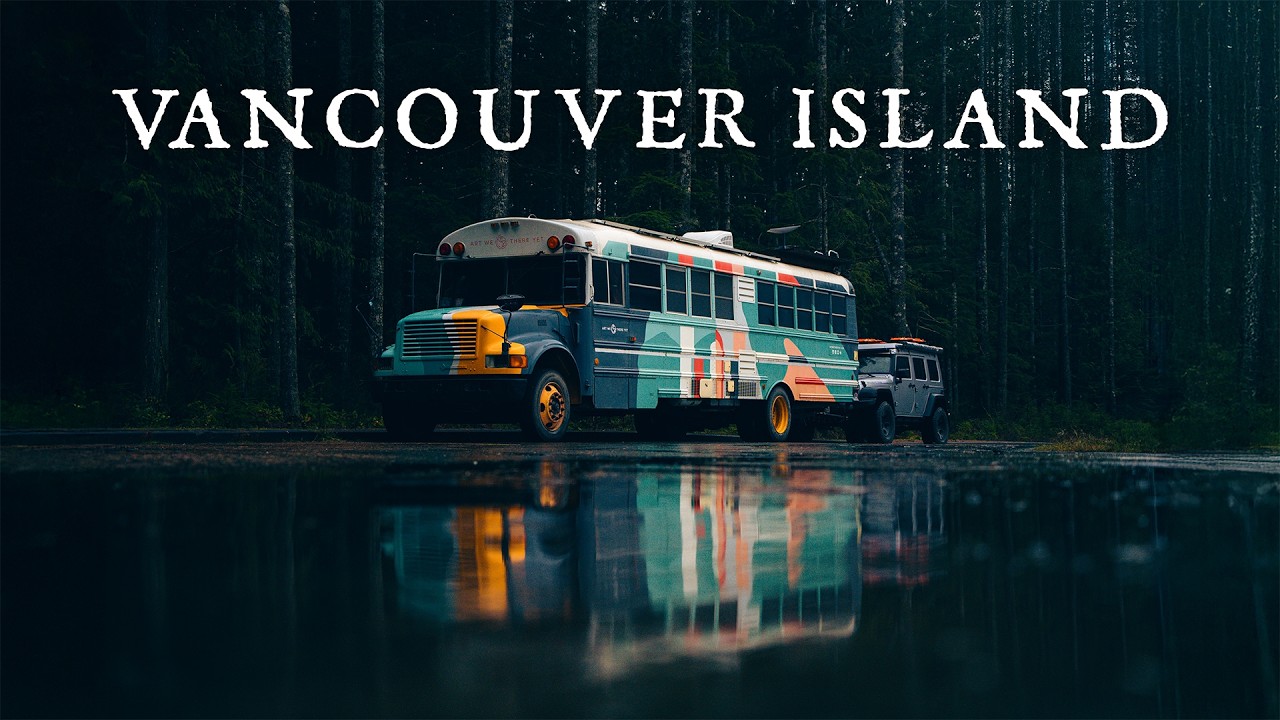
The journey belonged to the couple behind Art We There Yet?, who had spent years living and filming from a converted bus they call Bobby. The 5:00 a.m. start was a financial calculation as much as a logistical one. The first sailing of the day cost significantly less than the midday crossings, and moving a full-size bus across a ferry route is, as they put it, a meaningful investment every single time. The hour-and-a-half sail wove through the Gulf Islands and delivered them into Swartz Bay just as the sky began to lighten.
From the northernmost tip to the old-growth floor
The plan, which they cheerfully dubbed the Grand Squiggle, ran north first and then spiraled south. Port Hardy, population 3,900, sits at the northeastern edge of the island where a natural deep-water harbor once anchored logging, commercial fishing, and copper mining. A paved highway connecting it to the rest of the island only arrived in 1979. From there, a series of logging roads led to San Josef Bay, where sea stacks caught mid-formation stood in the surf, a cave not yet an arch, an arch not yet a pair of freestanding pillars of rock. Inside the cave, ferns and moss were already claiming the ceiling. ‘We should go before the tide comes in,’ one of them said. ‘I think it’s already getting higher.’
Sleepy Telegraph Cove, which holds only about 20 permanent residents in winter, was almost entirely theirs. A section of its historic pier had burned the previous December and reconstruction was underway, giving the already quiet boardwalk town an even more stripped-back quality that suited the grey skies perfectly.
Elk Falls delivered the trip’s most dramatic single image: water from the Campbell River dropping 89 feet into a canyon, the flow amplified by weeks of coastal rain opening the John Hart Dam’s gates wide. A suspension bridge built in 2015 places visitors directly above the plunge pool, close enough to feel the cold air rising off the water.
Tofino hot cocoa, a graveyard coastline, and a geological shortcut through time
Crossing Highway 4 over the Vancouver Island ranges brought the bus to the island’s west-facing shore and into Tofino, where a winter offseason tradition called the Hot Cocoa Trail was in full swing. A self-guided tour connecting local businesses, it led the pair from the Common Loaf Bake Shop to Chocolate Tofino, where the house elixir stopped one of them mid-sip: ‘Oh wow. That is really good.’ They completed the trail, earned a small prize that fit inside the bus, and finished with a dinner at a seafood restaurant that they agreed was one of the best meals in recent memory.
Down the road in Ucluelet, the mood shifted. The southwest coast of Vancouver Island carries the nickname ‘the graveyard of the Pacific,’ and the town holds physical evidence of why. The four-masted Pass of Melford shipwrecked in these waters in 1905 without a single survivor, triggering the construction of the Amphitrite lighthouse the following year. The first lighthouse was destroyed in a storm eight years later. The second, built of sturdier materials, has stood ever since.
On the drive back east, a roadside stop at a man-made hole blasted through a shale cliff in the early 1900s turned into an unexpected geology lesson. The layered rock visible inside the opening, once horizontal sediment at the bottom of an ancient seabed, had been compressed and folded roughly 50 million years ago when a rock body rammed into Vancouver Island from the west. The layers buckled like a rug pushed against a wall.
A last-minute overnight stop in a town they had not planned to visit produced the trip’s most serendipitous morning. The town’s mural scene, which stopped them cold, later turned out to be exactly what the place is regionally famous for. ‘What are the chances,’ they noted, ‘that out of all the towns we could have camped in, we chose this one.’
The Kinsol Trestle, built in 1920 for the Canadian Northern Pacific Railway, stood 144 feet tall and stretched 617 feet across a forested valley, one of the highest wooden trestles in the world. Cathedral Grove offered a walk among Douglas firs over 800 years old, their nurse logs from a 1997 New Year’s Day windstorm already thick with moss and seedlings. And Mystic Beach delivered exactly what the name suggested: a waterfall that drops to the ocean at high tide and to the open beach at low.
Victoria closed the loop. Fisherman’s Wharf, where floating homes share dock space with seals. Craigdarroch Castle, built by the man who became BC’s wealthiest resident on coal money and who died before he could move in. Fisgard Lighthouse, completed in 1860 and in near-continuous operation for 166 years, the oldest on the west coast of Canada. And Canada’s oldest Chinatown, which ended the trip exactly as it needed to: with Peking duck and dim sum on the last night in the country.
The bus that made the boat
Bobby the bus loaded onto the Victoria-to-Port Angeles ferry without incident. Ten days, every item on the list, and not a single sight missed.
The Amphitrite lighthouse in Ucluelet is still out there on its rocky point, the second version of itself, built to replace the one the Pacific destroyed, battering through another winter.
When the ferry cleared the harbor, Fisgard Lighthouse stood to the south, 166 years of continuous duty still underway, marking the edge of an island that takes months to see properly and ten days to fall completely in love with.