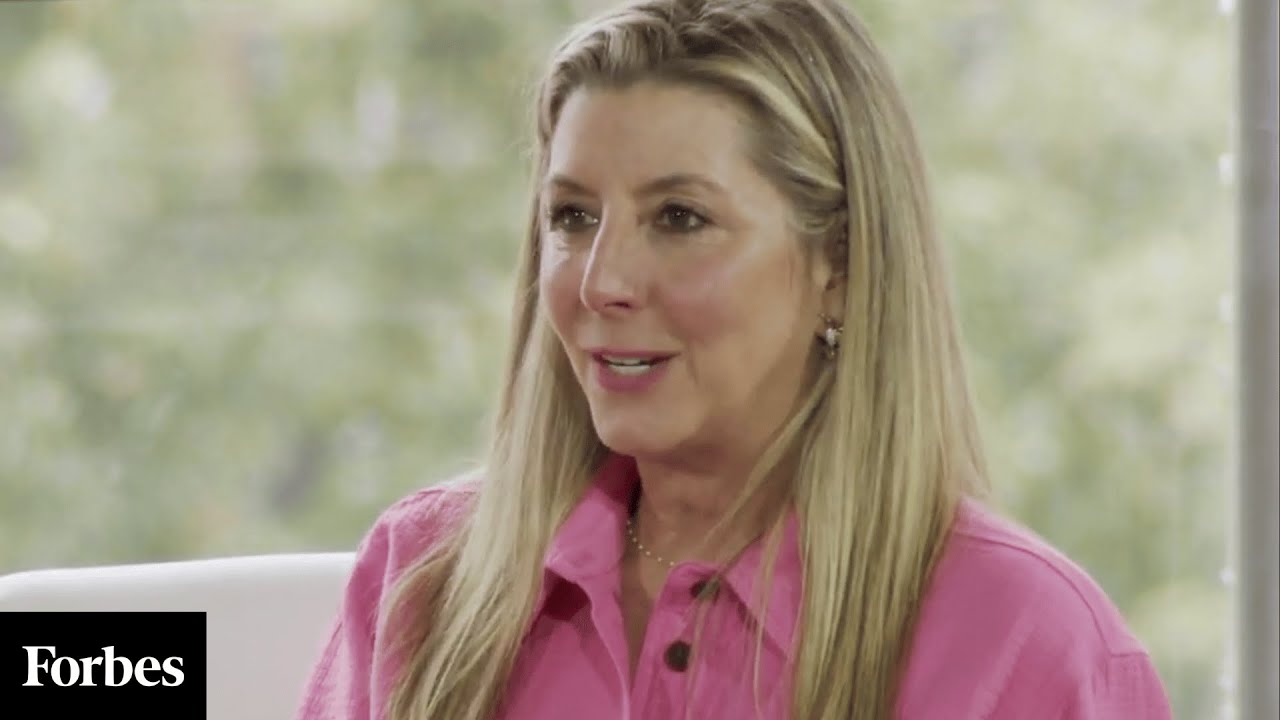
Sara Blakely was walking around her Atlanta house for three days in a shoe she had made herself, mostly in her pajamas, while her young kids watched from a safe distance and tried to figure out what their mother was doing. She had just sliced a high heel in half, sliced a sneaker in half, and glued the two pieces together. That moment, equal parts absurd and decisive, was the origin of Sneex, her second company. It is also the clearest window into how she has approached every problem she has ever tried to solve.
The industries nobody else wanted
Blakely did not start Spanx because shapewear was a booming category. She started it because the industry was in double-digit decline, girdles were uncomfortable and hot, and nobody was listening to the people actually wearing them. She did something similar with footwear: she walked toward an industry that was contracting, one where, as she put it during a conversation with Moira Forbes at a Forbes event, men had been designing women’s high heels since the 1500s and, plainly, had not cared much about how they felt to wear.
The sign she needed to finally commit came from a morning news program. A shoe designer, being interviewed live, was asked by the host whether comfort mattered. He looked into the camera and said he did not want his shoes to be comfortable, and that if someone called them comfortable, he took it as an insult. Blakely’s mouth dropped. So did the host’s. She booked a flight to Spain shortly after.
What followed was four years of factory rejections. Three manufacturers fired her after working with her for months, one after eight months, all of them saying the brief was too difficult. She finally pulled the plug on that first version herself, standing in the factory and telling her small team they had not crossed the finish line. Two women on the team cried. They told her the heel was already better than anything else they had worn. She agreed, but held the line: if a product is not ten times better than what already exists, it is not ready.
Betting on yourself before anyone else does
Blakely launched Spanx in 2000 with $5,000 saved from seven years of selling fax machines door to door in Florida. She never took outside investors. She ran the company out of her Atlanta apartment, where shipping boxes would pile up outside her front door and she would knock on neighbors’ doors asking them to help move the boxes so she could get inside.
The Forbes article that ran in 2001 changed one specific thing: QVC, which had rejected her for more than a year, called the day after it published. The buyer told her that her boss had read the piece. Blakely’s response was immediate: ‘Well, she had a very smart boss then.’
When two men in Atlanta spotted her in the local paper around that time and told her, with a shoulder pat and a laugh, that business is war and she had better be ready for it, she went home, sat on the floor of her apartment, and made a decision. She was not going to try to annihilate anyone. She was going to pay attention to the consumer and ignore the competition entirely. She credits that choice, and twenty-five years of deliberate mindset work starting with Wayne Dyer tapes she listened to at sixteen, with most of what followed.
Asked at the Forbes event whether she chased firsts or simply refused to accept existing limits, she did not hesitate: ‘I think the latter. I’m always asking why in everything.’
The pajama prototype that started something
The glued-together shoe she wore around the house did eventually become Sneex. The 10x standard she had failed to hit with the classic pump turned out to require a completely different object: something that looked like a heel but carried the internal engineering of a sneaker. That was not the product she set out to make. She considers the pivot the point.
She also added one reason she started Sneex that had nothing to do with footwear. Her children did not get to watch her build Spanx. They arrived for the aftermath. Starting something new from scratch, with all the rejection and grinding and uncertainty in plain view, was something she wanted them to see.
The morning she arrived at the Forbes event, she realized she had forgotten to put on her Spanx. A stop at Nordstrom and the backseat of a car filled in the gap. The founder of Spanx, she noted, does not always have her Spanx on. It was, she admitted, an art.
The glued-together prototype is somewhere in Atlanta. Her kids have probably stopped asking about it by now.