In the charred aftermath of Wyoming’s largest wildfire in recorded history, one green strip of land sat untouched, surrounded by blackened forest on every side. It was not a firebreak engineered by humans or a lucky gap in the wind. It was a beaver pond. While the headlines this past August filled with heat maps and drought warnings, a quieter set of stories was playing out across four continents, stories about animals, farmers, recovering communities, and lawmakers doing things that actually work. Sam Bentley gathered them into one place, and most people missed every one of them.
When nature builds its own fire department
The Mullen Fire of 2020 tore through the Wyoming-Colorado border, burning everything it touched. But researcher Emily Fairfax, studying the aftermath of that and several of America’s other major fires, found that 89% of beaver-dammed waterways acted as fire refuges, compared to just 60% of rivers without dams. The beavers had slowed Bear Creek, spreading it into wetlands whose waterlogged plants simply would not ignite. While forest on either side turned black, the beaver ponds became a refuge for displaced wildlife.
The same logic is holding up through a different crisis. In Devon, England, beaver wetlands stayed lush through a drought that left surrounding countryside parched, because a single beaver pond can hold around a million litres of water, released slowly to keep rivers alive through dry spells. A species once nearly wiped out for its fur is now functioning as a combined fire break and reservoir.
Spain is reaching further back in time for its own solution. In Catalonia, a nonprofit called Tvisa Donkey Firefighters rehabilitates abandoned and mistreated donkeys, then deploys a herd of more than 60 of them to clear forest undergrowth. The animals eat dry grasses, trample vegetation, and keep fire breaks clear. Research suggests grazing animals can reduce wildfire intensity at relatively low cost. The donkeys are getting a second chance, and so is the landscape around them.
The speed of solar, the work of women, and a river that could swim again
The world just crossed three terawatts of installed solar capacity. The first terawatt took nearly 70 years to reach. The second came in about two years. The third arrived in just 19 months. Germany’s wind and solar outgenerated fossil fuels for the first time ever last year. China has committed to growing wind and solar generation by 53% in five years, with those targets now legally binding.
In rural Senegal, where the Sahara has been spreading into farmland and temperatures push past 45 degrees Celsius in parts of the country, women backed by Our Legacy Foundation, set up by Ulimatas, have turned cracked, dust-dry ground into rows of vegetables. Solar pumps send water straight to roots using free energy, shade structures let crops grow year-round, and every woman who learns to farm passes the skills on. Women grow 80% of Senegal’s food yet historically receive the least land and support. The project is working to change that, with a goal of supporting millions of women farmers.
London, meanwhile, is trying to rescue its rivers. Not one of the city’s more than 600 kilometres of waterways is currently assessed as being in good condition, and the equivalent of nearly two Olympic swimming pools of sewage-polluted water enters them from misconnected properties every single day. Mayor Sadiq Khan’s new clean rivers and waterways plan brings together more than 50 organisations to restore 80 kilometres of river and create or improve 550 hectares of habitat over the next decade. The mayor told Sam’s colleague Anna on the ground that within a few years Londoners would see real changes, and within ten years he expected ‘the cleanest rivers and waterways in the world.’ Beaver reintroduction is part of the plan.
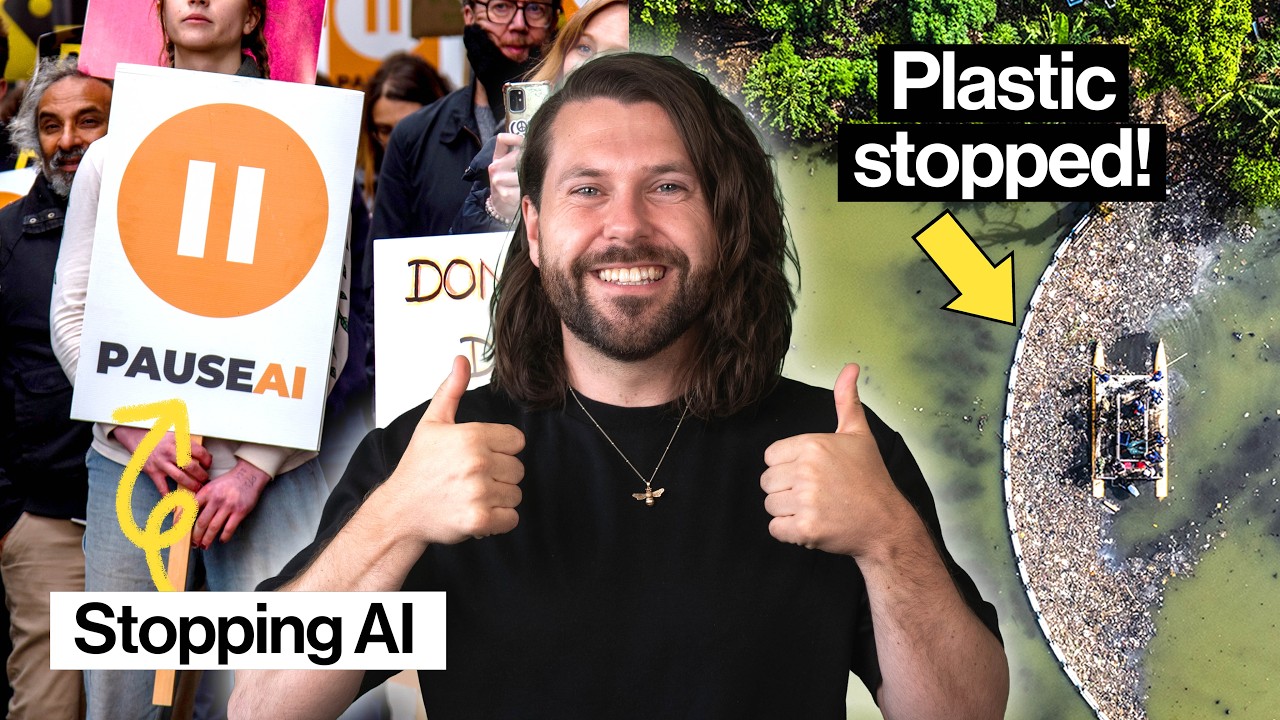
In Mumbai, a floating barrier called a trash boom, built from locally available materials by a group called Plastic Fisher working alongside Planet Wild, now spans a 42-metre-wide storm drain and is expected to stop at least 10,000 kilograms of plastic from reaching the ocean every month. Across more than 65 installations in South and Southeast Asia, the system has already intercepted around 2.5 million kilograms of plastic.
In Portugal, Julie, an African elephant taken from the wild in the 1980s and kept in a circus for nearly 40 years, became the first resident of the new Pangia Elephant Sanctuary in the Alentejo region, settling into more than 400 hectares of open countryside where she can roam, forage, and bathe in mud at her own pace. Her arrival also marks the formal end of wild animals performing in Portuguese circuses. France went further at a policy level, banning all imports of hunting trophies from threatened species including elephants, rhinos, and leopards.
In Wales, the RSPB bought 96 hectares of land called Gashed Ear, reconnecting two split halves of a nature reserve for the first time in almost 60 years, giving pied flycatchers, pine martens, and potentially hen harriers room to move freely through ancient oak forest and peat bogs. Colorado opened America’s first public nature library, a 33,000-square-foot building beside 140 acres of open land where visitors can borrow tents, fishing gear, and backpacks alongside books, powered by geothermal heating and more than 300 solar panels. And in Germany, the town of Andernach has run an edible city project since 2010, with more than 100 varieties of tomatoes at launch and now apples, strawberries, pumpkins, herbs, and even bananas growing around its medieval walls, free for anyone to pick.
In Leeds, a man named Chris Sylvester, who spent 26 years in active addiction before finding recovery at 36, launched a nonprofit called Getting Clean. Participants learn to make natural, chemical-free soap from scratch in therapeutic workshops, and the profits fund litter picking, wildflower meadows, community repair jobs, and routes into employment. As Sylvester put it plainly about the people rebuilding their lives through it: ‘Not only is it a working environment, it’s a family.’ In a country where nearly 70% of employers say they would not hire a former addict, 50% of the soap profits go to support other community groups tackling addiction across the UK.
The European Union began enforcing its new AI Act, requiring AI-generated content to carry digital markers, chatbots to identify themselves as machines, and deepfakes to be clearly labelled. Companies that break the rules can be reported directly to regulators. Spotify announced that from mid-September, any act whose identity is generated by AI will carry a label and be blocked from recommendations unless a user already follows them. The platform removed 75 million spam tracks last year as AI-generated music crowded out human artists.
The bar of soap Chris made on his first day clean
Sitting on a shelf in the Getting Clean workshop in Leeds is a bar of handmade soap, the kind participants produce in their first session. It is smooth, unpackaged, and smells faintly of whatever botanicals went into the batch that day.
The patch of green where Bear Creek runs through that scorched Wyoming hillside is still there, still wet, still standing, years after the Mullen Fire moved on. The beavers have not left.
 Wake up to Only Happy News!