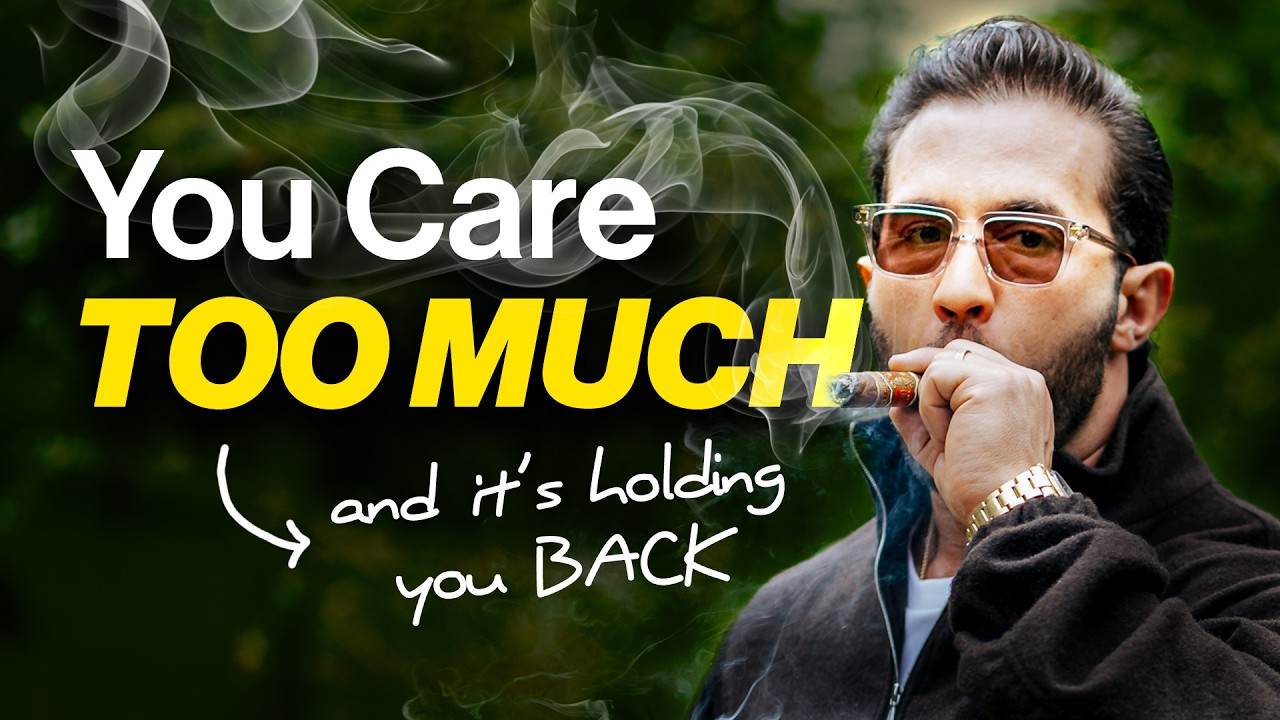
Rain was coming down hard enough that Greg Lavecia had almost stopped filming. The camera was getting wet. The plan was to pack it in. Then he kept going anyway, standing in his backyard at 10 a.m. on a Friday, delivering a 30-minute case study in what it looks like to bet against the consensus version of your own life.
Lavecia is the co-founder and CEO of Bloom, an energy drink brand he describes as the fastest-growing in the history of the category. According to Lavecia, Bloom’s Energy Drink surpassed Red Bull, Diet Coke, Monster, and Gatorade in Amazon search volume during a single week, roughly two and a half years after launch. That figure, if accurate, is a striking benchmark for a brand that started not with an energy drink but with snow leopard-print booty bands sold on Shopify for $9.99.
How you get from a college dorm room to a nine-figure transaction
Lavecia grew up in a household and community where the only recognized path to legitimacy ran through academic achievement. He was diagnosed with ADHD and told, explicitly, by educators and counselors that he would amount to nothing. His GPA when he left university was 2.4. He had been on academic suspension more than once. His wife, Mari, dropped out of college entirely when they launched their first venture together.
The early years were not glamorous by any definition. The couple lived in Lavecia’s father-in-law’s house. They posted before-and-after transformation photos on Instagram meme pages, spending first hundreds, then tens of thousands, then hundreds of thousands of dollars promoting their fitness guides. Everyone from their hometowns could see the photos. Lavecia says that public exposure was the point. Nobody had reason to trust them until they demonstrated results with their own bodies.
When the pressure of their social environment in New York became a drag on momentum, the two packed their belongings into a blue Toyota and drove to Boulder, Colorado. They had never been there. They chose it because they could rent a house they could afford and because they did not know anyone who would question what they were doing. Within 18 months, Bloom existed. Within a few years, it was generating $180 million in annual revenue from its greens powder alone, according to Lavecia, without outside investment.
In 2024, Lavecia says the company sold a piece of Bloom in a nine-figure transaction. That was, by his account, the first moment most people in his family fully understood what had been built.
The booty bands were never the point
Lavecia is deliberate about the arc of his career not being a straight line toward any obvious destination. He did not set out to build an energy drink company. He set out to take swings. The booty bands led to fitness guides, which led to learning marketing arbitrage on meme pages, which led to understanding influencer economics before most brands took them seriously, which led to Bloom. He launched what he estimates as 300 products before Bloom Energy Drink emerged as the one worth scaling.
That framing matters to what he argues in this video. The insecurity he spends the most time on is not failure or money. It is the specific discomfort of doing something that looks ridiculous to everyone watching. Standing in front of your hometown while selling cheetah-print exercise gear. Having people ask, with barely concealed mockery, whether you are ‘a little influencer boy now.’ Tolerating the gap between what you are doing and what anyone around you thinks it means.
He also addresses what he calls the two-way door principle. Most early business decisions, he argues, are reversible. Launch a product, it fails, you stop. Move to a new city, it does not work, you come back. The only genuinely irreversible choices are a narrow category of serious mistakes. Everything else has an exit. That framing, he says, removes most of the actual risk from starting.
Leo, now president of Bloom and a friend from Lavecia’s high school years, joined the company in 2022 after leaving a corporate career. Lavecia points to that as evidence that the people worth keeping will find their way back.
The moment before he almost turned the camera off
Lavecia is mid-sentence, rain still audible, holding an open can of his own energy drink, when he pauses and notes that the rain seems to be easing up. He takes that as a cue from somewhere and keeps talking. He is 31 years old, standing in his backyard in Austin, Texas on a Friday morning, doing exactly what he wants to do with the morning, which is what he says the whole journey was for.
The rain that almost ended the video was still coming down when he decided the message was more important than dry equipment. By the time he finished, the sky had cleared enough that he noticed it out loud.
Source: Watch original
This article was reported in November 2026.
OHN Editorial Note: This article is based on publicly available sources. If you spot an error or have updated information, contact us at editorial@onlyhappynews.com. We correct mistakes promptly.
 Wake up to Only Happy News!