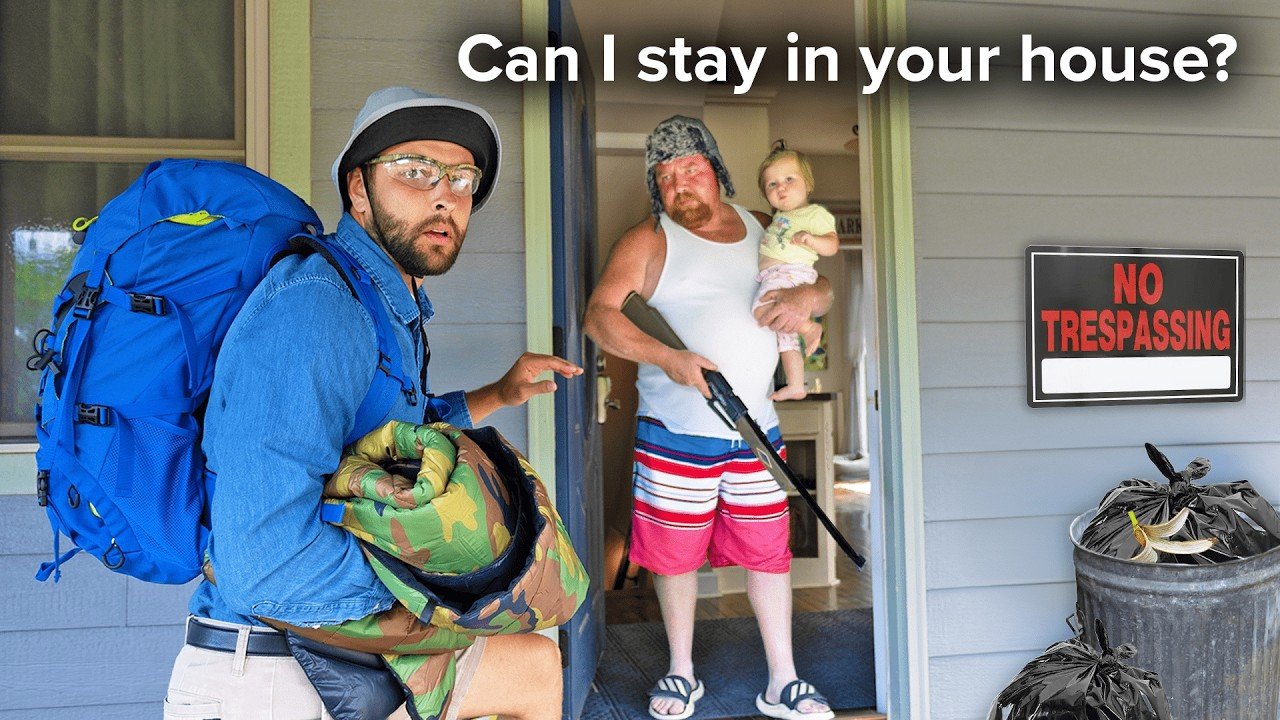
A man named Dwayne left such a lasting impression on creator Jimmy Darts during a kindness experiment that Jimmy declared he wanted Dwayne to adopt him. That single encounter anchored an entire social experiment conducted in a location recognized as one of the friendliest communities in the United States.
The Experiment: Putting Friendliness to the Test
Jimmy Darts traveled to a city widely regarded as the friendliest in America to conduct a real-world test of how residents respond to strangers in moments of need. The premise was straightforward: approach ordinary people in public settings and observe whether genuine human kindness emerges without prompting, incentive, or prior arrangement. Jimmy Darts has built a channel around exactly these types of unscripted social experiments, capturing raw, unfiltered reactions from everyday individuals across the country.
The experiment was not staged with actors or scripted responses. Jimmy Darts placed himself in situations designed to reveal the natural generosity of the local population, recording how quickly – and how warmly – strangers stepped forward to help.
Dwayne: The Standout Act of Generosity
Among all the encounters recorded during the experiment, one individual named Dwayne stood out so dramatically that Jimmy Darts singled him out by name in the video’s description. The warmth Dwayne demonstrated was extraordinary enough that Jimmy publicly joked about wanting to be adopted by him – a reflection of how genuinely moved the creator was by the interaction.
Dwayne’s response was not merely polite or obligatory. It represented the kind of open-hearted generosity that Jimmy Darts had been searching for across the American landscape – the sort of instinctive human decency that requires no camera, no audience, and no reward to activate.
The moment resonated because it was specific and personal. Dwayne was not an institution or an organization – he was a regular resident of a community that had apparently cultivated a culture of genuine neighborliness, and his actions reflected that culture in a direct and measurable way.
Research consistently supports the idea that community culture shapes individual behavior. Studies conducted by institutions including the University of Michigan have found that social trust – the degree to which residents believe their neighbors are honest and helpful – is one of the strongest predictors of prosocial behavior in public spaces. Communities that score high on social trust indices produce individuals who are statistically more likely to intervene, assist strangers, and engage in acts of unprompted generosity. Jimmy Darts’ experiment, while informal, effectively field-tested that principle in a real American city with real consequences and real emotional outcomes.
The ripple effect of encounters like Jimmy Darts’ experiment with Dwayne extends beyond a single video. Viewers who watch a stranger respond with genuine warmth are more likely – according to social psychology research – to replicate that behavior in their own communities. Dwayne’s decision to show up fully, openly, and generously for a stranger did not just move one creator. It traveled outward through every viewer who watched, quietly raising the bar for what ordinary human kindness can look like in everyday American life.