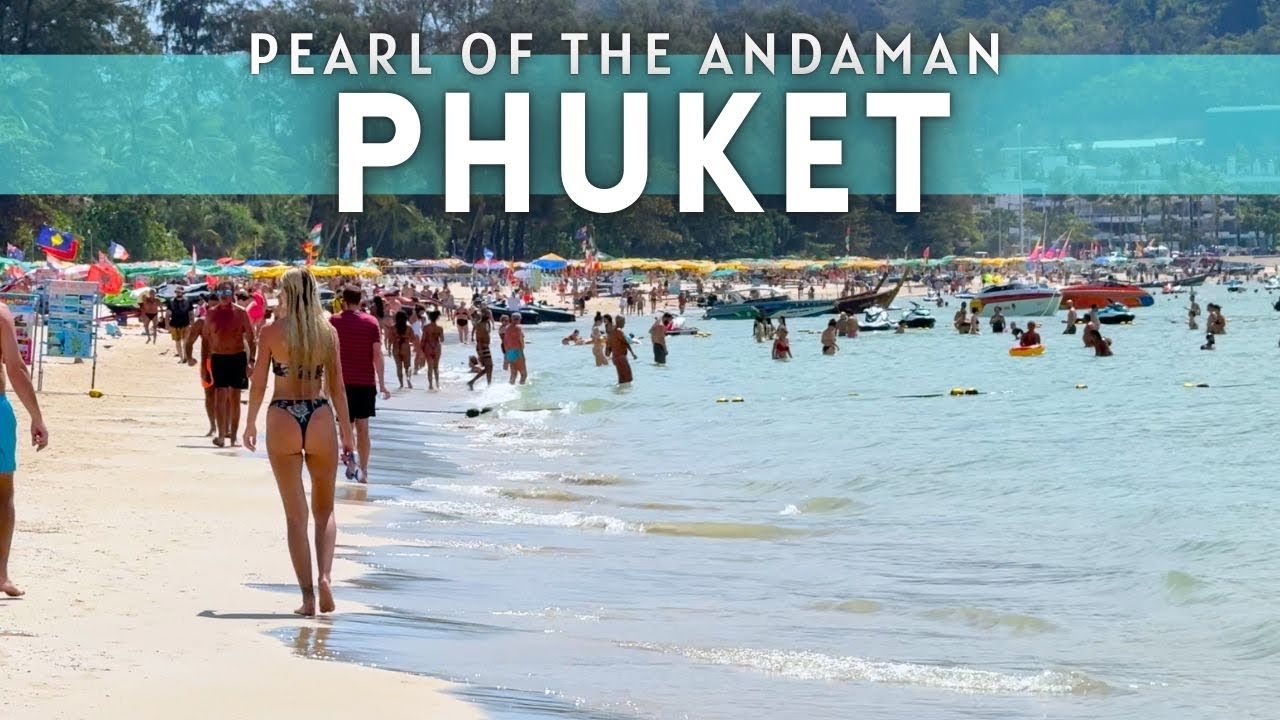
A coconut arrives at exactly the right moment. It is 11 in the morning on Patong Beach, the Andaman Sea is flat and glittering, and the heat is already pressing down hard enough to make shade a priority. James, the traveler documenting this seven-day circuit of Phuket, cracks it open and drinks while parasail operators a few meters away wait to negotiate their next ride. This is where the trip begins, and it does not slow down from here.
What Patong gives you and what it cannot
Patong is the loudest corner of Phuket, and it earns that reputation honestly. Bangla Road runs perpendicular to the beach and hosts what James from Island Hopper TV describes as the biggest nightly party on the island, operating every single night of the year without exception. For anyone in their twenties chasing energy and crowd density, the argument for staying here is strong. For everyone else, it is a place to visit once, eat a kebab served on a full rod of meat, watch the neon from a comfortable distance, and then make plans to sleep somewhere quieter.
The parasail ride above Patong costs around 2,000 baht, which is roughly 60 US dollars, for a two-minute run over the Andaman Sea. Operators at the beach handle the logistics, including where you land, whether that is the boat deck, the water, or the sand. James notes that incidents have occurred in the past and recommends independent research before committing.
North of the main drag, the water runs clearer. South of Bangla Road, a river feeds in and muddies things. The middle section, directly in front of the road, is where the swimming and watersports concentrate.
Beach by beach heading south and then north again
Kata Noi, which translates roughly to little Kata, sits on the south side of a hill from its larger neighbor. The water was calm during the February 2026 visit, the kind of calm that lets you see straight to the bottom. A handful of shops line a small walking street, and hotels like Katanoi Resort and Katatani sit nearby for anyone who wants low-key over loud.
Kata Beach proper is bigger, busier, and widely cited as the most famous beach on the island. Unlike Patong, restaurants do not line the beachfront road directly. Hotels fill that strip instead, which means food options thin out once you cross the sand. Vendors with coconuts and cold drinks fill some of the gap. Surf lessons are available, though the flat February conditions made actual surfing impossible on this visit.
Karon Beach, reachable from Kata by tuk tuk van with a Bluetooth speaker blasting the whole way, is the largest of the three beaches in this southern cluster. Trees provide more shade here than at either Kata. The Pullman hotel sits in a strong position along the shoreline. For transportation around the island, James recommends the InDrive app over Bolt or Grab, which he found unreliable. InDrive runs on cash payments and worked consistently throughout the trip.
Heading north from Patong, Kamala Beach is the first stop. It runs calmer and less crowded than its southern neighbors. The Hyatt Regency, Intercontinental, and Novotel all have properties in the area. A beach massage costs 300 baht, around ten to eleven US dollars. A longtail boat from Kamala can take visitors north to Banana Beach.
Laemsing Point, a viewpoint between Kamala and Surin, is worth pulling over for. A driver mentioned it on James’s first visit years ago, and the photo opportunity from that ridge has stuck with him since.
Surin Beach is where James puts his personal sunset ranking on the line. Of every beach he has visited on Phuket, he says the best sunset he has ever seen on the island happened here. The beach runs quieter than Kata or Patong. A Holiday Inn operates nearby for anyone wanting a branded option in this stretch.
Bangtao Beach is the longest on the island at six kilometers. It holds more beach clubs per linear meter than anywhere else James visited. Nomad Beach Club, Carpe Diem, Maya Beach Club, and Solis Beach Club all operate in a concentrated stretch. Prices during peak season have climbed noticeably. James, who has been traveling to Thailand for over ten years, notes that tourist-area prices across the country have risen sharply, though deals remain available in areas away from the main visitor corridors. Peak season on Phuket runs from roughly December through May, driven by the dry weather locally and cold winters in Europe and Russia pushing travelers toward warm coastlines.
Islands, temples, and the south point
From Rawai Beach, a longtail boat negotiation leads to Coral Island Beach rather than Banana Beach after locals recommend it as the better option. The price is 3,000 baht per boat, fixed, regardless of whether one person or four are making the trip. The western side of Phuket had been glassy all week, but the open water toward Coral Island ran choppy. Life jackets are available and James wore one. The island offers two or three hours of swimming, food, and drinks across two restaurant areas before the return crossing.
Wat Chalong Temple is the most recommended temple on the island by local Thai residents, according to James’s conversations there. Renovations have upgraded the complex significantly compared to five years prior. The visit coincided with preparations for Chinese New Year. The Big Buddha viewpoint, also on this southern circuit, has been closed for roughly a year following heavy rain and a landslide, though a reopening sometime in 2026 was being discussed as of the visit.
Phromthep Cape at the island’s southernmost tip is where the sunset crowds gather. James arrived twice, once at midday and once in the evening. His recommendation is to arrive ten minutes before sunset rather than an hour early, and to arrange transportation in advance because congestion builds fast around the main event. The windmill viewpoint just up the road offers comparable views of Yanui Beach and the offshore islands, and James rates it slightly higher for his own preferences.
Yanui Beach itself is small, snorkeling-friendly, and gets crowded from around 10 in the morning through sunset during peak season. Nai Harn Beach nearby runs a bit larger and is the daytime choice for most of the travelers based in Rawai.
Rawai as a base and what it costs to stay there
Rawai is the area James returned to most often during this trip. The neighborhood is known for seafood restaurants, Muay Thai gyms anchored by venues like Rawai Boxing Stadium, and onsen or sauna-style wellness centers. It is quieter than Patong without being empty. Sidewalks are limited and uneven in places, which is worth knowing before planning evening walks.
Accommodation options range from the Space House Capsule Hotel, a compact pod-style property with a pool on-site, to a private villa booked through Airbnb at around 320 US dollars per night. The villa came with a private pool and a separate electricity billing structure. Guests pay a 2,000 baht deposit at check-in and are charged for actual power usage, which worked out to roughly 20 US dollars per day depending on air conditioning use.
Phuket Town sits about an hour to an hour and a half northeast depending on traffic. The Sunday night market there begins near the old clock tower and spreads across two full streets. The crowd during peak season on a Sunday night is dense. Phuket Town is the oldest settlement on the island and carries centuries of Portuguese and Straits Chinese architectural history from its origins as a tin mining hub. The market is built for walking and eating simultaneously: spring rolls with peanut sauce, mangosteen on a stick, grilled corn, and a frozen herbal menthol stick that James pressed to the back of his neck for the rest of the evening walk.
Phang Nga Bay viewpoint and skywalk sits about an hour to an hour and a half outside Phuket depending on traffic. Tickets are 800 baht per person. Sunrise is the peak time to visit, though sunset produces good color too.
The man by the elephant enclosure
At the Sea View Elephant Escape near Skyline zipline, a man sells single-serve banana bundles for 100 baht a bag. He hands them over the fence without ceremony and the elephants reach across without hesitation. The transaction takes about four seconds. The man is already looking at the next visitor.
Back at Patong on the first morning, the coconut seller handed over a fresh one without waiting to be asked twice. The Andaman Sea was flat, the parasail operators were ready, and Bangla Road was still quiet in the morning light, saving itself for later. That opening coconut, cold and green in the heat, turned out to be a fair preview of what the next seven days would deliver: constant motion, very specific choices about where to spend time, and a steady argument between the crowded and the calm.
Source: Watch original
This article was reported in June 2026.
OHN Editorial Note: This article is based on publicly available sources. If you spot an error or have updated information, contact us at editorial@onlyhappynews.com. We correct mistakes promptly.