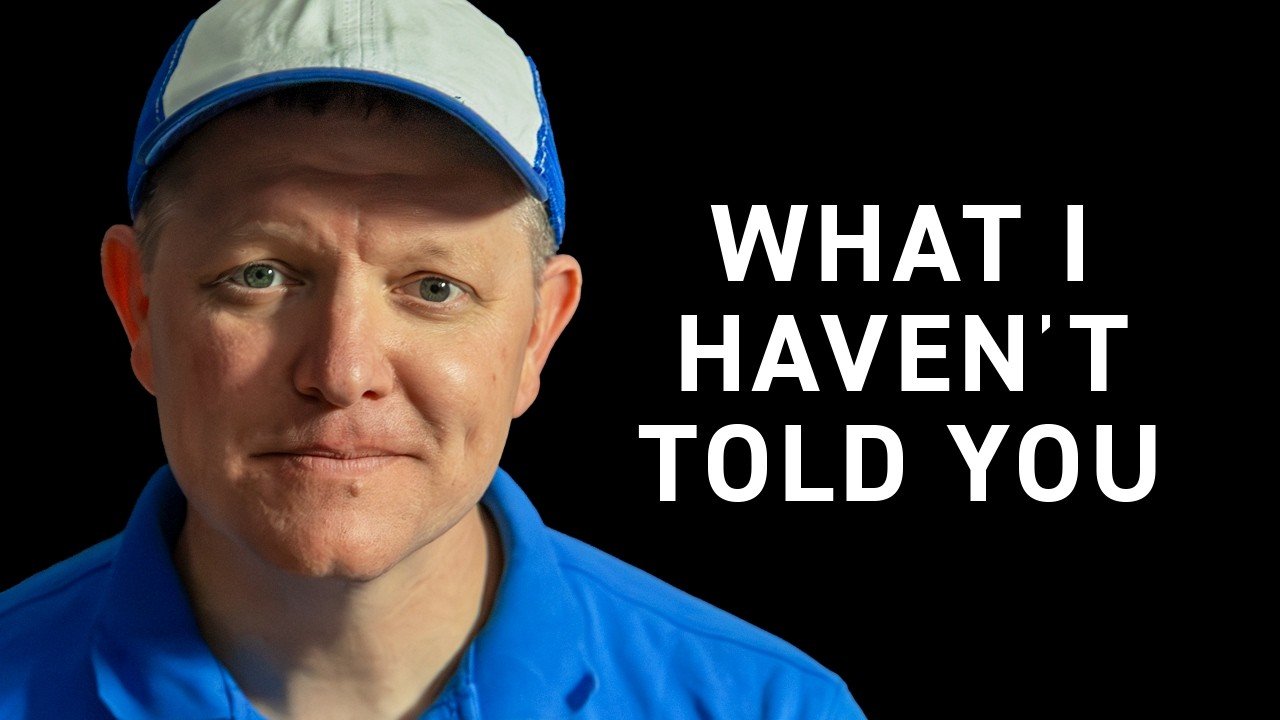
Reverend Daylan Woodall was mid-semester, door closed, standing at the front of a New Testament survey class at a local community college, when his friend Destin Sandlin walked in with a camera and no agenda on the table. Woodall had agreed to be filmed. He just did not know why.
Sandlin had been carrying a single idea around for years, ever since a lunch conversation with Woodall about parenthood and children. Woodall had mentioned something called the Johari window, a psychological framework developed by Joseph Luft and Harrington Ingram, who first presented the concept in 1955. The name is a combination of their own first names. Sandlin had not been able to let it go.
What the four panes of the window actually describe
Standing at a whiteboard with a blue marker, the two men walked through the framework together. The Johari window divides self-knowledge into four quadrants arranged by what a person knows about themselves and what others know about them.
The upper left quadrant, which Luft and Ingram called the arena, holds everything that is known both to the individual and to the people around them. An occupation, a faith, a public role. Sandlin being an engineer and a father both land there.
The lower left quadrant is the facade. Woodall was careful with the word. ‘It’s not so much the lie that you’re telling people,’ Sandlin explained after their conversation, ‘but it’s the truth you’re withholding.’ He used his own back injury as an example, something he had chosen not to disclose publicly until that moment on camera.
The upper right quadrant is the blind area, what others can see that the individual cannot. Woodall called it the central implication of the whole framework. ‘There are parts and pieces of our personality and identity that are mysteries to us,’ he said. ‘We don’t have perfect self-knowledge.’
The lower right quadrant is the unknown, things not yet visible to the person or to anyone around them. Sandlin noted that Luft and Ingram’s framing of this quadrant echoes what the late U.S. Defense Secretary Donald Rumsfeld once called ‘unknown unknowns.’ Woodall’s path into this territory is through prayer. Sandlin suggested that for anyone, faith-based or not, it can also open up simply by placing yourself in unfamiliar situations and watching how you react.
When Sandlin asked Woodall to actually name the blind spots
Moving from theory to practice required Sandlin to ask a direct question: what does Daylan Woodall see in Destin Sandlin that Sandlin does not see in himself?
Woodall’s first answer was about relational assumptions. Sandlin grew up in a generation where in-person relationships formed the baseline, before the internet reshaped how people connect and what they expect from connection. Woodall said Sandlin’s instincts about how relationships work do not always match what people in contemporary culture are actually looking for. ‘I’m not saying you don’t build relationships,’ Woodall clarified. ‘I’m saying your assumptions for what other people might be looking for are different than maybe what they’re actually looking for.’
His second observation was about cultural perspective. As a white man, Sandlin does not carry the lived experience of, for example, being pulled over by police as a Black man. Woodall framed this not as criticism but as a structural gap. ‘Your ability to perceive needs to be aided by relationships,’ he said, ‘because it has been shaped by the kind of life that you have had.’ Sandlin chose not to say he understood. He said he would sit with it.
The third blind spot landed differently. Woodall pointed to Sandlin’s influence over people and Sandlin’s apparent unawareness of its scale. Sandlin is recognizable enough that strangers regularly cross restaurant dining rooms to speak to him. Woodall argued that in an era researchers and sociologists are calling a loneliness epidemic, the act of a stranger walking across a room to talk to someone is not a small thing. ‘It’s never been harder in human history for a person to walk up to a stranger,’ Woodall said. ‘And it happens to you all the time. And you don’t understand how big of a deal that is.’ Sandlin’s response was that the observation made him feel slightly sick.
The man walking back into class
Students started arriving in the hallway outside Woodall’s classroom door. Sandlin introduced him to the camera one last time, noting Woodall is currently working toward his PhD, and that he maintains a website at daylanwoodall.com along with a Substack. Then Woodall went back inside to teach.
Standing alone in the corridor after, Sandlin said he noticed people moving around him and felt uneasy, newly conscious of how his presence in a space affected others without him realizing it. He did not resolve the feeling. He just named it and let it sit there.
That lunch conversation about parenthood started this, years ago, with Woodall sketching out a framework on whatever surface was handy. Sandlin never forgot it, brought it back to his own children, and eventually drove to a community college classroom to ask his friend to say out loud what the blind spot actually looks like from the outside.
Source: Watch original
This article was reported in June 2026.
OHN Editorial Note: This article is based on publicly available sources. If you spot an error or have updated information, contact us at editorial@onlyhappynews.com. We correct mistakes promptly.