A white tram car climbs a hillside above the city, and before it reaches the top, the Pacific Ocean comes into view. That is the Getty Center arrival in a single moment. Free to enter, with parking fees that make an Uber ride the smarter call, the Getty Center sits at elevation above Los Angeles with panoramic views in every direction. The tram ride from the parking garage to the top takes roughly three to four minutes. Inside, the collection includes European paintings, sculptures, and photography, all housed in a modern stone building that has become one of the city’s architectural landmarks.
Why the viewpoints alone justify two days of planning
Two of the best vantage points in Los Angeles cost nothing to enter. Griffith Observatory, which originally opened in 1935, sits inside Griffith Park, one of the largest urban parks in the United States. From its terrace, visitors get some of the clearest sightlines to the Hollywood sign and the downtown LA skyline available anywhere in the city. Parking requires payment, but again, ride-share drops the stress. The observatory functions as a working planetarium, with large white domes housing instruments for observing the moon and planets. Arriving around sunset turns the visit into something worth planning an entire afternoon around.
Santa Monica Pier operates at a different register entirely. Pacific Park, the small amusement park on the pier, has a ferris wheel and rides sitting directly above the ocean. The beach stretching away from it is wide, flat, and built for activity: cycling, running, and volleyball on regulation sand courts. The pier’s reputation was partly built by geography. It sits near what was historically considered the western terminus of Route 66, a detail that helped cement its place in American road culture.
Hikers can approach the Hollywood sign directly via a trail through Griffith Park, avoiding the tour bus circuit entirely. The trail system inside the park is extensive, and the sign hike is one of the few ways to get close without a vehicle queue.
The theme park belt runs from Magic Mountain to Anaheim
Six Flags Magic Mountain ranks among the more intense theme park experiences in the country. Its top rides include Twisted Colossus, X2, and Riddler’s Revenge. South in Anaheim sits Disneyland California, the original Disneyland, which opened in 1955 and currently operates as two separate parks. Universal Studios occupies a footprint in Universal City, adjacent to Hollywood, and functions simultaneously as a theme park and an active movie production facility. Attractions there include the Wizarding World of Harry Potter, Super Nintendo World, Jurassic World the Ride, Revenge of the Mummy, and Transformers 3D. Ticket prices vary across all three properties and are best confirmed directly through each park’s official site. Just outside Universal Studios, Universal CityWalk provides restaurants and bar and grill options at no entry cost.
The Hollywood Walk of Fame is free to walk. Over 2,700 stars line the pavement with celebrity names embedded in the sidewalk. The area also contains the Chinese Theater, famous for its handprint and footprint cement displays, plus the Dolby Theater, home of the Academy Awards ceremony. Street performers range from Mickey Mouse to superhero characters. Going with a guided tour rather than solo is worth considering: the history behind the area is layered enough that walking it without context means missing most of the story.
Huntington Gardens in Pasadena is one of those places that consistently gets bypassed by visitors who stay closer to the coast. General admission runs around $30 per person. Inside, the grounds include a Japanese garden, a Chinese garden, a rose garden, and a desert garden that ranks among the most impressive collections of its kind in the country. The diversity of flora from around the world across a single property is difficult to find anywhere else in the United States. A spring or fall afternoon visit, when temperatures drop and crowds thin slightly, gets the most out of the grounds.
Catalina Island, roughly 22 miles off the Southern California coast, is reachable by the Catalina Express ferry departing from Long Beach. The arrival point is Avalon, a small harbor town where golf carts are a standard mode of transport. It functions well as a day trip, with the ferry schedule allowing a morning departure and evening return.
Downtown Los Angeles holds more than its critics suggest. The historic core combines old buildings with modern skyscrapers, and the area contains the Arts District, Little Tokyo, and Angel’s Flight, a funicular car that climbs the hill between the lower commercial district and the elevated civic section. The Walt Disney Concert Hall, a futuristic curved-metal building, is one of the most photographed structures in the city. The Broad Museum focuses on modern art. Grand Central Market on the ground level offers a wide range of local food vendors in a historic market hall setting.
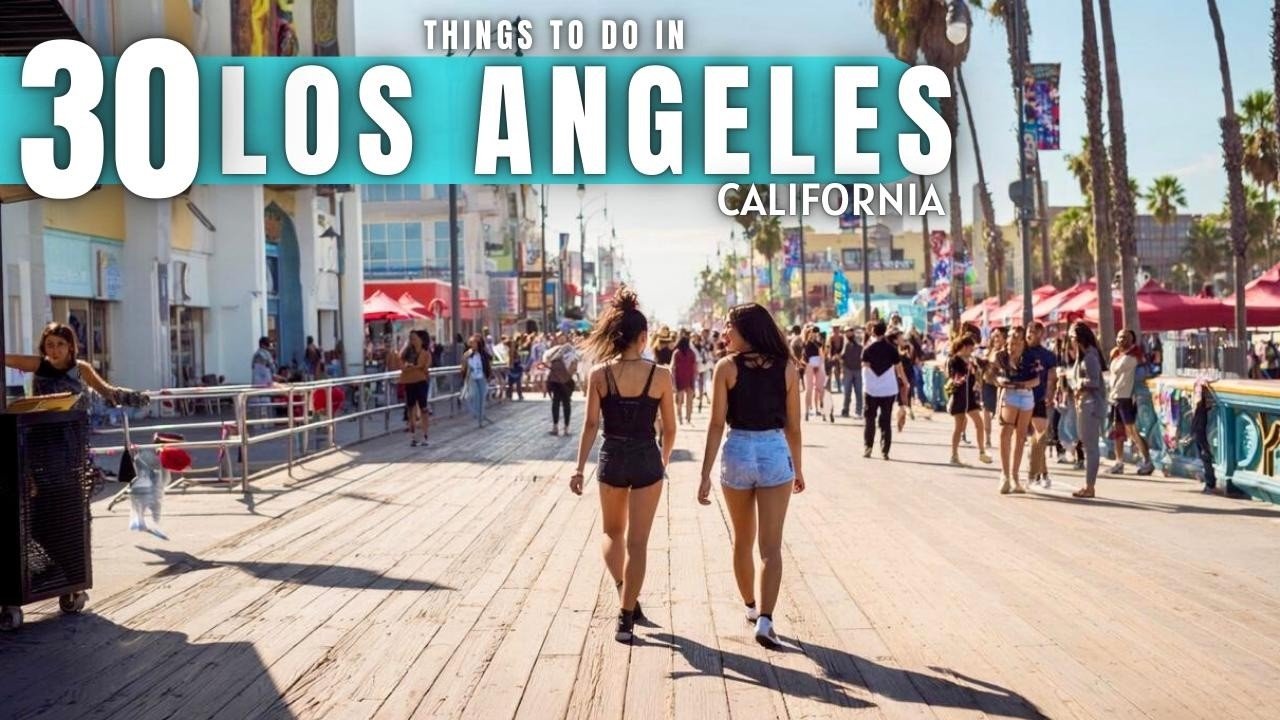
Venice Beach Boardwalk is still the most unscripted mile in Los Angeles. Street performers, artists, local vendors, and the outdoor gym at Muscle Beach all occupy the same stretch. Basketball courts along the oceanfront draw pickup games throughout the day. The city has worked to improve safety in the area in recent years. Santa Monica is accessible directly from Venice via the Strand bike path running along the coast. Venice sunsets, framed by lifeguard towers against the orange sky, are among the most photographed light events on the entire California coastline.
The Grove and the adjacent Original Farmers Market offer two contrasting experiences in the same location. The Farmers Market has a vintage look going back to the 1950s era, with bakeries and food stalls. The Grove side is modern, with fountains, palm trees, outdoor shopping, a trolley running through the center, and a reputation for celebrity sightings, particularly on weekends.
Rodeo Drive in Beverly Hills represents the luxury retail end of the LA experience. Gucci, Louis Vuitton, Chanel, Prada, and Dior all have locations along the strip. The surrounding Beverly Hills neighborhood adds palm-lined streets, mansions, Beverly Hills Gardens Park, and the Beverly Hills sign to a single walkable zone. The hop-on hop-off bus that covers this area starts near the Hollywood Walk of Fame and travels Wilshire Boulevard and Sunset Boulevard, offering a reasonable way to cover the distance between neighborhoods without navigating traffic personally.
On the sports side: Dodger Stadium is home to the Los Angeles Dodgers. SoFi Stadium, described as one of the most technologically advanced stadiums in the world, hosts both the Los Angeles Rams and the Los Angeles Chargers for NFL games. The Los Angeles Lakers play at Crypto.com Arena.
The La Brea Tar Pits sit in the middle of the city and contain active Ice Age fossil excavation sites. Woolly mammoths, saber-tooth cats, dire wolves, and giant ground sloths are among the species whose remains have been recovered from the natural asphalt deposits. Scientists continue working the site. The oil history of Los Angeles is tied directly to this location: the petroleum industry was among the first major economic forces that shaped the city, and the tar pits make that origin story visible in a way that few urban sites anywhere can match.
Next to the tar pits along Wilshire Boulevard, in the area known as the Miracle Mile, sits the LA County Museum of Art. According to the museum, it is the largest art museum in the western United States. Non-LA County residents pay $30 for adult admission. The most photographed spot on the grounds is Urban Light, an outdoor installation of restored classic street lamps. The collection spans ancient art, European paintings, and American and Latin American works. The Petersen Automotive Museum is also located along the Miracle Mile, offering exhibits across cars, roadsters, and automotive history. The California Science Center, near downtown LA in Exposition Park, houses hands-on science exhibits and will again display the Space Shuttle Endeavour once installation is complete.
The Los Angeles Zoo occupies land adjacent to Griffith Park. Adult admission is $27 and children aged 2 to 12 pay $22, according to the zoo’s listed pricing. Exhibits include gorillas, lions, giraffes, elephants, and tigers, alongside the LA Zoo Botanical Gardens. The Autry Museum of the American West is located across from the zoo, making both stops possible in a single outing.
Malibu is a coastal drive more than an activity hub. The coastline is genuinely beautiful, with million-dollar homes running along the water, but it functions primarily as a residential neighborhood. Palos Verdes is a peninsula positioned between Long Beach and the South Bay beach towns. High coastal cliffs, a golf course, hiking trails, a lighthouse, and seasonal whale-watching from the cliff edges make it one of the more overlooked spots in the metro. Rancho Palos Verdes and Palos Verdes Estates occupy this peninsula, and the homes here rank among the most expensive in the region for reasons visible from any cliff-top viewpoint.
Manhattan Beach, Hermosa Beach, and Redondo Beach form a trio of South Bay beach towns that share similar qualities. Manhattan Beach is clean, upscale, and has a pier, the Roundhouse Aquarium, and a walkable downtown with cafes and boutique shopping. Hermosa, whose name means ‘beautiful’ in Spanish, is nearly indistinguishable in character from Manhattan Beach. Redondo Beach adds a marina shopping area to its pier, and Torrance Beach sits just south of it. All three towns have a more relaxed pace than the central LA beachfront areas.
Echo Park, northwest of downtown, offers a different version of city green space. Echo Park Lake is surrounded by lotus flowers in season and swan pedal boats available for rental. The skyline views from the lake are calm rather than overwhelming, making the park a useful reset point in the middle of a dense urban itinerary.
Long Beach, while better suited for tourists than long-term residents in this assessment, has genuine attractions: the Queen Mary, an aquarium, nightlife, and the Catalina Express terminal. The Port of Long Beach is one of the largest commercial ports in the United States, and the industrial waterfront is visible from several vantage points in the city.
Ventura County sits roughly one to one and a half hours north of Los Angeles, depending on traffic. Ventura itself has a classic California surfing and coastal walking character, and the Channel Islands ferry operates from there, providing access to a group of islands separate from Catalina.
For airports, Los Angeles International (LAX) handles international arrivals. Domestic travelers can also consider John Wayne, Burbank, or Ontario airports, each serving a different section of the sprawling metro area. The existence of four functioning airports is its own measure of the city’s scale.
The woman photographing saber-tooth bones through a glass panel
At the La Brea Tar Pits, a visitor pressed her phone against the observation window of the active excavation pit, trying to frame a saber-tooth cat skull against the dark asphalt. The fossil was still partially submerged. A scientist in the pit below adjusted a tool without looking up.
That tram climbing toward the Getty Center started all of this. By the time it reaches the top and the Pacific appears on the horizon, the full scope of what Los Angeles actually contains starts to feel manageable, even if just barely.
Source: Watch original
This article was reported in June 2026.
OHN Editorial Note: This article is based on publicly available sources. If you spot an error or have updated information, contact us at editorial@onlyhappynews.com. We correct mistakes promptly.