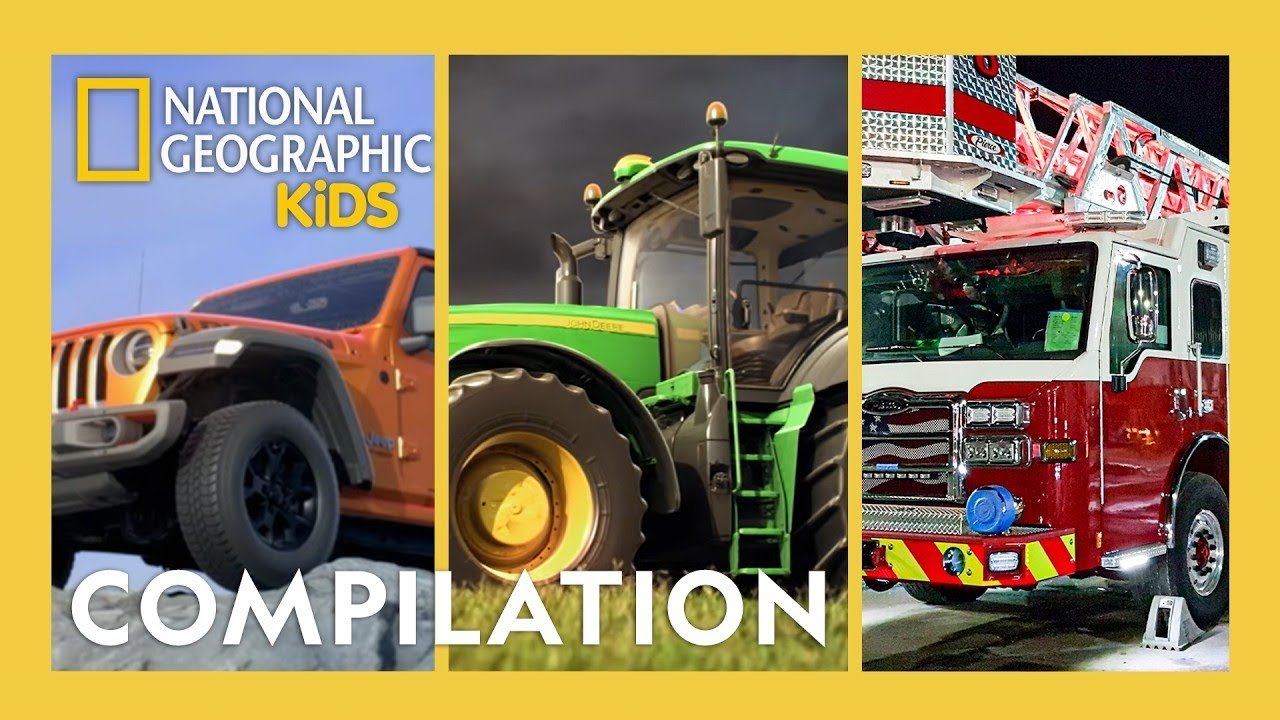
A freight train rolls into the shipping yard outside the Jeep plant in Toledo, Ohio, and within hours it will carry roughly 600 freshly built Wrangler SUVs toward the US coast, bound for customers in 52 countries. That single daily rail operation is a small window into a manufacturing world operating at a scale most people never see up close.
How a Jeep Wrangler goes from raw steel coils to a road-ready truck in under a day
The Toledo facility where the Wrangler is built covers 3.9 million square feet and runs two 10-hour shifts with 876 employees per shift, according to Diego Nakashima, who oversees operations at the plant. By the time a finished vehicle rolls off the line, 860 people will have touched it. The pace is relentless: the plant completes almost one car every minute.
It starts with steel. Pro-Tec, a processing facility in Leipsic, Ohio, supplies over 100,000 tons of steel annually for Jeep platforms, according to Bernhard Hoffman at Pro-Tec. Raw steel coils are treated with zinc and galvanized to increase strength while being made thinner. From there, 162 trailer loads of steel arrive at the Toledo body shop every single day. An army of over 1,000 robots handles the welding, completing all 2,562 welds on each body shell in 48 seconds across each station. Five spot welds happen every 10 seconds on the panel line.
What separates the Wrangler from most vehicles begins at the chassis. Where most cars use two-part split axles, the Wrangler uses a single piece of solid steel for both its front and rear axles. Each axle can absorb a 3,100-pound load, according to Jesse Geronimo, who works the axle installation stations. That choice drives the vehicle’s off-road capability. Electric cranes drop the axles into place, suspension coils follow, and then the driveshafts are connected, one to the front axle and one to the rear, delivering power to all four wheels. In just over an hour, the backbone of the Wrangler is complete.
The global supply chain feeding this production is sprawling. The engine comes from Italy and Mexico. Trail-ready wheels are sourced from France and Italy. Seats are crafted in Detroit. The 4×4 drivetrain is built in Michigan. All of it converges in Toledo on a seven-mile production line that takes roughly seven hours from one end to the other, according to Nakashima.
Paint adds another layer of precision. With 136 robots in the paint shop, an entire car body can be primed in one minute. It takes six gallons of paint to cover each vehicle. The powder primer is not purely cosmetic. As Oddie Hayes, who works in the paint shop, explains it: the powder acts like a sponge or spring, absorbing shock when objects strike the surface out on rough terrain. The glossy topcoat is applied afterward by robots with precision accuracy.
The Wrangler’s history stretches back more than 75 years. For World War II, 643,000 ‘general purpose’ vehicles were built to support Allied frontline efforts. Shortened to ‘Jeep,’ the general purpose 4×4 became the primary land transport for Allied troops. Just four years after the war ended, the consumer version arrived. By 1962, the Jeep Wagoneer coined the term SUV. Chuck Padden, who works at the Toledo plant, says people still tell him stories about grandparents seeing Jeeps parachuted into Europe during World War II, and that some of those Jeeps are still driving through villages in Europe today.
The Wrangler’s detachable features, the doors, roof, tailgate, windshield, and spare tire mount, trace directly to those original military models. Removing all four doors, the tailgate, the windshield, and the roof produces a vehicle that is 300 pounds lighter and 10 miles per hour faster, according to the plant. Before any Wrangler ships, a water test inside a booth simulates storm-force conditions. The torrential rain setting outputs 900 gallons per minute onto the vehicle while hydraulic platforms tilt the car to face a hurricane-strength gale. The result on the day reported: 100% dry.
Each Wrangler starts at upwards of $28,000. Around 1,000 are built daily, and over 330,000 annually, enough to fill Arizona’s Meteor Crater, according to the plant’s own estimates. The next generation of Wrangler, built in Toledo, is planned as a plug-in hybrid electric vehicle, according to Padden.
Inside the John Deere factory where a single tractor sells for a quarter of a million dollars
Seven hundred miles west of Toledo, in Waterloo, Iowa, a different kind of manufacturing machine is running. John Deere’s factory there covers 7 million square feet and employs a workforce of over 5,000. Its biggest seller is the 8R tractor, a machine that retails at upwards of a quarter of a million dollars and ships to over 140 countries, according to Becky Guinn, who works at the Waterloo plant.
The 8R is built around a 9-liter engine block driving a transmission with up to 34 gears, 23 forward and 11 reverse. Some American tractor engines kick out up to 700 horsepower, though the 8R’s high-performance engines push out up to 410 horsepower. A hydraulic manipulator makes minute adjustments during engine installation. As Jeremy Hoth, who works chassis assembly, puts it plainly: if the bolts break, the engine falls from the transmission, and if everything is not just perfect, you will have faults.
Over 70% of the tractor’s components are purchased outside of Waterloo, according to Guinn. Tires use rubber from Southeast Asia. The cab windscreen is made with glass from Finland. Wheels come from France and Italy. The chassis, engine, and drivetrain are made in America.
Seven miles from the main plant sits John Deere’s own iron foundry. Jacob Severson, who runs the furnaces there, says there is not a foundry quite like it in North America. Every day, trucks arrive loaded with up to 21 tons of recycled iron and steel from scrapyards across the country. Four gigantic electric furnaces liquefy a 50,000-pound load in just over an hour. Severson describes the process as slow-cooking in a Crock-Pot, watching for the moment the sparks start flying to know the metal is going molten. Alloys including carbon, silicon, manganese, chrome, and pyrite are added to fine-tune the mix into high-strength iron. A bad blend compromises the entire tractor. As Severson puts it, the castings are the key, the strength of the whole machine, and if the quality is not there, you are building a tractor around nothing.
Back on the assembly line, the completed chassis and power train roll into the paint shop where the iconic John Deere green is applied by robots. A 212-gallon fuel tank is installed. The cab hides a significant amount of technology: concealed computer units control engine performance, fuel consumption, steering, and suspension. A GPS receiver on the roof helps the computer learn the best course through different terrain. A built-in modem broadcasts yield data. A touchscreen lets the driver monitor implements through hidden cameras.
At a test farm 100 miles from the Waterloo plant, test farm engineer Andy Leighton put the 8R’s auto-track system through its paces. He marked a circular course, drove it once while the computers recorded the route using GPS data, then reset the tractor’s position. When he hit the engage button and released the steering wheel, the 15-ton machine navigated the course independently. According to Leighton, the system saves time, money, and provides accuracy, helping farmers maintain straight paths without overlap. That technology alone can increase farmers’ yields by 14%, according to the test results reported. Companies are already testing fully driverless tractors that could increase global production by 70%.
The tractor’s massive tires finish a journey that begins on rubber plantations in places like Liberia, where slicing bark produces a latex milk that is collected, transported, chemically dyed black, cut, bonded, rolled thick, and pressed into a toothed tire. Every year the world produces over 2.5 billion tires, according to industry figures cited in the reporting. After eight hours of manufacturing, a technician fires up the completed 8R, and it rolls off the line. A UV light inspection checks for fluid leaks before it joins hundreds of other new tractors waiting for trucks, trains, and ships to carry them to customers across the USA and over 130 countries. The global farm machinery market is forecast to grow by over 30% in the next five years to be worth over $135 billion, according to industry projections cited in the reporting.
The fire truck factory in Wisconsin where 200 shades of red and 23-carat gold are both standard practice
At Pierce Manufacturing’s flagship factory in Appleton, Wisconsin, the fire truck taking shape on the production floor costs nearly $1 million. That price reflects a machine built to keep 15 million firefighters operating under the worst conditions on earth. Pierce leads the American market with annual revenue of over $1.2 billion, according to industry figures cited in the reporting.
Construction begins with the chassis frame. Even though it measures only around three feet wide, it must support the full weight of the completed truck, up to 36 tons with apparatus included. Five chassis frames are finished every day at the Appleton plant, each custom built to one of four different specifications. High-strength steel, harder and more corrosion and crack resistant than ordinary steel, carries the load.
The fabrication department runs around the clock making 4,000 body parts a day, working through around 6.5 million pounds of steel a year, enough to nearly build two more of Britain’s London Eye, according to figures cited at the plant. Water jet cutting combines tiny particles of sand with water fired at high speed under immense pressure, slicing through inches of steel. Components that used to take six or seven minutes to produce by hand can now be rolled out in as little as 15 seconds. Each cab, a 12 by 8 foot steel and aluminum box, receives between 3,000 and 4,000 welds and takes about two days to complete. The plant builds 25 cabs a week in six different styles.
For the city of Nanning in southern China, which has four buildings over 1,000 feet tall and three more under construction, the standard fire truck pump was not enough. Pierce engineered a prototype with two pumps and three impellers between them. The result: 424 liters per minute delivered from ground level to the 85th floor, reaching a height of over 1,300 feet, which is 300 feet higher than the Eiffel Tower, according to the reporting. The challenge, as Ken from Pierce describes it, is pressure loss as water travels up through the floors.
Pierce’s ladders are built 60 miles away at Kewaunee Fabrications, designed to stay straight and strong in winds up to 50 miles per hour. The method is counterintuitive. As Kyle at Kewaunee explains, each ladder section arrives straight, is bent backward in a fixture, and then welded. The heat from welding causes shrinkage in the cold steel, which pulls the back-bowed ladder back to straight. Bob, who oversees welding quality at Kewaunee, describes the goal as a perfect weldment, straight as an arrow flying through the air. Finished ladders can support up to 1,000 pounds of firefighters, hoses, rescue gear, and breathing equipment. Lowering a collapsed 100-foot ladder onto the rotatable anchoring hub at the Pierce factory requires two overhead cranes and leaves just inches of clearance, a task one worker describes as threading a very large heavy needle on a small area.
Paint at Pierce comes in over 200 shades of red alone. The plant uses an imager that can scan a color sample from a customer and match it exactly. Yellow, blue, green, and even pink trucks have shipped from this factory. The paint itself is highly resistant to ultraviolet light, chemical spills, abrasion, and heat. After priming, each component spends at least two hours in an industrial oven at 160 degrees Fahrenheit.
The worker hand-brushing 23-carat gold onto a fire truck badge in Appleton, Wisconsin
In a finishing bay at the Pierce factory, Mike works a velveteen pad in careful circular motions across a freshly gilded emblem. A special adhesive called Size has already been hand-brushed onto the stencil. Gold leaf sourced from Italy is then laid down, the excess brushed away. The swirl pad distorts the soft adhesive beneath the gold, creating the signature pattern. If the adhesive dries too quickly, the swirl cannot be applied. A garbage sack of leftover gold scraps from this process can be recycled for nearly $2,000.
A freight train carrying 600 Wranglers, a flatbed truck chaining down a freshly painted 8R tractor, and a Pierce fire truck rolling out of Appleton with its gold emblem still curing under a vinyl layer: all of it traces back to the same starting point, the raw coils and scrap metal and rubber milk that arrive at factory gates each morning before the shift begins.
Source: Watch original
This article was reported in June 2026.
OHN Editorial Note: This article is based on publicly available sources. If you spot an error or have updated information, contact us at editorial@onlyhappynews.com. We correct mistakes promptly.