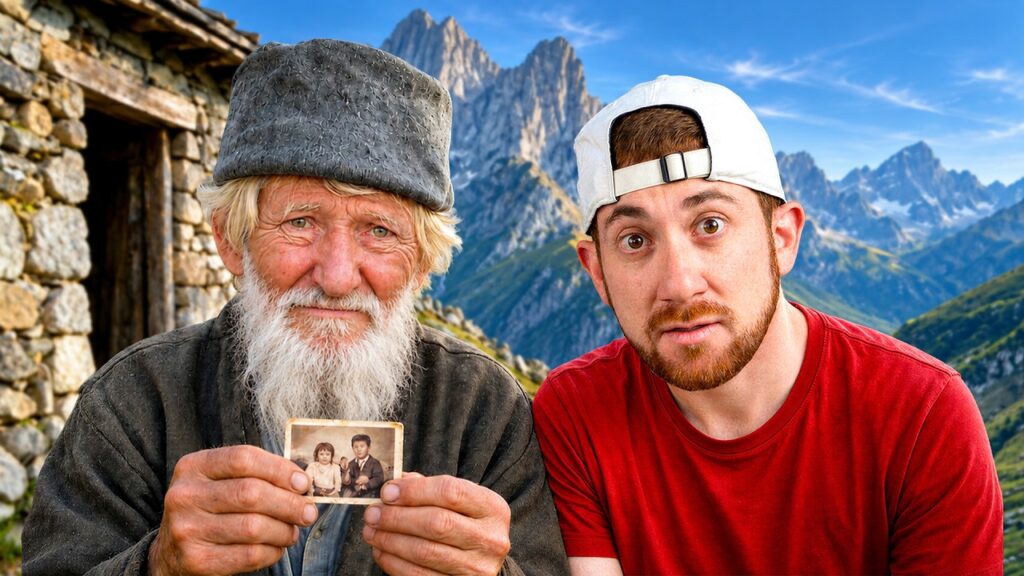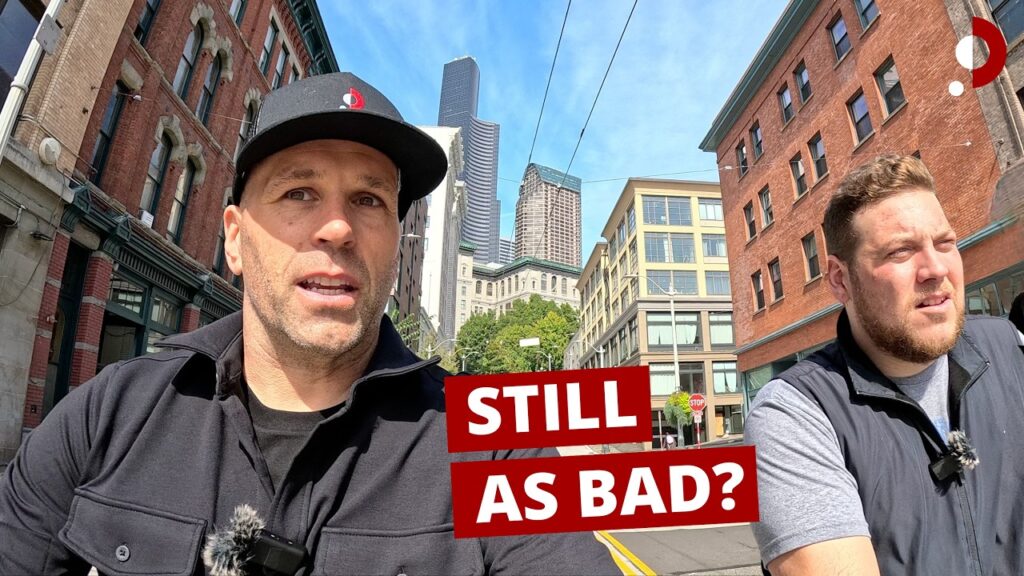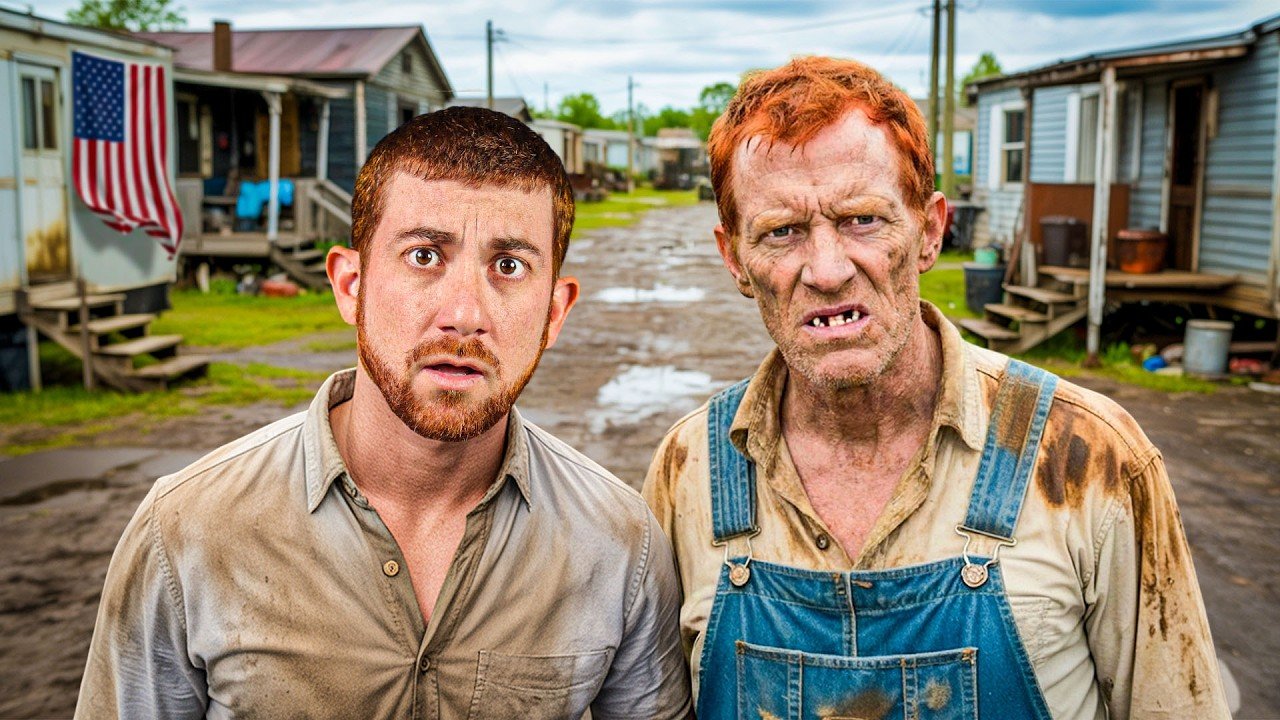
The single stoplight in Whitley City came into view as Drew Binsky rolled through McCreary County, Kentucky, in a rental car bearing Texas plates. That license plate detail mattered. In a county where outsiders are rare enough to draw hard stares, the wrong plate can make a person feel, as Binsky put it, guilty until proven innocent. He had no script, no contacts, and no certain idea of who or what was waiting around each bend on Highway 421.
McCreary County is consistently ranked among the poorest counties in the United States in terms of median income. According to Binsky’s reporting from the region, the poverty rate exceeds 40 percent. The county has no hospital and no local newspaper, though mom-and-pop stores dot the roadside in steady succession. What struck Binsky first was not despair but silence. Storefronts, brick buildings, and empty lots told the story of a place that once hummed with coal-industry money and now carries the weight of its absence.
Where Colonel Sanders first cooked and a flute player waited for his SSI check
Kentucky’s backstory runs deep. First settled on Cherokee land, the state was later built on coal, bourbon, bluegrass music, and fried chicken. That last item brought Binsky to Corbin, where Colonel Sanders began cooking his now-famous recipe in the 1930s. A figure of Sanders is visible through the window of his actual former house, preserved there as a kind of living display. Travelers once detoured specifically to taste his chicken, and according to Binsky, Sanders was at one point selling gas on the side of the road at the same location.
Outside the original KFC site, a man named Robert was playing a flute, angling for tips. He explained that his SSI check was not due until the first of the month. He had lived around Corbin long enough to know the local lore, including the fact that Sanders had once shot a man. ‘He was cantankerous,’ Robert said. ‘He was a pistol.’ The two talked about KFC restaurants appearing in countries all over the world, and Robert noted that some local families had members who once worked directly for Sanders. Binsky left Robert a tip and went inside to try the chicken, which he described as crispy, juicy, and better than any fast food he had ever tasted.
A ride into the holler, a house fire survivor, and Jeff who can teleport
Back on the road toward Pineville, Binsky spotted two men walking on the shoulder. He pulled over. Brian and his companion were heading home, about half a mile or a mile down the road. Brian accepted the offer of a ride and was candid about the region’s social codes: some people, he said, would bring a gun to your face before they would give you the time of day. ‘We are really good-hearted people,’ Brian said. ‘We just have it hard.’
The destination was a holler, a narrow valley road cutting back between hills where Mamaw owned the land from the blacktop all the way up. Brian’s partner mentioned that she was a recovery addict, had been locked up for three years on drug possession charges, and had been out for one year. She spoke plainly about methamphetamine’s grip on the area, describing it as the top-rated substance problem in the state. ‘It’s took everyone I know,’ she said. The county’s unemployment rate, she confirmed, sat around 40 percent.
Binsky continued north to Harlan, the old heart of Appalachian coal country. The brick buildings and railroad tracks cutting through town still carry the architecture of a booming era, but most of those buildings have been empty for decades. A man named Roy, 63 years old and living on roughly $900 to $1,000 a month in SSI and social security payments, agreed to walk Binsky around town for 20 dollars. Roy paid $400 a month for his house and acknowledged that the math did not work. He said only drinking made him happy. Nothing else came close in his telling.
In a Harlan bar, Binsky met a man who survived the house fire that killed his wife and their four-year-old twins, Alex and Olivia, on April 22, 2019, the morning after Easter. His oldest son Ozzie, who was at school that Monday morning, survived but was not yet 17 when he had to let his mother go two days after the fire. The man who survived had endured more than 100 surgeries, including multiple skin grafts. Doctors expected him to remain hospitalized for two and a half years. He walked out in just under three months. He described doing the floss dance with nurses on his way out. ‘You can let things that come at you in life either mold you to be good or you can let them mold you to be bad,’ he said. He added that he wished his wife could experience the man he had become.
Later, a young man named Andrew Jones gave Binsky a tour of the back hollers in his red pickup truck. Andrew, whose grandparents raised him after his parents were arrested for methamphetamine trafficking and production when he was around four years old, navigated the narrow roads between Sand Gap and McKee with easy familiarity. He pointed out his grandmother’s childhood home as they passed. He had stayed clean his entire life, he said, primarily through work. ‘If you didn’t work, you would just fall into the drug trap of everybody else,’ he explained.
Along the way, Andrew introduced Binsky to Jeff, a local man who wanders the roads between Sand Gap and McKee without a phone, pays for Mountain Dew and candy bars with hundred-dollar bills when the mood strikes, and is known to every person in the area. Andrew believed Jeff had some kind of mental disorder, possibly tied to abuse he experienced at home growing up. Despite that history, Jeff greeted Binsky with open warmth. ‘Everything makes me happy,’ Jeff said when asked. He told Binsky to come back and see him.
The tour ended at a mom-and-pop diner that had been operating since the 1950s, on the same road that was dirt when it first opened. Binsky ordered a cheeseburger for around three dollars and a peanut butter milkshake that Andrew had been recommending since they left the holler. The burger was, by Binsky’s reckoning, a serious homemade effort for the price. The milkshake was too thick to suck through a straw. He ended up eating it with a spoon and rated it a ten out of ten.
A man who walks everywhere and pays with hundreds
Jeff was somewhere between Sand Gap and McKee, heading toward a destination nobody could predict, carrying no phone and apparently no fixed route. Andrew said Jeff would always get a ride when he needed one, and that everyone in the county knew his face. A man Binsky knew had once watched Jeff ask for five dollars for a Mountain Dew and a candy bar at the Whistle Stop, then walk to the counter and pay with a hundred-dollar bill.
By the time Binsky canceled his original Lexington flight and extended his stay by one day, the Texas-plated rental car had wound through enough hollers to leave a clear impression. The stoplight in Whitley City was still the only one in the county, and the people who had been willing to talk, Robert with his flute, Brian in the holler, the fire survivor in the Harlan bar, Andrew Jones and his grandmother’s old house, and Jeff moving between two towns without a phone, had each offered something the main road could not. Binsky drove on.
Source: Watch original
This article was reported in June 2026.
OHN Editorial Note: This article is based on publicly available sources. If you spot an error or have updated information, contact us at editorial@onlyhappynews.com. We correct mistakes promptly.