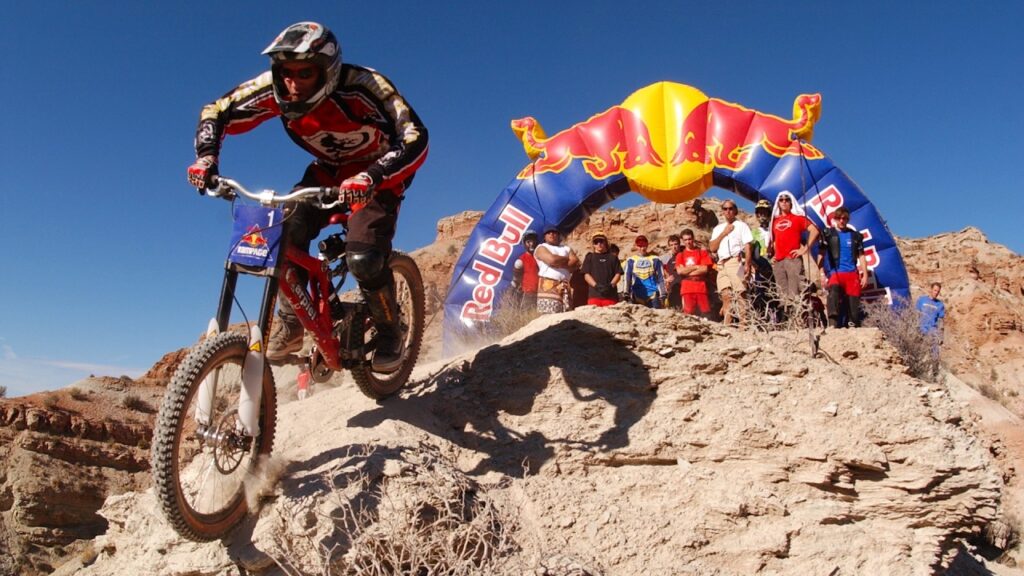
Somewhere on the cracked alkali flats of the Black Rock Desert in 2011, Teddy Saunders stood inside one of the most chaotic, wonder-saturated events on earth and found the perfect companion for it: a children’s book. The pairing sounds unlikely until it doesn’t, because Dr. Seuss wrote ‘Oh, the Places You’ll Go’ as a map for exactly this kind of terrain, wide open, unmarked, and full of boom bands. What Saunders recognized, and what makes this particular reading feel so precisely placed, is that Burning Man is the Seussian journey made literal dust and fire.
Where the streets are not marked
The book opens with pure momentum. ‘You’re off to Great Places! You’re off and away!’ And at Burning Man, that is exactly where you are, off the grid, off the map, off any street that anyone bothered to name for you. Saunders lets the text breathe against the desert context, and the result is that lines like ‘You’ll look up and down streets, look ’em over with care’ land differently when the streets in question are temporary, chalked into the playa for one week and then gone. The instruction to steer yourself any direction you choose is not metaphorical here. It is the actual operational reality.
The book’s middle section, the Waiting Place, hits with particular weight. Seuss lists everyone just waiting: waiting for a train, for a better break, for the snow to snow. Burning Man was designed, structurally and philosophically, as a refusal of exactly that stasis. The line ‘No! That’s not for you!’ reads less like encouragement and more like a direct address to everyone who made the drive out to Nevada and chose not to wait anymore.
The bang-ups and hang-ups are part of it
Seuss does not pretend the journey is clean, and Saunders does not pretend Burning Man is either. The prickle-ly perch, the Lurch, the Slump, the long wiggled roads at a break-necking pace: these map cleanly onto the real friction of the event, the dust storms, the disorientation, the 3 a.m. walk back to a camp you can barely locate. Seuss calls it 98 and 3/4 percent guaranteed that you will succeed, which is an honest number. It leaves room for the quarter percent that goes sideways.
The reading lands on the closing lines with the full stack of Seussian names: ‘be your name Buxbaum or Bixby or Bray or Mordecai Ali Van Allen O’Shea.’ At Burning Man, where most people are going by a playa name they invented themselves, the roll call of improbable identities feels less like whimsy and more like a census.
A chicken, clucking, somewhere on the playa
At one point in the reading, tucked inside the passage about getting mixed up with many strange birds, there is a single parenthetical stage direction: ‘(Chicken)’ followed by a clucking sound. It sits there in the text, unelaborated, doing exactly what it needs to do.
Saunders closes the reading the same way Seuss closes the book, not with a summary, but with a direction. ‘Your mountain is waiting. So get on your way.’ At Burning Man in 2011, surrounded by temporary mountains built from wood and intention, that was not a metaphor. It was a schedule.
Dr. Seuss ‘Oh, the Places You’ll Go!’ in This Animated Read-Along for Kids