At 6:30 every morning, before most of Baltimore has had its coffee, the team at the National Aquarium’s Dolphin Discovery exhibit is already elbow-deep in fish. Two hours, 200 pounds, sorted and weighed before the first training session begins. For anyone who has ever wondered what it actually takes to care for seven bottlenose dolphins, the answer starts long before the doors open to the public.
A morning built on trust and a lot of fish
Sam, the young journalist behind the What Sam Sees project, got a rare look behind the scenes alongside trainer Susie Walker and her team. The day is structured around food in a way that goes well beyond nutrition. The dolphins are fed every hour and a half, seven to ten times a day, and each feeding is woven into a system of positive reinforcement. Food is not just fuel; it is the currency of the entire learning relationship between trainer and animal.
Susie Walker walked Sam through the basics of what her job actually involves. ‘I help take care of our animals,’ she said, ‘and another part of it is teaching them behaviors that help us monitor their physical health’ – including collecting blood samples voluntarily, without restraint, because the dolphins have been trained to cooperate.
Six of the seven dolphins were born at Dolphin Discovery. The seventh was born at another aquarium and was given a new home when she needed one. The eldest of the group, a dolphin named Chesapeake, is 25 years old and holds a distinction none of the others can claim: she is the only dolphin at the exhibit who will deliver a raspberry on cue.
Sleeping with one eye open and seeing through sound
The deeper the conversation went, the more the dolphins revealed themselves as genuinely strange and sophisticated animals. They sleep with one eye closed and one eye open, resting only half of their brain at a time, keeping just enough awareness to navigate and breathe. In the open ocean, going fully unconscious is simply not an option.
Echolocation, the system they use to navigate murky or dark water, works by sending clicking sounds forward into the water and then listening to the echo that bounces back. In effect, they are building a picture of the world in front of them entirely through sound.
Socially, bottlenose dolphins typically move in pods of a few individuals up to around 20. Spinner dolphins, by contrast, can gather in groups of 100 to 200 at a time. Within those pods, dolphins communicate through whistles and clicks, rub their flippers along each other’s bodies to bond, and look out for each other when resting.
Mimicry is at the core of how training works. Walker demonstrated by spinning in a slow circle in front of one of the dolphins, which followed the motion almost immediately. ‘They’re like, oh hey, I can do that too,’ she said, ‘and that’s a great way for us to build a relationship and build trust.’
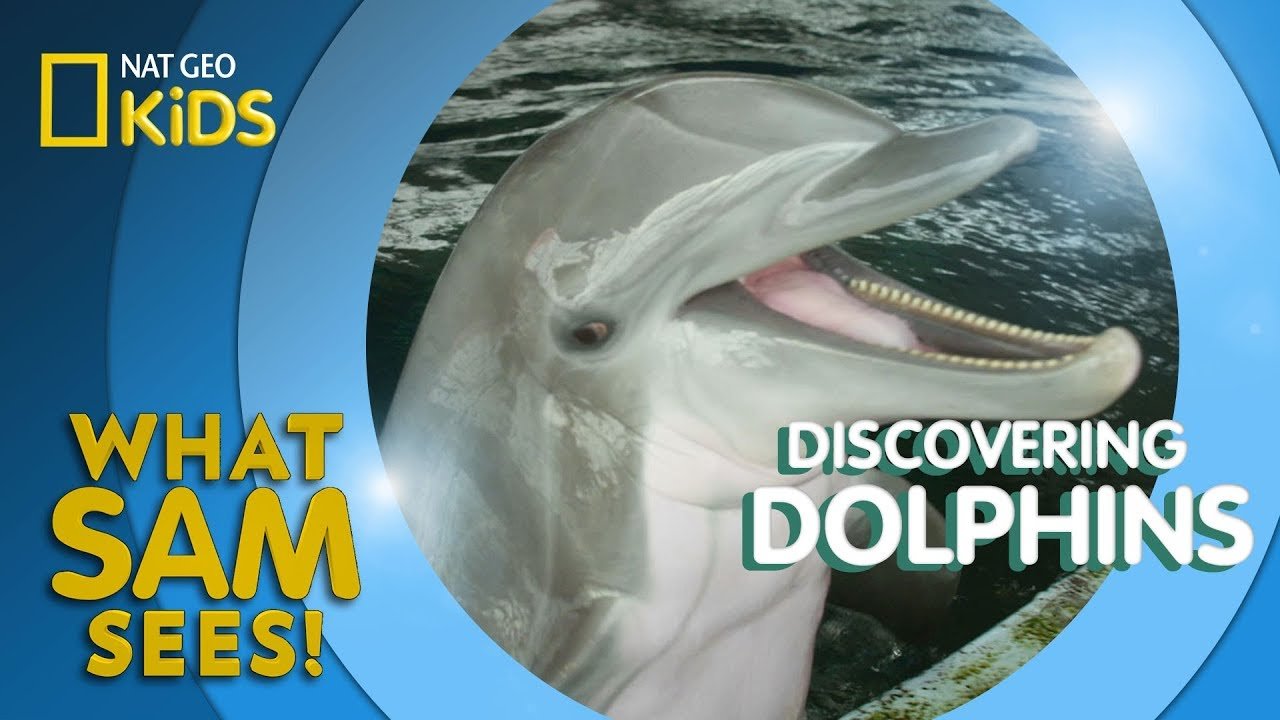
Chesapeake, age 25, waiting by the ledge
Chesapeake surfaces near the edge of the pool, teeth interlocked like a zipper around nothing in particular, her blowhole sealed shut below the waterline.
The National Aquarium has announced plans to relocate its entire dolphin colony to a new seaside sanctuary, a more naturalistic ocean-type habitat designed to give the animals a different kind of home. The seven dolphins who have spent their lives here – six of them born in this very space – will eventually trade these familiar walls for open salt water. What that transition looks like for a 25-year-old dolphin who has perfected the raspberry is not yet known.