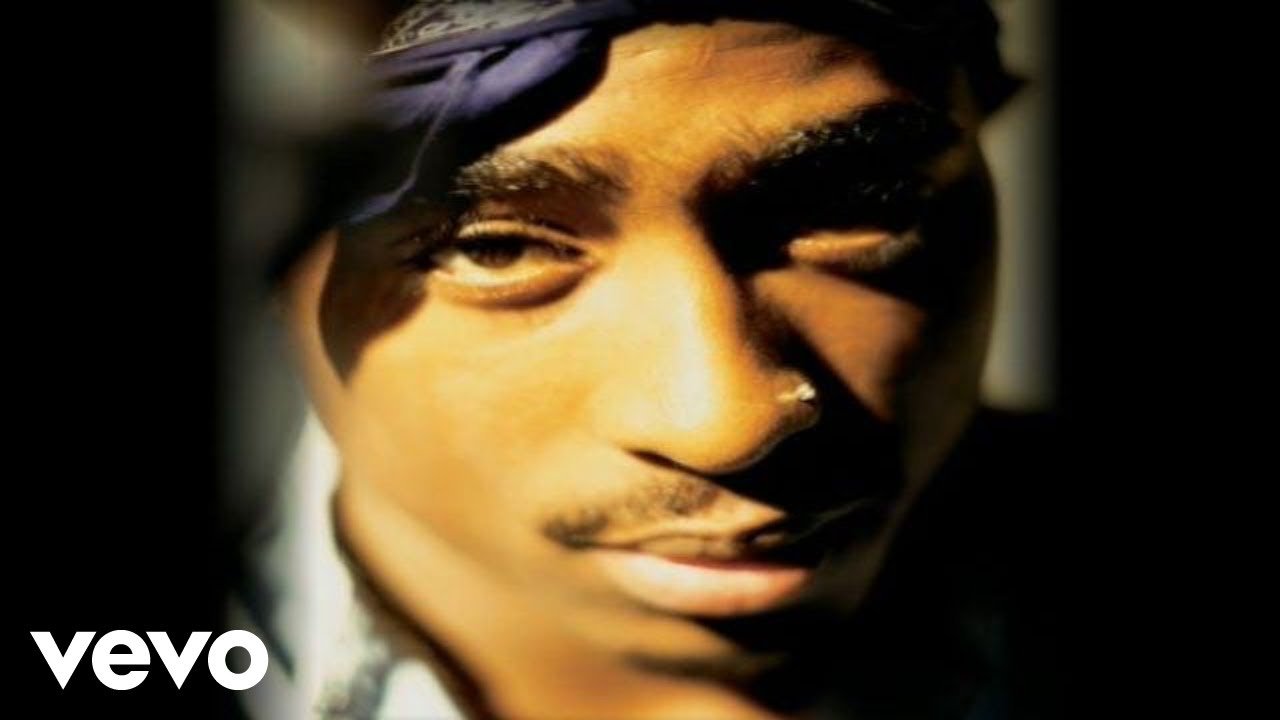
The track opens on radio chatter, helicopter noise, and sirens before a woman sobs, and then two voices arrive that have no business sounding this right together. Tupac Shakur and Elton John, sharing a hymn about broken streets and stubborn hope, built something that outlasted both the gold records and the grief. For anyone who grew up in a neighborhood where the sounds in that intro were not sound design but Tuesday morning, ‘Ghetto Gospel’ is not a song so much as a reckoning. The collaboration was assembled after Tupac’s death, pairing his recorded verses with Elton’s vocal, and the seam between them is invisible.
What two voices from opposite worlds actually said
Elton’s half of the hymn is liturgical and deliberate: a welcome extended with open hands, a red sun sinking into hills of gold, and a wish for peace to a young warrior without the sound of guns. Tupac’s half is street-level and urgent, moving through a gallery of people he sees and refuses to look away from. An old lady living out of bags, glad for the little she has. A woman on crack, about to give birth. Young men tested by stress they did not choose and did not deserve. He does not sentimentalize any of them. He observes, and the observation itself is the act of care.
The lyric that lands hardest is the one where he turns the blame around: ‘We left ’em a world that’s cursed, and it hurts.’ The shame, in his telling, belongs to the generation that handed the mess down, not the kids inheriting it. That is a harder argument than most peace anthems are willing to make.
The part where he refuses the clean version of himself
Tupac builds toward a question that most artists would cut in the final edit. He asks whether his own spirituality is diminished because he smokes and drinks with his friends, and he does not resolve it neatly. He keeps both things: the sense of God’s hand on his brain when he writes, and the beer with his homies, and he refuses to surrender either as the price of being taken seriously. ‘God isn’t finished with me yet’ is not a claim to sainthood. It is a claim to being in process, which is a more honest and more durable kind of faith.
He put it plainly in the final verse: ‘Before we find world peace, we gotta find peace and end the war in the streets.’ The sequence matters to him. The macro follows the micro, and the streets come before the summit.
A young man who asked if God could hear him
The last image Tupac leaves is not a resolution. He is mid-sentence, still asking: ‘Lord can you hear me speak, to pay the price of being hell bound.’ The question hangs there, unanswered, the way it does for a lot of people in a lot of neighborhoods at the moment the sirens start.
The track began with a woman sobbing over radio static and a helicopter overhead. It ends with a man still praying. The distance between those two moments is the whole song, and the whole song is still playing.