In a small town just west of Montreal, the local council voted unanimously to give trees the legal right to live, grow, and regenerate. Terrasses-Vaudreuil, population roughly 2,000, did not make international headlines when it passed that resolution, but it quietly became the first municipality in Canada to recognize trees as living beings under the law. That is the kind of shift that tends to arrive quietly before it changes everything, and July 2025 was full of moments exactly like it.
The clean energy corridor that took 18 years to build
The biggest renewable energy project in American history is now fully operational. SunZia combines a sprawling wind farm in New Mexico with a transmission line stretching across the Southwest, and together they can generate more electricity than the Hoover Dam, the Colorado River structure that was once the country’s largest source of clean power. The electricity flows from some of the windiest terrain in the United States to rising-demand markets including Arizona, California, and the broader Western Grid, capable of powering around 1 million American homes. It took more than 18 years from proposal to switch-on, but SunZia is now the clearest demonstration yet of what happens when wind generation, transmission infrastructure, and local investment are built as a single system.
Over in China, engineers took that logic into the sky. The S2000 Stratosphere is a helium-filled airship roughly 60 metres long with 12 turbines built directly into its frame. It floats 2 kilometres above the ground, where winds are stronger and steadier than at surface level, and it transmits the electricity it generates back down to earth through a tether cable that also keeps it stable. In its first test in Sichuan province, it produced enough power to run an average home for nearly two weeks. It is early, but the technology hints at generation in places where conventional wind farms are not practical, remote regions, dense urban areas, disaster zones.
Back in the UK, a quieter milestone arrived in the sales data. For the first time ever, more new electric cars were sold over a 12-month period than petrol ones. Between June of the previous year and May 2025, drivers bought around 516,000 new electric vehicles against 504,000 petrol cars, according to Carbon Brief analysis. Globally, electric cars now account for roughly one in every four new cars sold.
The lawyer who took period taxes to court in Pakistan
Mahnoor Omar was 25 years old when she decided that taxing period products as non-essential goods was discriminatory and worth fighting in court. Working alongside fellow lawyer Asma Jahangir Khan, and backed by groups including My Body Justice and thousands of petition signatories, she argued the case before Pakistan’s government. UNICEF had estimated that the tax burden on pads could reach around 40 percent, making a single pack cost as much as a family meal. The government agreed to scrap the 18 percent sales tax on period products and, for the first time, formally declared them essential to women’s health and dignity. An import customs charge remains, but the principle is now on record.
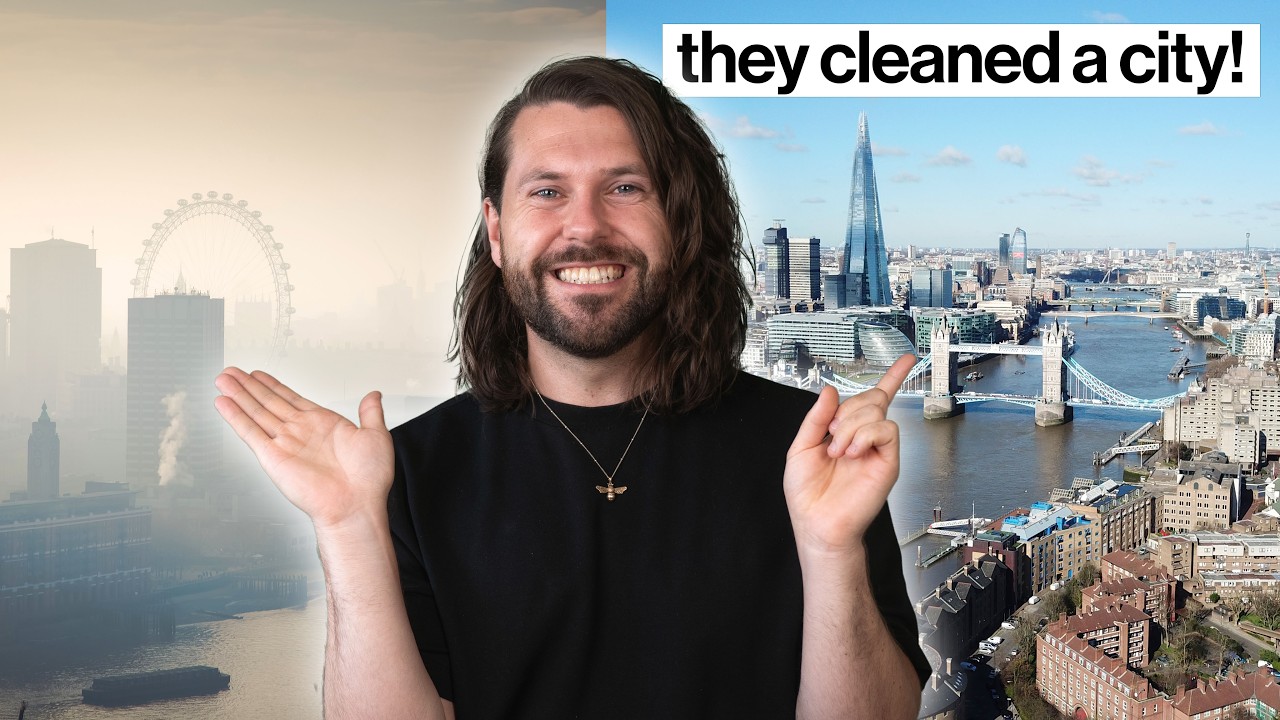
Elsewhere, July brought news that London’s toxic air deaths have fallen by 40 percent since the city introduced its ultra-low emission zone in 2019. Authorities had once been told it could take 200 years to bring pollution within legal limits. It took nine. Sam Bentley‘s producer Anna reported from a Breathe Cities gathering in the capital, where Nicola Pastori, co-founder of Solve the School Run, described what happened when traffic was restricted outside one London school: ‘children can see families on the other side of the road and they like wave to their friends and they’ll race next to each other, one on one side of the street, one on the other. And before you couldn’t even see them and you couldn’t hear them because there was so much traffic.’ Breathe Cities is now operating across 16 cities on five continents and has cut toxic air pollution by as much as 45 percent over 15 years.
In Australia, the numbat, a small striped marsupial and Western Australia‘s official state animal, was reclassified by the IUCN from endangered to near threatened after its population recovered from around 300 individuals in the late 1970s to between 2,000 and 3,000 today, with at least five new wild populations established. At Lake Tuz in Turkey, around 5,000 flamingo chicks hatched, more than the previous two years combined, just five years after the salt lake nearly dried out entirely.
And in France, a company called Pivert Funeraire has begun making coffins from sunflower waste, rapeseed, and sawdust, materials that burn more cleanly than the varnishes and metals in conventional coffins. The plain, natural surface of each one is designed to be decorated by friends and family during the ceremony with messages, drawings, and flowers. Around 600,000 coffins are used in France every year.
The duck huts shaped like pine cones
Four floating wooden huts now sit on a pond at a farm in Yilan, Taiwan, each one clad in shingles arranged in the shape of a pine cone. They have small round windows and interior lights for cold nights. Artist Cheng Tsung-Feng designed them after the farm floated a single prototype and filmed how the ducks actually used it, adjusting the shape until the birds showed a preference.
Terrasses-Vaudreuil will now review its bylaws to ensure any tree that is cut down is properly replaced. For a town of 2,000 people, it is a modest administrative update. For the global movement to give nature legal recognition, it is one more town that has crossed a line it cannot uncross.