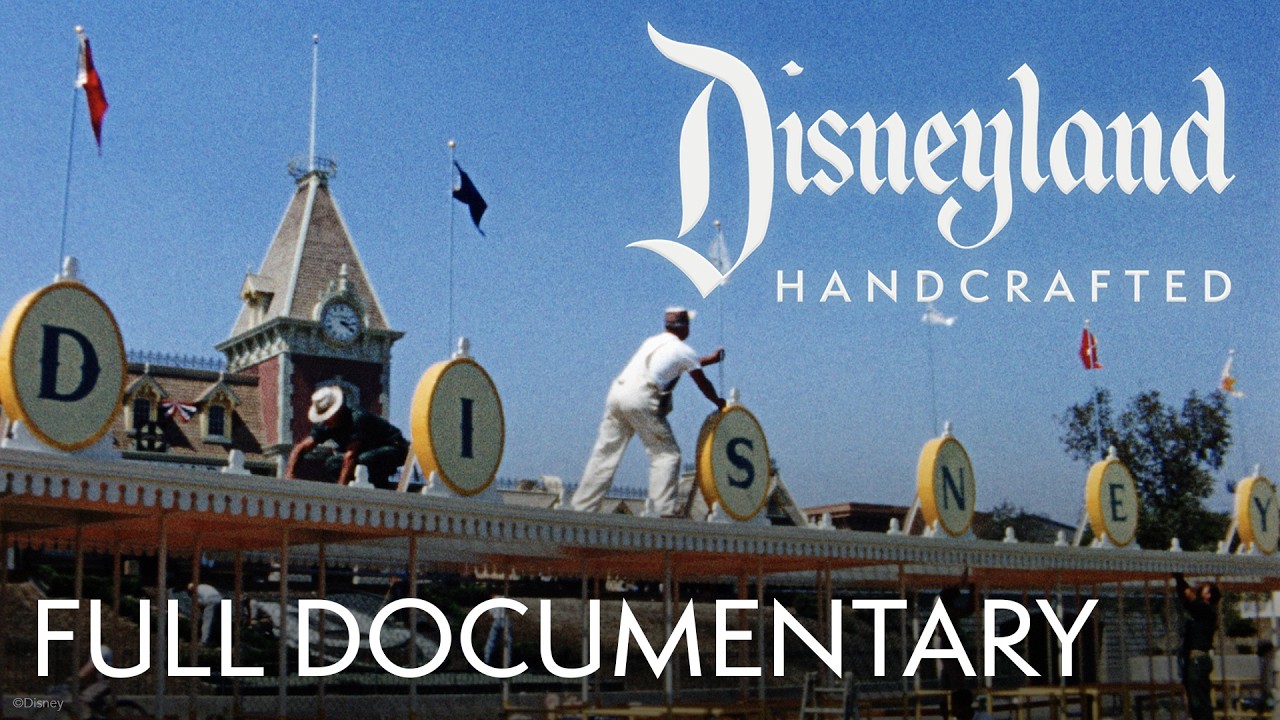
On a sweltering July afternoon in 1955, Walt Disney stepped off a miniature railroad train at five-eighths scale and into the center of the most improbable opening day in American entertainment history. The crowd that surged through the gates of Anaheim’s newest 160-acre attraction was nearly twice what anyone had planned for. Food ran out. Women in heels sank into asphalt that had not fully dried. And somewhere beneath Sleeping Beauty Castle, small blue flames had been licking the ground from a gas leak only hours before. None of it mattered. What mattered was that a man who had borrowed against his life insurance, mortgaged his house, and watched his budget balloon from four and a half million dollars to something that kept everyone guessing had actually built the thing.
The seed was modest and personal. Walt had spent his Saturdays and Sundays taking his daughters to zoos and kiddie parks while their mother stayed home. He called those years some of the happiest of his life. But the parks themselves bothered him. What he wanted, his daughter Diane recalled, had been growing in his mind since she was five years old, expanding from a small attraction on the studio lot into something she described only as ‘quite grand.’ When he finally announced it, the reaction inside Hollywood was nearly unanimous skepticism. Marty Sklar captured the mood plainly, noting that most people in Hollywood expected a spectacular failure, and then added that Roy Disney himself admitted he had thought the same thing.
Building something nobody had blueprints for
The construction that began on 240 acres near Anaheim, California in 1954 was unlike any building project anyone on the team had managed before. Joe Fowler, overseeing finances, watched the budget climb from four and a half million to seven million to eleven million before settling into what he called ‘anybody’s guess.’ Milt Albright recalled construction nearly halting at seventeen million dollars. Walt had put everything in. There were no project managers, no Xerox machine, almost no finalized plans. Joe Fowler later estimated they broke ground with perhaps ten percent of the drawings they needed, developing the rest as they went.
The physical problems were relentless. Workers dug out the Rivers of America, filled the channel with water overnight, and returned the next morning to find it completely dry. Sandy soil had absorbed every drop. The eventual fix involved a clay-like waterproofing material that Dick Irvine described as barely adequate. A plumbing strike in the final days forced a choice between drinking fountains and restrooms. Walt’s call, delivered without hesitation, was direct: ‘People can drink Coke and Pepsi, but they can’t pee in the street.’
Landscape architect Bill Evans planted the entire berm by what he called ‘the seat of my pants,’ no dimensions, just a quick sketch of where trees and boulders should go. Walt wanted mature trees immediately, refusing to wait five years for saplings to fill out. With the budget already shredded, Evans had to improvise constantly. When plants died in the final push, gardeners were seen spraying shrubs and grass with green paint to make them presentable for opening day.
The man who kept coming down on Sunday mornings
Harper Goff, who conceived the Jungle Cruise waterfall, remembered a quiet moment that cut deeper than any budget meeting. Walt had walked the site one Sunday, looked around at the enormous foundations and the piles of dirt, and told Goff that they had spent just over half the money and there was not one thing on the property that any human being would pay fifteen cents to come and see. ‘I’m scared,’ Walt said. Then he sat in silence for a long time.
What kept the team moving was something harder to quantify than a deadline. John Hench described it as a mutual stimulation that could tip into the ridiculous but usually produced things no single person would have arrived at alone. Walt, he said, was a master at provoking exactly that atmosphere. Designer Marvin Davis remembered Walt’s single standing directive to everyone who worked on the park: ‘I want them, when they leave, to have a smile on their face. Make it pretty, but make it so that the people come out smiling.’
The Mark Twain, a 105-foot sternwheeler, had been built inside a studio stage 50 miles from water and designed in sections specifically so it could be trucked to the site and assembled on the river. The Peter Pan ride introduced something its builders believed had never existed in any amusement park: an overhead suspended ride where cars swung from rails above the track. Roger Broggie, who had originally learned steam engineering by building a miniature backyard railroad for Walt at home, simply scaled up the same drawings to build the full-gauge locomotives for the park.
The July 17th morning nobody forgot
The opening telecast on July 17, 1955 used 85,000 feet of cable and thirteen hydraulic forklifts converted into camera platforms. Rehearsals had been nearly impossible because construction crews were still laying asphalt through the broadcast setup hours before airtime. Tomorrowland, as Dick Irvine recalled, received what he called a ‘quick and dirty dressing job’ in the final hours because it simply was not finished.
Roy Disney, Walt’s brother and the financial architect of the entire venture, described wandering through the opening day crowd as ‘one of the sweaty people trying to find our way through.’ Actress Irene Dunne christened the Mark Twain with a bottle at dockside. Art Linkletter, standing on the railroad tracks at the entrance, told the television audience that anyone present that day would say what people had said at the opening of the Eiffel Tower: ‘I was there.’
Walt read the dedication himself, standing in the center of Main Street. ‘To all who come to this happy place, welcome. Disneyland is your land.’
The train that ran for the first time on July 10th
Roger Broggie noted that the first time the park’s railroad was allowed to run a full circuit of the property was July 10, 1955, seven days before opening, at a private party. The Mark Twain made its maiden river run the same afternoon.
On the actual opening day, the Casey Jr. Circus Train had to be pulled from service after a test run revealed no safety rail around part of the track. Broggie ran the locomotive once around for the telecast and then shut it down.
That locomotive, still at the park, was built from drawings originally made for a train that ran around a private backyard in the hills above Los Angeles.
The park it helped open has never been finished, exactly as Walt said he intended.