Three weeks ago, Anthropic pulled its most capable AI model off the market after the US government flagged it as too powerful for unrestricted global access. Then, on July 1st, the export controls that forced that decision were lifted, and Fable 5 came back online, free to use, but only until July 7th (This has Passed Now), and only up to 50% of a user’s weekly usage limits. For anyone trying to squeeze real productivity out of the current wave of AI tools, that narrow window matters enormously.
Three models, one practical question
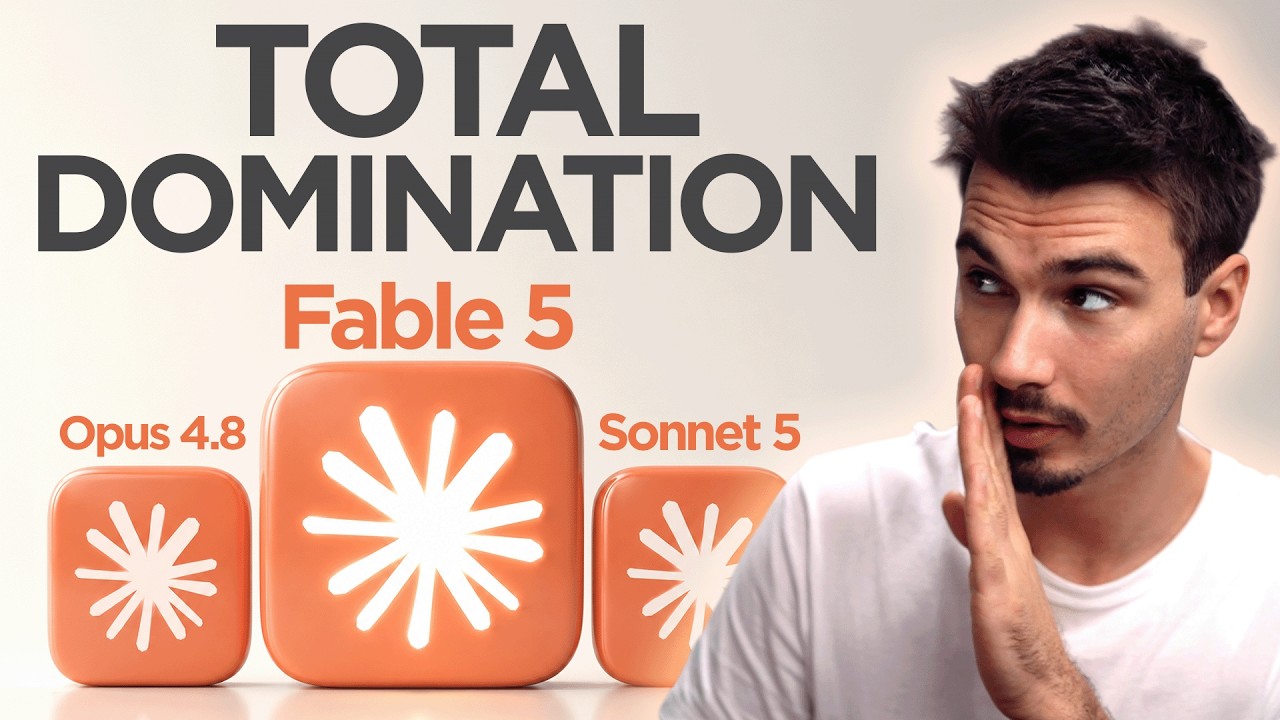
The release of Fable 5 alongside the new Sonnet 5 left many people confused about which model to actually reach for. Igor, who runs The AI Advantage, cuts through the noise with a framing that is more useful than benchmark scores: not which model is smartest, but which model fits which task.
Fable 5 is the most resource-hungry of the three. It consumes roughly 70% more tokens than Opus 4.8, which itself was considered the top model just days before Fable returned. Because of that appetite, Anthropic caps Fable 5 usage at 50% of a user’s weekly limit, and added tighter cybersecurity safeguards that will bounce flagged prompts back to Opus 4.8 automatically. Sonnet 5, meanwhile, arrived as the new default for free and Pro users. It closed a significant chunk of the gap that once separated it from Opus 4.8, and in many everyday tasks the difference is barely noticeable. Depending on usage patterns, Sonnet 5 can stretch credits roughly four times further than Fable in a single day.
Igor’s verdict is direct: ‘Use Fable 5 for the most valuable and the messiest work. Use Sonnet 5 for everyday work.’
Turning chaos into a working plan
The use case Igor walks through in detail is one he calls building an AI operating system for a business or personal life, essentially a structured hub where different workflows, prompts, and automation loops live together. The idea sounds abstract until Fable 5 renders it concrete.
The prompt he demonstrates has three blocks: context on the user and their situation, a concrete task (building a 30-day AI productivity plan), and a tightly defined output structure that asks for the five highest-value workflows to automate, the exact first workflow to build that week, what inputs each workflow needs, what outputs it should produce, a human review step, the likely time saved each week, a simple tech stack a non-technical owner can manage, and the first ready-to-paste prompt to get started.
Running the identical prompt through Sonnet 5 and Fable 5 side by side revealed the difference. Both surfaced similar workflow categories. But Fable 5’s recommendation for what to build first went further: it identified a call-to-action converter that turns Zoom transcripts into same-day recaps with next steps, flagged that the raw input already exists because Zoom generates transcripts automatically, noted that the output quality is instantly verifiable because the user was on the call, and produced a ready-to-paste prompt to start immediately. Sonnet 5’s first-workflow suggestion was also reasonable, but it required the user to manually gather and paste in common questions before anything could run. The gap is subtle but decisive: one produces a working first version in minutes, the other requires preparation before it can begin.
Igor’s bonus tip: add a link to the support documentation for any tool the workflow will touch, such as the Claude Co-work help center. Fable 5 knows a great deal, but grounding it in accurate, current product documentation prevents it from planning around capabilities a tool does not actually have.
The moment it picks a starting point
Of all the outputs from the Fable 5 demo, one detail stands out: when asked to sequence a 30-day plan, the model did not just list options and leave the choice to the user. It named one workflow, explained exactly why that workflow required zero preparation, and handed over a prompt ready to paste. That specificity, the difference between a plan and a first action, is what Igor points to as the meaningful edge of a flagship-class model over a capable but more generic one.
The free window for Fable 5 closes July 7th, after which usage shifts to token-based billing and every prompt carries a direct cost. For anyone building workflows, planning tools, or trying to organize a backlog of messy documents, the window is short but the starting point is already written.