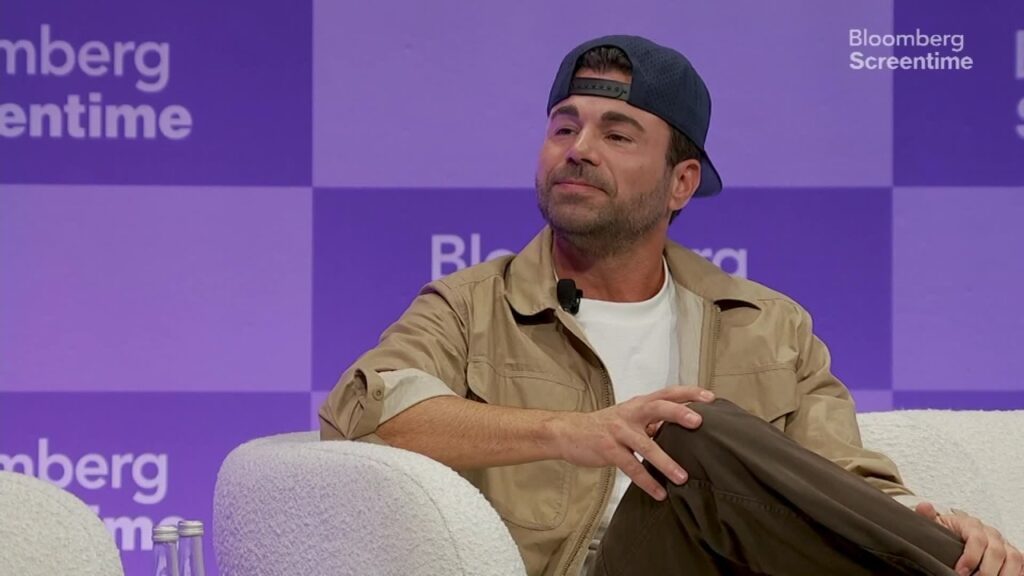
Mark Cuban was 12 years old, standing on a neighbor’s front porch with a box of 100 garbage bags he had bought for three dollars, asking one of the easiest questions in sales history: ‘Hi. My name is Mark. Do you use garbage bags?’ Almost nobody said no. The simplicity of that moment contains more practical business instruction than most MBA curricula, and Cuban has spent decades unpacking why. For anyone trying to start something from scratch, that childhood route through the neighborhood is a cleaner map than any formal business plan.
The whole thing began at his father’s poker night. Cuban would sneak in, steal a donut, and talk to whoever was around. When he asked his father for a new pair of basketball shoes, his father shut him down without hesitation: ‘As long as those shoes on your feet work, no. But when you get a job, you can buy whatever you want.’ One of his father’s friends at the table spoke up and offered a different path. He had boxes of garbage bags that needed moving and suggested Cuban go sell them around the neighborhood.
The math a 12-year-old already understood
Cuban bought each box of 100 garbage bags for three dollars and sold them for six. Before he knocked on a single door, he already had the two numbers that actually determine whether a business is real: cost and margin. His pitch solved a problem customers had without even knowing it bothered them. Nobody wants to carry a heavy carton of bags home from the grocery store. Cuban showed up at the door, solved that friction, and saved his neighbors the trip. He had the world’s first, only, and last garbage bag route, as he put it, and enough money for his basketball shoes.
Why he stopped caring about business plans
Cuban is direct about the formal tools that business culture pushes on founders. He did write a business plan once. He found a template online, filled it all in, and describes the experience as doing him no good. His objection is not to thinking things through but to rigidity. ‘You cannot be dogmatic about anything you have ever written in a business plan,’ he says. A business is a living process that changes constantly, and a competitor is always working to overtake you. Treating a document as a fixed instruction set is, in his view, one of the most dangerous things a founder can do.
The same skepticism applies to the vocabulary that surrounds entrepreneurship. Cuban has little patience for acronyms or buzzwords, KPIs, CAC, and the rest of the alphabet, and argues that the better question is always simpler: what can I do to improve? He frames the real fundamentals as sales, margins, and profits. Everything else, he says, is noise around those three things.
The deeper lesson from the garbage bags was not the margin. It was what selling actually is. Cuban landed on a definition at 12 that he has carried ever since: selling is not convincing. It is putting yourself in the position of the person you are trying to reach, understanding what they actually need, and finding a way to fill that need.
The one sale that started it all
A box of garbage bags and six dollars sitting in a 12-year-old’s pocket after the first successful door knock.
Decades later, the fundamentals Cuban laid out on that first route have not changed: know your costs, know what someone will pay, make sure a profit exists in the gap between those two numbers, and never stop asking what you can do better. The shoes he was saving for were a pair of basketball sneakers. He got them.