
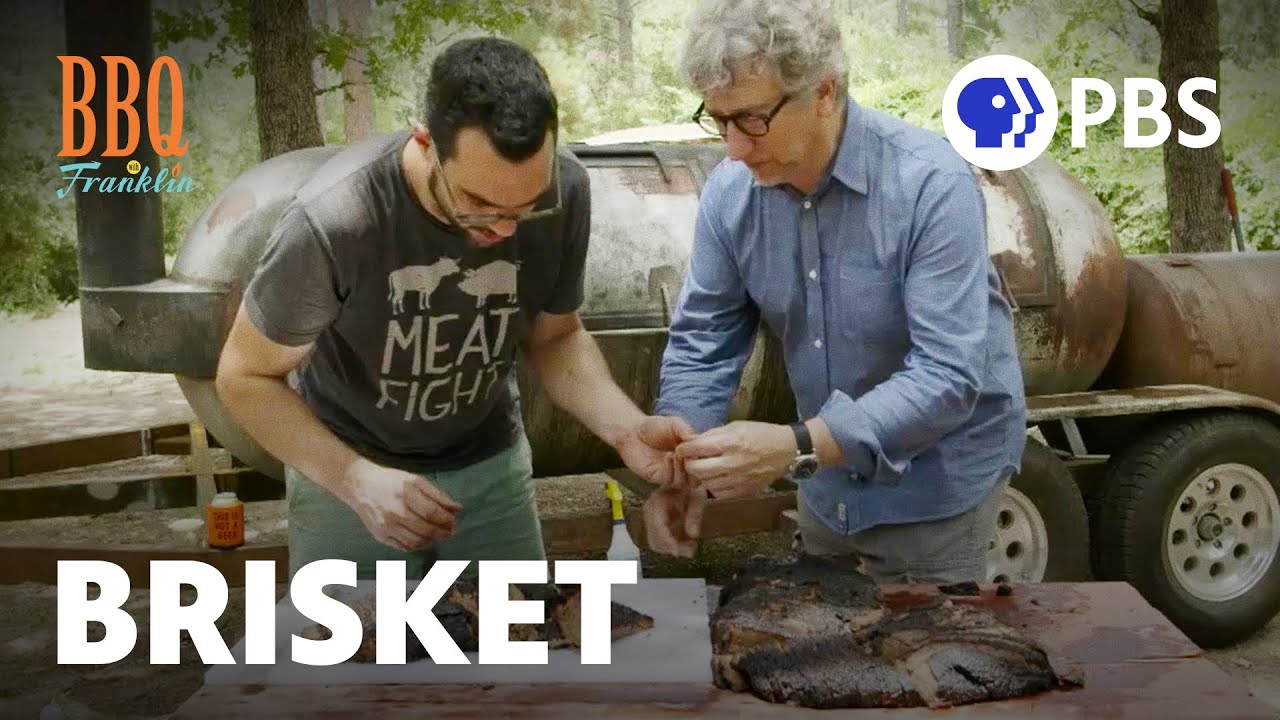
At 6:30 in the morning, Aaron Franklin lifted the lid on a smoker that had been running since the previous afternoon and found three briskets looking, as he put it, ‘super juicy.’ He had stayed up until 1 AM feeding the fire, slept a few hours while a big log held the temperature, and come back to finish what he started the day before. The question driving the whole cook was deceptively simple: foil, butcher paper, or nothing at all? The answer matters to anyone who has ever stood over a cold smoker at midnight wondering whether they were doing it right.
The one variable that changes everything
Franklin laid out his logic early. Brisket cooking involves an almost impossible number of moving parts: the breed of cattle, the fat grade, placement on the cooker, wood size, temperature swings, seasoning coarseness, and the precise moment to pull the meat before it tips from tender into dry. Change too many things at once and you will never know what made a cook good or bad. So for this experiment, three prime-grade briskets went onto the same offset cooker, treated identically in every way except one. After trimming each flat to remove the hard fat that would not render and shaping the meat so smoke could flow evenly around it, Franklin coated them in equal parts salt and coarse black pepper, holding the shaker high above the meat so the seasoning fell in an even layer. The coarse pepper, he noted, acts as a physical texture that attracts and holds smoke, which is exactly what builds a proper bark.
The cooker ran at roughly 275 to 285 degrees, with the brisket points aimed toward the firebox to shield the leaner flat from direct heat. Franklin spent the overnight hours managing the fire in small increments, adding wood when the temperature dipped rather than making dramatic adjustments. He described this as the split cook, a method home cooks can use to avoid losing an entire night’s sleep: run the briskets up to about 165 degrees internal, put a large log on, and sleep for a couple of hours before returning to finish the job.
Three wraps, three completely different briskets
Once a solid bark formed, Franklin pulled the briskets off one by one to wrap. The first went into two overlapping sheets of aluminum foil with a third sheet laid sideways, shiny side facing in so the reflected heat would not fight the cooking process. The second went into butcher paper, pulled tight so it hugged the meat almost as snugly as the foil. The third went back onto the cooker as it was, naked, to finish without any wrapping at all.
His friend John Markus was there for the second half of the cook and for the slicing. When the briskets came off and rested long enough to reabsorb their juices, the differences were immediate and distinct. The foil brisket was the moistest of the three and held its bark better than Franklin expected, though it leaned slightly toward what he called ‘pot roasty.’ The paper brisket sat in the middle: firm enough to hold a clean slice, moist through both the flat and the point, with a bark that was present without being overwhelming. Franklin called it the most accurate result, the one with the most integrity on the bite. The unwrapped brisket was the most aggressively Texan of the three, with a thick, crunchy exterior, a pronounced smoke ring, and a flavor that was notably less beefy and more smoke-forward than the other two. Markus described tasting it as ‘a party treat at a party I want to stay at until they drag me off.’
The paper brisket was the one Franklin kept returning to. ‘This one tasted a lot beefier,’ he said of it. ‘You could tell that the fat really cooked back into it.’
What Kreuz Market learned over 75 years
Earlier in the cook, Franklin drove to Lockhart to sit with Rick Schmidt, whose family has operated Kreuz Market since his father bought it in 1948, nearly five decades after Charlie Kreuz opened the original meat market in 1900. Schmidt explained that brisket was not always the centerpiece. For most of the market’s history, shoulder clod was the dominant cut, partly because it is more forgiving, cooks tender even when pulled slightly early, and does not require the same precision. Brisket, he said, used to go mostly into sausage because it was a tough cut that customers were not requesting. It was only about ten years before this conversation that Kreuz started running out of brisket during service and began increasing the amount they put on each day. ‘People are not afraid of fat, I guess,’ Schmidt said. ‘Fat’s where the flavor is.’
The cooker at 6:30 in the morning
Three briskets sat side by side in the early light, one wrapped tight in foil, one wrapped tight in paper, one with nothing on it at all.
The paper-wrapped brisket came off the cooker with the flat and the point both glistening, a bark that gave cleanly under the knife, and a depth of beef flavor that neither of the other two quite matched. Franklin had not changed the rub, the fire, the cooker, the cattle grade, or the overnight method. He had changed one thing. That turned out to be enough.