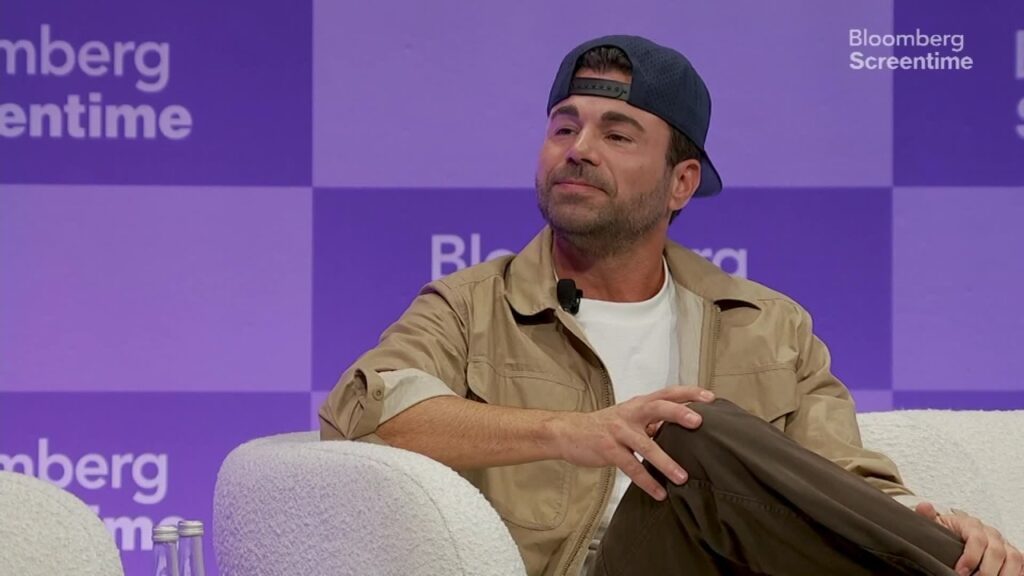
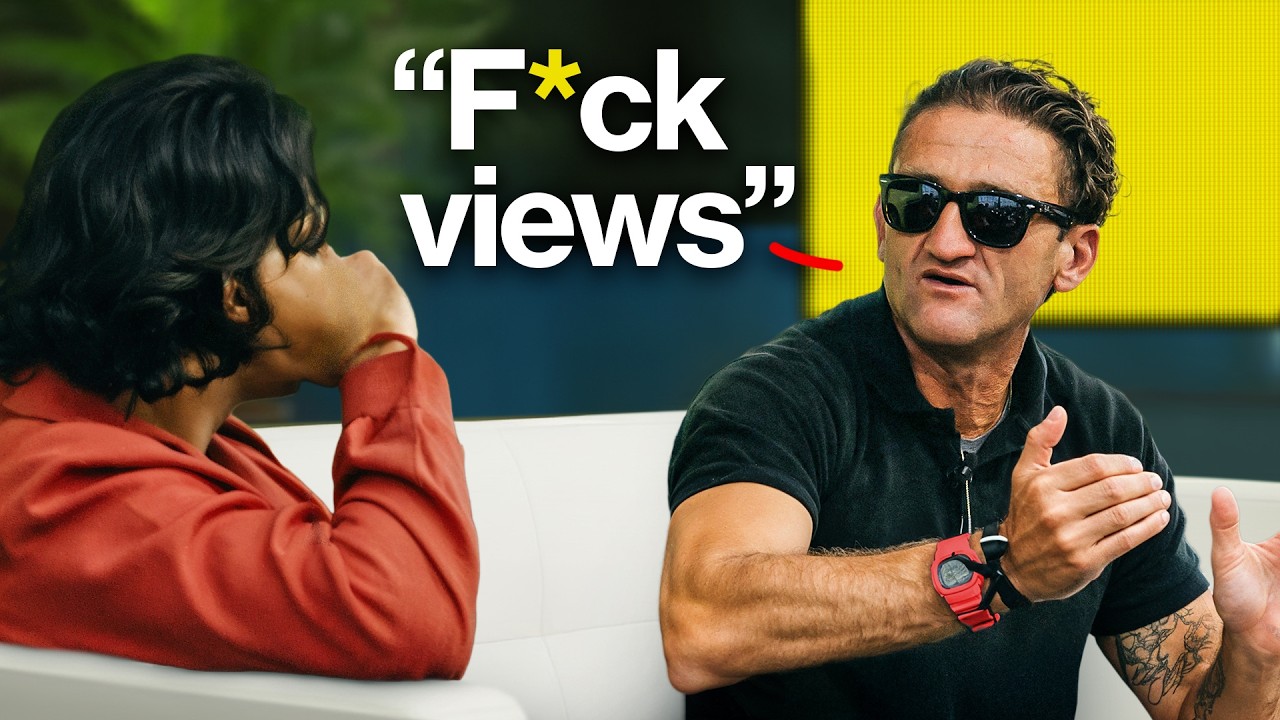
Casey Neistat walked out onto the stage at PressPublish NYC as a surprise, and the room had no idea he was coming. That tension, the gap between who shows up and who the crowd expects, turned out to be the perfect setup for a conversation about the widening distance between making something and monetizing it. For Colin and Samir, two creators who spent seven years rehearsing an apology they never got to deliver, finally sitting across from Neistat in front of a live audience felt less like an interview and more like unfinished business finally getting finished.
When the economy ate the creativity
Neistat was blunt about what the last decade has done to YouTube. He worked in Hollywood, produced films, directed television commercials, and found all of it suffocating. When he discovered YouTube, the thing that lit him up was the absence of distance between the work and the audience. No gatekeepers. No filters. Just the thing he made and the person watching it. ‘The focus has shifted away from the creativity part of creator and shifted towards the economy part,’ he said, and he did not soften it. ‘It breaks my heart and it makes me so sad.’
He drew a sharp line between the two camps. Creators who make things because they love making them, and creators who are there to chase a number on a screen. He put it plainly: ‘If you’re in it because you want to make money, you want to get the views, then I don’t care about you.’ He acknowledged the contradiction immediately. He has made money. He has had financial security. It is easy for him to say. He said it anyway.
His comparison to 1970s cinema landed harder than a simple YouTube critique. Studios back then did not know what a successful movie looked like, so they just made movies. Harold and Maude got made. Then data arrived, and the industry optimized itself into something he considers significantly worse. Netflix, he argued, is doing to film exactly what the algorithm has done to video. The data tells you what people click, and then everyone makes more of that.
The one creator he called his all-time favorite
Neistat’s admiration for Jimmy Donaldson, known as Mr. Beast, is genuine and specific. The reason is not the scale of the success. It is the consistency of the intention. When Donaldson first approached Neistat before the Mr. Beast era, he never claimed to want to make art. He told Neistat he wanted the most views possible. ‘I like your focus, man,’ Neistat told him. The thing he cannot stand is the conflation, creators who say they care about the work but whose only real concern is the blue analytics line climbing in YouTube Studio. Neistat mentioned he does not have YouTube Studio on his phone, and described that as one of the better decisions he has made.
He also named Mark Felton, a British military historian who posts dense, 12-minute deep dives into hyper-specific moments from World War II, as his current favorite creator on the platform. When Colin mentioned he also knew Mark Felton Productions, Neistat looked genuinely startled: ‘I’ve never met someone who knows Mark Felton Productions.’ That narrow, obsessive specificity is exactly the kind of work Neistat believes YouTube was built for, even if the platform’s incentive structure keeps pulling creators in the opposite direction.
The shower list that destroyed four cameras
The most revealing moment came when Neistat described what he has been working on at home. His daughter taped a handwritten list to the outside of a shower door. Eight things you have to do in the shower. Sing. Eat the water. Spit it out. Have a disco. Make a potion. Get the potion in your eyes because you’re dumb. She wrote that one herself, he was careful to note. He has been reading it every day and decided he had to make a video about it. He has since destroyed four Sony A7S3 cameras trying to film inside a running shower. The whole sequence will amount to roughly nine seconds of a five-minute piece.
‘There’s nothing I’ve done in my career, including standing on the stage at the Cannes Film Festival, that gets me excited the way that little idea does,’ he said.
The Oscar Wilde quote he left the room with: some things are too important to be taken seriously. In his view, the metrics, the views, the revenue, all of it has a way of making people forget that the magic was the point. His argument is that faithfulness to the creative impulse is not just artistically correct. It is what actually produced the success. Chasing the other thing, in his read of his own career, would have cost him both.
The apology that took seven years
Samir described the moment from seven years ago at a high school in Princeton where the two of them had about 30 seconds with Neistat and spent the entire time talking about their own work. At the door, Neistat looked at them and said, ‘Congrats on all your success,’ and walked out. Colin and Samir did not speak to each other for the rest of that day.
On stage at PressPublish NYC, Neistat confirmed what they had suspected. ‘Congrats on all your success was a polite way of saying go somewhere else.’ He compared the encounter to someone using a first date entirely to catalog their own achievements. The apology finally landed. The room laughed. Neistat said he appreciated it. Colin and Samir had been thinking about it every day for seven years. He had loosely forgotten it by the following week.
The shower door in Neistat’s apartment still has the list taped to the glass, eight handwritten instructions in a child’s handwriting, and somewhere nearby there are four ruined cameras that did not survive the attempt to turn it into something.