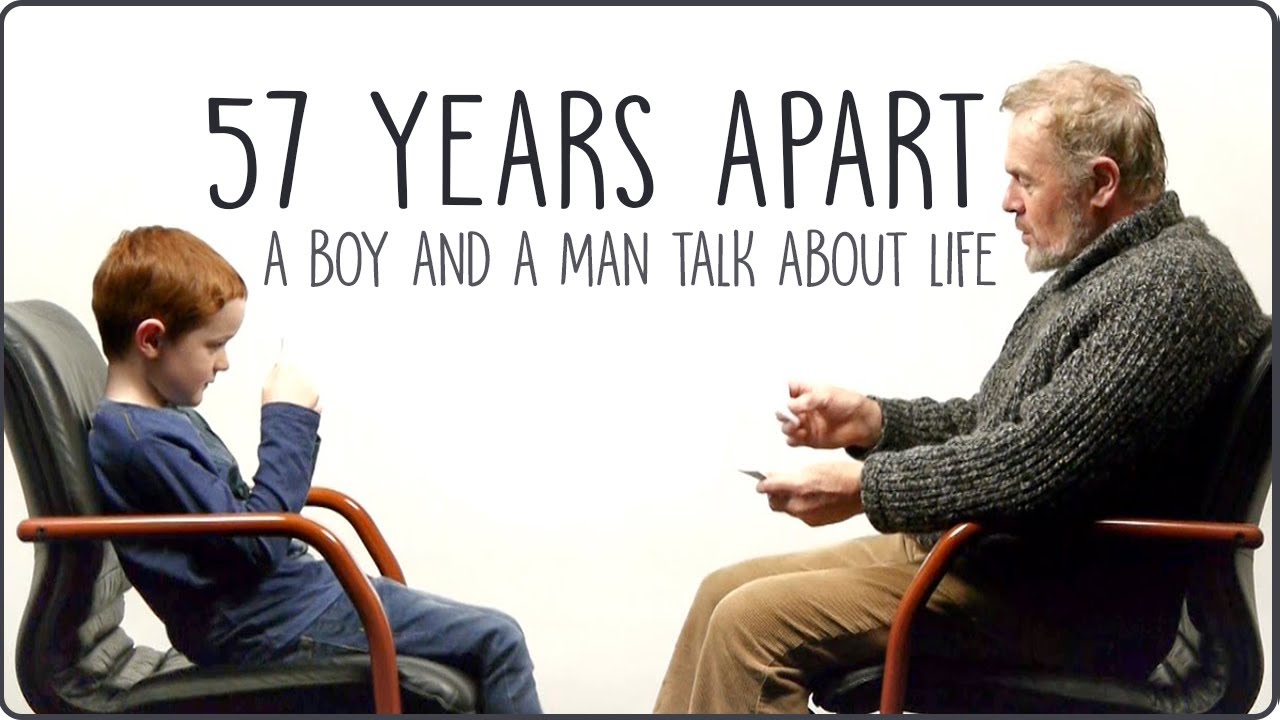
Shawn had a plan for fatherhood already worked out. If his future baby cried in the night, he would sing to the child like Ed Sheeran. The diaper changing he was less thrilled about, but he had decided it would still be fun. Across the table sat Gordez, 64 years older and carrying a lifetime of answers to questions Shawn had not yet thought to ask. What happened next was one of the more quietly remarkable conversations two strangers can have: one person at the very beginning of everything, and one who has already lived through most of it.
The things you lose when your body stops cooperating
Shawn opened the questions. He wanted to know the worst thing about being old, and Gordez gave him a straight answer: your body gets stiff, and you cannot always do the things you once could. Shawn, who had apparently already encountered this reality secondhand, nodded with some authority. ‘It hurts a lot when you try to bend down,’ he offered. Gordez confirmed it. Getting sick more often was the other part, the less negotiable part, and Shawn received that information with visible concern for his own future health.
The worst thing about being young, Shawn reported, was the homework. He described his situation as sitting somewhere ‘in the middle of bad and good,’ which is perhaps the most accurate summary of childhood ever delivered without any effort to be profound.
When Gordez said he missed having more time, that the great thing about youth was the sheer quantity of it, Shawn’s ears picked up on something specific. Gordez used to play Cowboys and Indians. Shawn plays Cowboys and Indians. The two of them sat with that for a moment, a shared game across six decades, and Gordez said he missed being able to use his imagination more freely. ‘That’s a sad story,’ Shawn told him plainly, ‘you can’t do that anymore.’ Gordez thought about it. ‘I could be an older cowboy,’ he said. ‘I might do it, yes.’
The memory that still lives in his head
When the conversation reached love, Gordez went quiet in a different way. He had fallen in love, he said, but late. He had not married. His partner had died. ‘That was a sad thing,’ he said. ‘She got sick.’
Shawn’s face moved immediately. ‘I’m gonna cry,’ he said.
Gordez steadied him. ‘No, no, don’t. These things happen, Shawn. That’s life.’ He told the boy that what remains after loss is memory, and that memory can hold all the good things, and that living inside good memories is not a small thing at all.
The advice they traded at the end landed with the same unpolished accuracy the whole conversation had. Gordez told Shawn he did not have to be rich to be happy, that doing what feels good makes the people around you feel good too. Shawn’s advice to Gordez was to act normal, stop being silly, and not bully people. He also mentioned that when his friend Alex gets hurt at school, he hugs him. ‘It might not be able to work,’ Shawn admitted, ‘but.’ Gordez said that was good advice.
The boy who already had a hug ready
Shawn, somewhere around seven years old, describing his reflex to hug a hurt friend even when he is not sure it helps.
Gordez left him with one last thought: keep your good friends, and keep life going. Shawn had arrived at the table already doing both, without knowing that was what it was called.