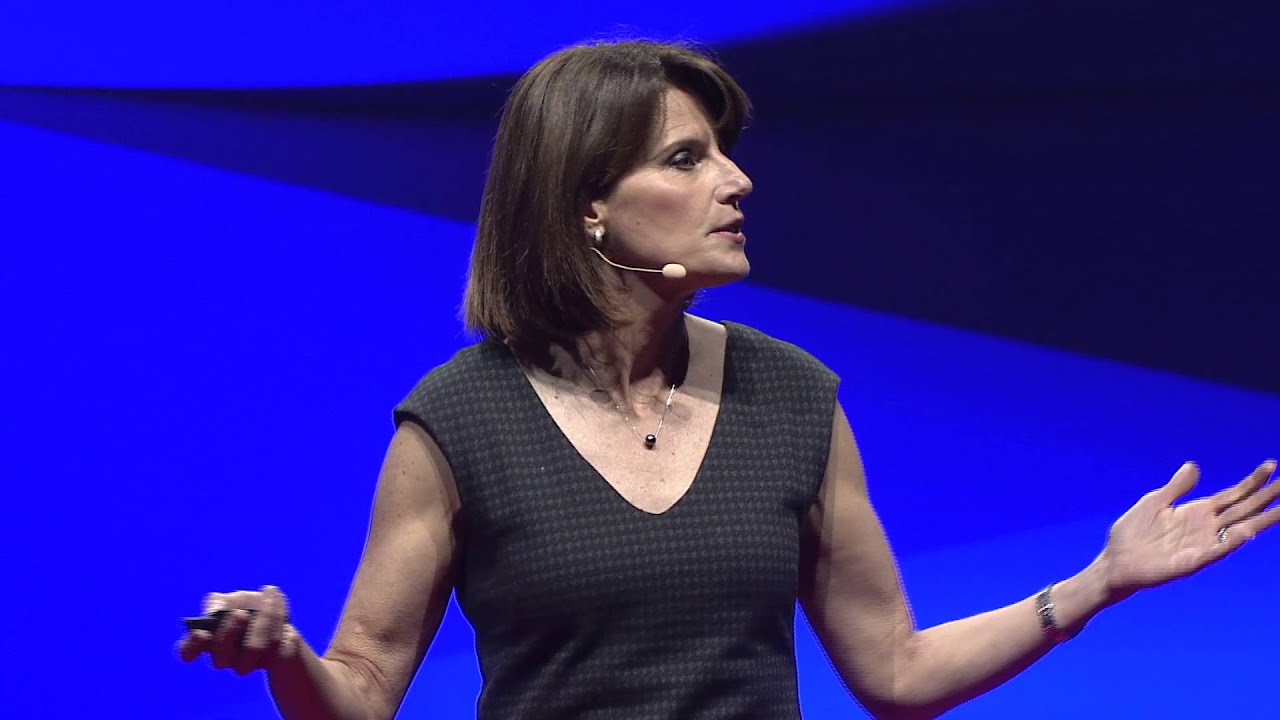
Dr. Lara Boyd walked onto the stage at the University of British Columbia carrying a question most people have quietly asked themselves at some point: why does learning feel effortless for some people and like pushing a boulder uphill for everyone else? The answer, she told her audience, lives inside a brain that is far more changeable than almost anyone realized even a generation ago. And understanding that change, she argued, is about to transform not just medicine but education itself.
Three ways a brain physically changes when you learn something
Boyd, a brain researcher at UBC, laid out the mechanics of neuroplasticity in terms that land hard precisely because they are so concrete. The brain changes to support learning in three distinct ways. First, it increases the chemical signaling between neurons, a fast shift that supports short-term memory and the quick improvement anyone feels during a single practice session. Second, it alters its physical structure by changing the connections between neurons, a slower process that locks in long-term memory. Third, it shifts its function: the more a brain region is used, the more excitable it becomes, and over time whole networks of activity reorganize.
Those three processes interact in ways that explain a frustratingly familiar experience. You spend an afternoon learning a new piece on the piano, feel genuinely competent by the end, go to sleep, and return the next morning to find it mostly gone. Boyd’s explanation is blunt: the chemical signaling improved inside that session, but for whatever reason it did not trigger the structural changes needed to hold the skill overnight. The improvement you felt was not learning. The physical change is learning.
The examples of structural change are striking. People who read Braille develop larger hand sensory areas in their brains than those who do not. The dominant-hand motor region, on the left side of the brain for right-handed people, is measurably larger than the other side. And London taxi cab drivers, who are required to memorize a full map of the city to earn their license, develop larger brain regions devoted to spatial and mapping memory.
Why the 10,000-hour rule is too simple
Boyd’s research focuses on stroke recovery, a field she described as failing its patients despite genuine effort. Stroke has dropped from the third to the fourth leading cause of death in the United States, but not because fewer people are having strokes. Survival has improved; quality of life has not kept pace. Stroke remains the leading cause of long-term adult disability in the world.
Her search for better rehabilitation therapies led her to an uncomfortable finding: neuroplasticity varies enormously from person to person, and that variability is the most important data her lab collects. The popular claim that 10,000 hours of practice produces mastery, she said plainly, ‘is not quite that simple. For some of us, it’s going to take a lot more practice, and for others it may take far less.’
Her lab has identified structural and functional characteristics of the brain, called biomarkers, that help predict which therapies will work for which patients. The same logic, she argued, applies to everyone learning anything. A brain that picks up languages with ease may struggle to snowboard. A child who thrives in a traditional classroom is not smarter than one who does not; their brains are simply shaped differently.
One finding cuts against the instinct to keep practice comfortable: increased difficulty and increased struggle during practice lead to both more learning and greater structural change in the brain.
The notebook left open on the last page
Somewhere in the audience at the end of Boyd’s talk sat a person who had just changed their brain in a way measurably different from everyone sitting next to them, and neither of them would ever know exactly how.
Before her talk ended, Boyd offered a framing that is harder to set down than it sounds. Every behavior changes the brain, and so does every behavior avoided. Neuroplasticity moves in both directions: toward a new skill, or toward a forgotten one, toward recovery, or toward chronic pain, toward a habit worth keeping, or one worth breaking. The brain being shaped in this moment, she told the room, is the same brain doing the shaping.