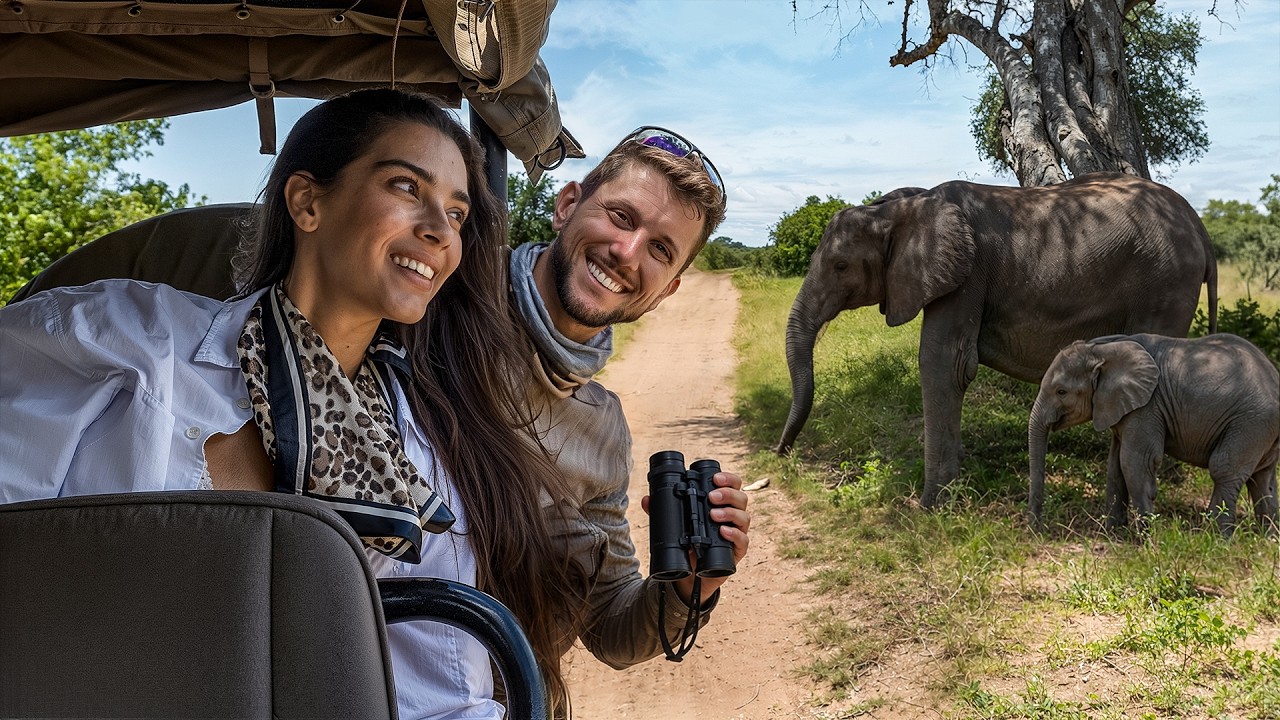
Christian LeBlanc was standing in a safari boat deep inside Chobe National Park in Botswana when an elephant surfaced close enough to fill the frame, close enough that Charles, the guide, read the animal’s posture immediately and confirmed it was showing aggression. After ten years of travel and thousands of kilometers already crossed on motorbike from coast to coast across Africa, LeBlanc held the shot. ‘That might have been the best shot I’ve gotten of this whole trip,’ he said quietly, just after the shutter. For anyone who has ever flipped through the yellowed pages of a National Geographic on a childhood bookshelf and quietly wondered what it would feel like to actually be there, Chobe is the answer. The park sits at one of the most improbable junctions on the continent, the point where Zambia, Zimbabwe, Namibia, and Botswana meet at a single geographic pinch, and it delivered from the first light of morning to the last warm glow of a sundowner.
The safari park that doesn’t need the spotlight
LeBlanc arrived in Chobe having just come from the Okavango Delta, and the contrast landed immediately. Where the Okavango runs deep green, thick with reeds and adrenaline, Chobe opens up into broad floodplains and low brush, a landscape designed, it seems, for animal spotting. Unlike the more internationally famous circuits of Tanzania and Kenya, where safari vehicles can end up bumper to bumper, the group had the wildlife entirely to themselves, a fact LeBlanc credits partly to the timing: the rainy season keeps crowds thin and temperatures cool, even if it also raises the floodplains fast enough that crocodiles line the riverbanks in patient rows, watching zebras and buffalo calves weigh the risk of a crossing.
That crossing became the defining ground-level drama of the overland leg. A herd of buffalo made their approach to the water, and Charles narrated the stakes quietly from the vehicle: the floodplains would be fully submerged within weeks, the animals would have no choice but to swim, and the crocodiles, which the team noted grow to 6 meters in this part of the river, were already in position. The calves were visibly struggling. In the end, the herd spooked and turned back in a rush, every animal making it to the bank. ‘They lived to see another day,’ LeBlanc noted.
On the water, Charles went from relaxed to high-alert inside a single breath when a hippopotamus came up fast near the boat, expelling air through its nostrils in what he confirmed was a direct threat display. He threw the engine into reverse and explained afterward that a hippo strike would punch holes in the hull. The group watched a kingfisher spend several minutes trying to force down a fish nearly its own size, and Bridget, who had already in one safari outing witnessed a pride of nine female lions take a jackal and survived being charged by an elephant at night, added a first kill sighting to her list before the morning was out.
Where the guide reads the ground and the wildlife reads you back
Charles tracked from the vehicle by reading the soil, pausing once to announce he had spotted a fresh print. ‘Right now it looks like a rare Toyota Land Cruiser,’ he said, scanning the dust. ‘I can’t tell the year.’ The impala carcass wedged into a tree three weeks earlier told its own story, a leopard’s larder, still recognizable as ribs and hide. Full-grown bull elephants, Charles explained during the sundowner hour, sit entirely outside the food chain’s ordinary logic. The crocodiles fear the hippos, and everyone else steps back from the bulls. ‘There is such a delicate balance out here,’ LeBlanc observed from the riverbank. ‘These animals may look like they happily coexist, but in reality they’ve just learned to respect each other’s authority.’
The campsite itself ran on a 25-liter bag of water heated over the fire for an open-air shower. Nights came with lions moving through the perimeter and the camp team confirming the morning after, matter-of-factly, that yes, at least two had come through. The rule Charles offered for tent safety was precise: a completely enclosed structure, even mesh, reads as a barrier to most large predators. The exception, he added, is the honey badger.
A reunion and a road still ahead
The group crossed into Zimbabwe at a border LeBlanc had been warned about repeatedly. The Canadian visa ran 75 dollars; the American, 30. ‘We win in hockey and we win at the border,’ Cam said. The border officer signed the motorbike alongside the names already collected from guides and locals across the continent, and the convoy rolled toward Victoria Falls with two new riders aboard, bags packed to the absolute limit.
Charles, standing at the departure point outside Chobe House, gave the group a send-off in the local language that nobody had anticipated. ‘We had nobody here had any idea that was coming,’ LeBlanc said afterward, still visibly struck by it.
The 25-liter shower bag still hanging from the tree
Back at the bush campsite, a heated 25-liter water bag hangs from a branch at the edge of the clearing, the open-air shower that served as the group’s only boundary between a five-star experience and the sounds of a chuckling hippopotamus somewhere in the dark.
Chobe had delivered from the first track in the dust to the last pastel ray catching the leather hide of a bull elephant at the park exit. The motorbikes are pointed at the Zimbabwean border now, the bags are overfull, and the continent still has a long way to run.