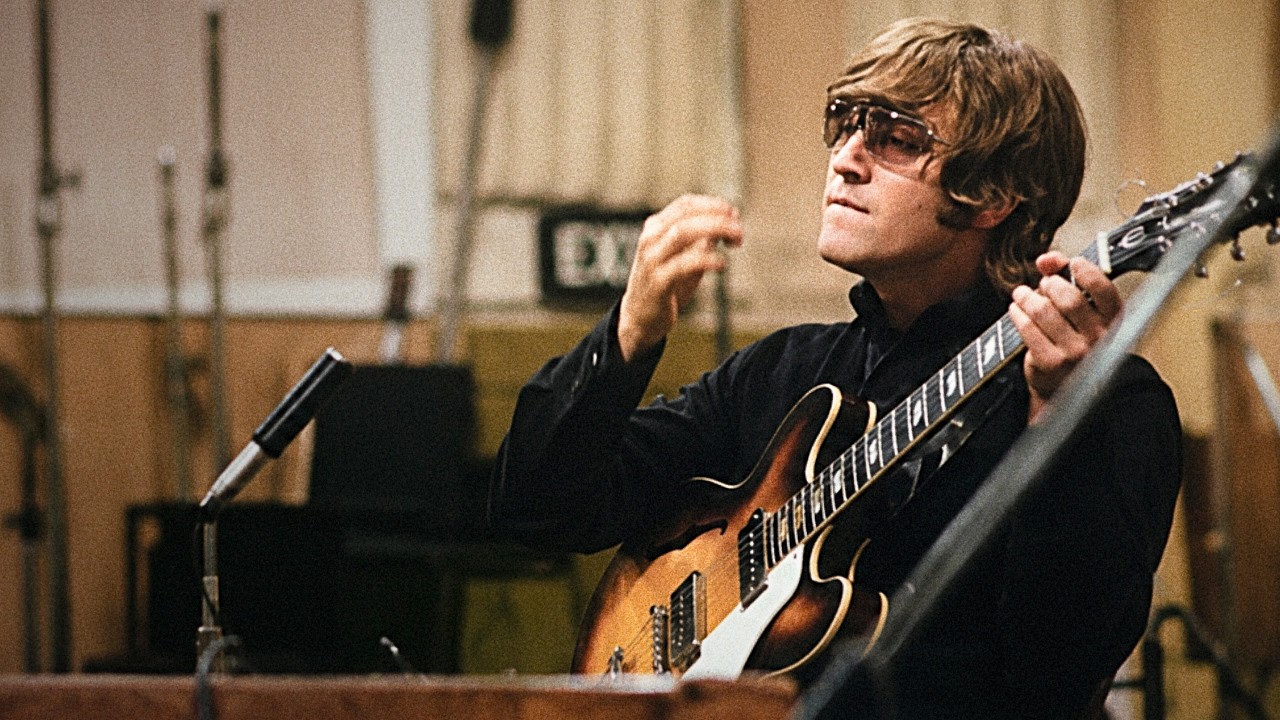
At 8:00 p.m. on the 6th of April, 1966, the Beatles walked into EMI Studios and found a stranger behind the engineering desk. Jeff Emerick was 20 years old and had never run a session for them before. George Harrison‘s immediate reaction was blunt: ‘Where’s Norman?’ What followed across the next 10 weeks would quietly rewrite the rules of how popular music is recorded, and it started because four young men had run out of road doing things the old way.
By early 1966, danger and exhaustion had made touring unbearable. The Beatles were months away from their final show and fully aware that the playbook that had taken them to the top was no longer working. A three-month break gave them a single clarifying thought: if they no longer needed to perform songs live, they could record sounds that had never existed before. The only problem was that none of those sounds existed yet, and the equipment to make them largely did not either.
Inventing the sounds one panicked session at a time
The first song attempted was Tomorrow Never Knows, then listed internally as ‘Mark 1’ or ‘the void.’ John Lennon wanted his vocal to sound like, in his own words, the Dalai Lama chanting from a mountaintop. There were no effects units to reach for. One suggestion involved hanging Lennon upside down and swinging him around the microphone. That went nowhere. Emerick, standing at the control room window and running out of ideas, spotted the Leslie speaker from the Hammond organ in the live room. Running Lennon’s voice through its rotating mechanism gave the vocal exactly the quality Lennon had been circling. ‘We did that,’ Emerick recalled, ‘and of course it won John over. He thought it was absolutely fantastic.’
Lennon also despised double tracking, the painstaking process of singing a song twice to thicken the vocal. EMI engineer Ken Townsend solved it by feeding the original vocal through a separate tape machine running a variable oscillator, producing a second signal with a fractional difference in pitch and timing. The result was automatic double tracking, or ADT, and the phasing and flanging effects it produced as a byproduct became an accidental signature of the entire record. Townsend was called into the office and reprimanded for the experiment. The technique became an industry standard.
Paul McCartney‘s bass had always sat quietly in the mix compared to the American records he admired. For Paperback Writer, Townsend used a speaker wired in reverse as a microphone, placed directly in front of the bass cabinet, producing a low-end thump the group had never heard from their own recordings. A separate EMI engineer had recently invented automatic transient overload control, which prevented the new bass levels from making the needle jump out of the groove on vinyl at home. Every tool that made Revolver sound the way it does was either invented during the sessions or arrived at EMI just in time.
The songs that took shape around the sounds
George Harrison‘s Love You Too began with no title at all. Jeff Emerick labelled the tape ‘Granny Smith’ after his favourite type of apple. Session tabla player Anil Bagwat had no idea whose studio he was entering until a Rolls-Royce arrived at his door to collect him. Yellow Submarine was assembled across two sessions that included George Harrison swallowing water in a bathtub to create the sound of the ocean, sandbags and rags slurping in buckets of water, John Lennon blowing bubbles through straws, and a party organised in the studio attended by Brian Jones, Pattie Boyd, and Marianne Faithfull, all recorded and mixed into the second verse.
Eleanor Rigby featured no Beatle playing an instrument at all. George Martin’s double string quartet was recorded in a near three-hour session, with the musicians quietly shuffling their chairs away from Emerick’s unusually close microphones until Martin cut in over the talkback: ‘Stop moving your chairs.’ The Taxman guitar solo was played by Paul, not George, because Paul had been listening to a new guitarist named Jimi Hendrix and arrived with a feedback-and-fuzz idea George found compelling enough to hand over entirely.
Here, There and Everywhere was written by Paul in the garden of John’s Kenwood home while waiting for Lennon to wake up. When the song was finished and played back, Lennon, not given to easy compliments, simply said he liked it.
A room full of borrowed time
All the stereo mixes for the entire album were completed in a single long day. The mono mixes, considered the real mixes because so few people owned stereo record players, were done live, with everyone moving the faders in real time. It was only near the end of that process that someone noticed the album was a song short. John Lennon’s She Said She Said was rehearsed, recorded, and mixed in nine hours. Paul McCartney walked out before it was finished, leaving the other three to close the album out. The Beatles flew out for the first leg of their final world tour the following morning.
Ringo Starr‘s kit on Rain and Paperback Writer was the drumming performance he later called his best ever. John was 25 at the time. Paul and George were both 23.
The Leslie speaker, still in the corner
The revolving Leslie speaker Jeff Emerick spotted through the control room window on his first day sits somewhere in the history of that studio. It was not designed for vocals. Nobody had ever run a human voice through one before that evening.
Revolver was finished in just over 10 weeks and released on the 5th of August, 1966. Recording began with a song about letting go of the mind entirely and ended with one about never having been born. In between, on his first day on the job, a 20-year-old engineer looked through a window and saw a speaker that was not meant to do what they needed, and decided to try it anyway.
The Beatles – Changed Music for Eternity
Words are not sufficient for explaining or describing The Beatles, and how they helped make the World A Better Place –
John Lennon | Paul McCartney | George Harrison | Ringo Starr
But ALWAYS remind yourself to Imagine, Believe, Achieve … And don’t forget the lessons of Yesterday 🙂
Yesterday is important, so Let it Be 😉
Hey Jude, remember Eleanor Rigby is a lesson to never forget, and also critically essential that While My Guitar Gently Weeps we remember all of the whys In My Life every Now and Then … 😉 ✌️☮️❤️ Don’t miss Ringo Starr on The Beatles Secret to Success and The Beatles Final Rooftop Performance!
And WHEN you are occasionally down, don’t worry, Tomorrow is Another Day and…