Jonathan Josel was already fielding calls and clearing donuts off a conference table when the morning started at the Plaza, the casino he runs on the largest single piece of property in downtown Las Vegas. He is the youngest licensed casino operator in the city, and for one full day he handed over access to the parts of the business that most operators would never discuss on record: the surveillance architecture, the advantage players flying cross-country to exploit must-hit machines, the real reason the Plaza’s monthly bingo event is the most profitable thing in the building, and the surprisingly simple psychology underneath all of it.
The machine that tells you when to sit down
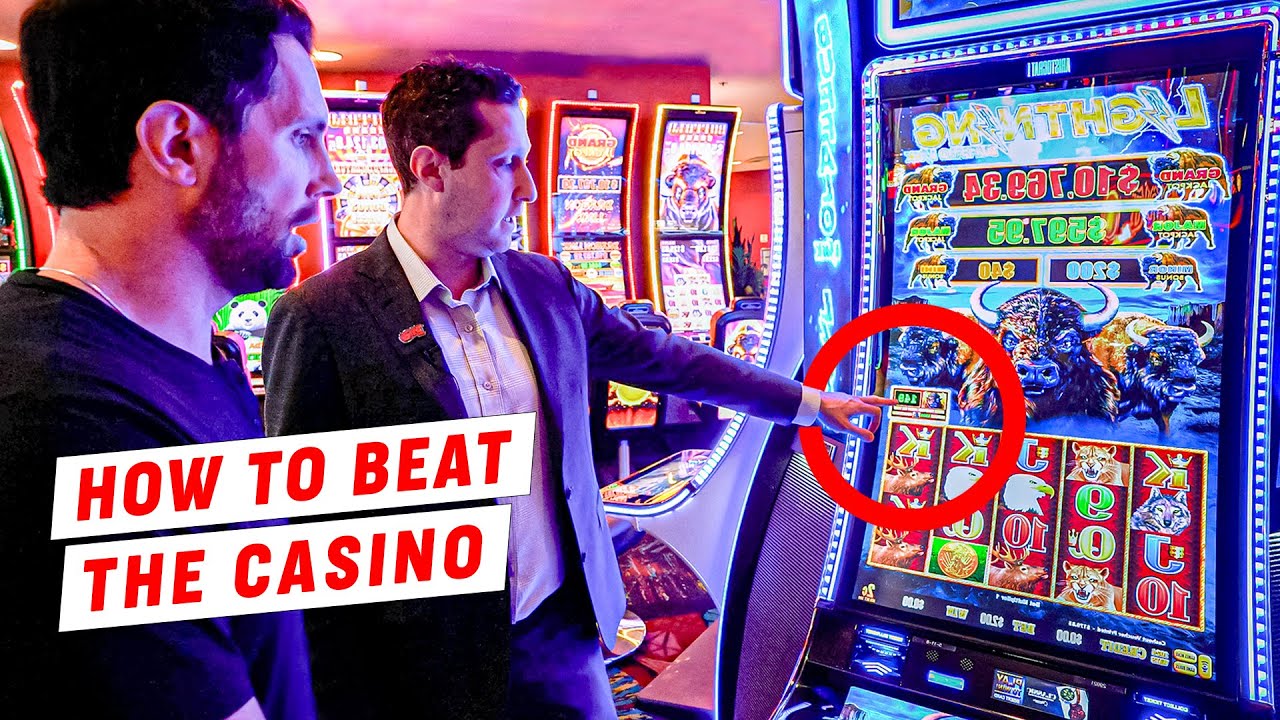
Most people assume every slot machine is equally random at every moment. Josel walked across the floor and stopped at a buffalo-themed game showing an internal counter at 149. The display read: free feature must hit before 1,800, meaning every time a buffalo symbol landed on the reels, that number climbed. Once it cleared roughly 1,400 to 1,500, the odds shifted in the player’s favor. ‘If you’re an advantage player you know what you’re looking for,’ Josel said, pointing at the counter. These are called must-hit-by slots, and teams of mathematically-minded players track them across multiple casinos simultaneously, coordinating by group text and sometimes flying in from the East Coast when a big must-hit threshold is close. Josel said he likes to meet them in person when he spots them: ‘I say I know what you’re doing.’ He does not throw them out.
For players who want better baseline odds, Josel’s advice was specific. The Plaza runs single-zero roulette, compared to the triple-zero tables common on the Strip where two extra losing numbers are added without any change to the payout. On video poker, the floor carries a Joker Poker game with 101 percent payback to a player using perfect strategy. And at craps, the instruction was direct: stick to the pass line, take maximum odds behind the bet, find a table offering at least ten times odds, and avoid the proposition bets in the center of the layout, which he called ‘fun but not effective.’
The secret weapon filling a convention room 11 times a year
The single most profitable thing Josel described was not a table game or a slot section. It is Super Bingo, a monthly event the Plaza runs in its convention space that draws close to 700 players, runs for six hours, and pays out a top prize of 50,000 dollars. Josel called it his secret weapon without irony: ‘No one else in downtown does this. No one on the Strip does this.’ Prizes in earlier rounds are structured to stay at 199 dollars, one dollar below the 200-dollar threshold that would trigger a different tax treatment, a detail Josel noted with a slight smile. The bingo room is run by a longtime operator who knows virtually every regular player by name and books them for the next event before they leave.
Back in his office, Josel pulled up a daily marketing report showing each player’s Average Daily Theoretical, the industrywide metric calculated by multiplying average bet size by hours played by the house edge on the game. That number determines who receives a penthouse room, who gets a free dinner at Oscars steakhouse, and who gets concert tickets. He was clear that a single large bet generates almost no theoretical value regardless of outcome: one hand of 10,000 dollars on red is nearly meaningless to the model. One hundred dollars a spin for ten hours is not.
On the question of pumped oxygen keeping gamblers awake, Josel dismissed it immediately. ‘Total myth,’ he said. His actual theory was blunter: ‘Have a really fun, engaging dealer. That’s like oxygen to some people.’
The woman who already won a car
Mid-afternoon on the bingo floor, a regular player in a bingo t-shirt mentioned almost in passing that she had once won a 50,000-dollar jackpot at the Plaza, and before that had won a car. She was still waiting on the day’s big prize.
The day ended at Oscars steakhouse, back inside the Plaza, where Josel ordered a rib cap for the table and arranged for a complimentary dinner to be sent to a player who had just hit a 14,000-dollar slot jackpot. ‘She’ll get a free meal because she’s a good player,’ he said. ‘And then she’ll go downstairs and pay more.’ He said it without any apparent cynicism, the same flat frankness he had used all day to explain the math, the surveillance, the mob question, and the donuts.