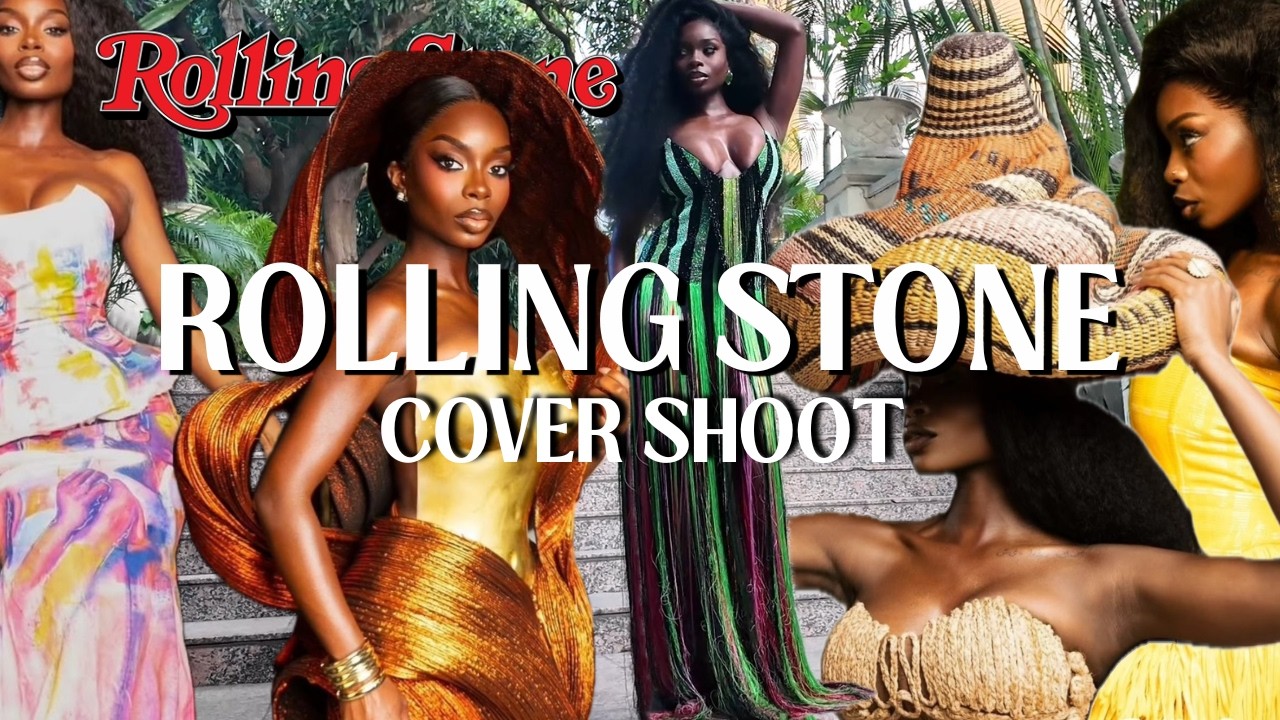
Olandria Carthen walked into Victoria Island Primary School in Lagos wearing a custom dress painted with images of children, the bottom left intentionally blank, a canvas waiting for small hands and crayons. The moment she stepped into the classroom, she started crying before she could finish a sentence. For a creator who grew up in Decatur, Alabama, dreaming dreams that felt, as she put it, ‘a lot farfetched,’ standing in front of a roomful of Nigerian schoolchildren was not a content moment. It was a calling confirmed.
New York to Lagos, with a stop over Paris rooftops
The journey began in New York, where Carthen was already running on fumes after a packed week that included shoots tied to Sports Illustrated and a Brandon Blackwood project. She caught a flight with a five-hour layover in Paris, where the airline provided gift cards for shopping and a hotel room to rest. She skipped the nap. Within hours of landing at Charles de Gaulle, she was on a rooftop above the city doing a glass-floor walk, looking out at a building she was told had once been a bank, with the Eiffel Tower visible in the distance. Brunch followed, with a clock ticking toward a 2:30 boarding. She made it, face mask applied, lip balm on.
She landed in Lagos to flowers, a ceremony at the airport, and a three-bedroom villa stocked with welcome gifts: ivory body butter, a glow oil, incense labeled ‘Morning Dew,’ and a fragrance her travel companions agreed smelled, in their exact words, ‘like a fine man.’ The first night ended at 2:35 a.m., after a restaurant stayed open late to make sure the group ate.
The school visit, the school visit, the school visit
Carthen had been thinking about the school visit for weeks before the trip. She commissioned the custom dress specifically for it. The idea was that the children would use crayons to write, draw, and paint their wishes directly onto the fabric, making the dress a living document of their dreams. ‘I want to have this forever,’ she told the classroom. ‘If I can take it home, we’ll be a team forever.’
She told the students she came from a small town in the US and that her own big dreams once seemed out of reach. ‘It didn’t stop me from dreaming,’ she said. ‘Don’t be in competition with each other. Collab together. Make your voice amplified.’ The school also received donated bags. She described the moment simply: ‘I just really feel like this is my purpose.’
The rest of the trip moved fast. She spent an evening in an Afrobeats recording studio, listening to unreleased music and learning the history of what had been made in that room. She visited a concept gallery called Akoko, a 56-year-old building in Lagos where a designer hand-beaded bags that take six months each to complete, one shaped like a house with a door you open to get inside. She met artist Mama Nik on her birthday, poured a libation during a traditional ceremony, and sang happy birthday in a gallery hung with her work. She danced at a Lagos club where the DJ played a mix of Afrobeats and American rap, and the venue handed out house slippers near closing time so guests could rest their feet after standing on elevated sections in heels.
On the last day, at a restaurant called Nest, she tried Zobo for the first time, a hibiscus drink with a ginger kick that is a Nigerian staple, and ordered pounded yam with egusi soup. She did her research: dip, scoop, swallow. She licked her fingers.
The dress that came home covered in children’s drawings
The custom children’s dress made the return flight to New York. The shoot on the final day ran until 12:34 a.m., six looks total, with phone flashlights held up to a door to add light for one frame, a rash from an allergic reaction managed with an allergy pill between setups, and a wig slipping in the heat during the outdoor portion. The shots, by Carthen’s own account, were fire.
Somewhere in the suitcase, packed alongside a black bodysuit gifted from a Lagos boutique and a yellow dress she bought for herself in her birthday month, was that dress, the hem now covered in the handwriting and drawings of Lagos schoolchildren, their dreams pressed into the fabric in crayon.