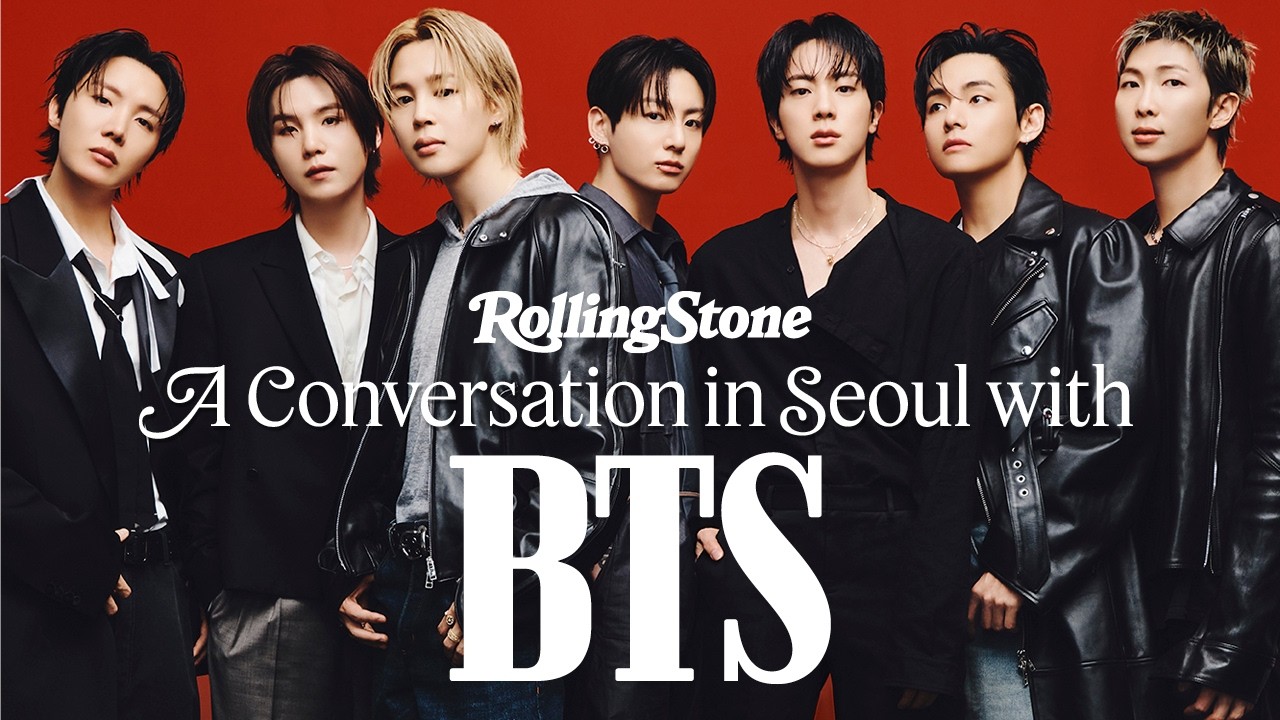
The first thing RM said when Rolling Stone welcomed BTS back to its cover was a dismissal that landed like a joke and landed like the truth at once: ‘We’re just a boy band from Korea.’ The room pushed back immediately, and that tension, between genuine humility and the unmistakable fact of their scale, ran through the entire conversation. BTS had just narrowed somewhere between 100 and 110 songs down to a final album, fought over every track, and returned from years of mandatory military service to find armies of fans who had simply waited. The world, as one member put it, was still watching.
A hundred songs, twelve opinions, and no easy answers
The sequencing alone could have produced a completely different album. RM described the selection process plainly: ‘There were a lot of conflicts. Like, which to go, which not to go. Maybe like two of them, twelve of us, really strongly claim that this song has to be on the album.’ With that many voices and that many finished tracks, the version of the record that actually exists is one of many it could have been, a fact that seems to quietly thrill and haunt the members in equal measure.
The one point of consensus after the military, RM explained, was identity: Korea. That agreement is what pulled the traditional folk song ‘Arirang’ into the track ‘Body to Body.’ The decision came from their art director, who edited it into the song and played it for the group. RM recalled the arc of that first listen: ‘First time, nah. Second time, okay, I’m getting convinced. Third time, I think this version should be like this.’ The song is roughly 600 years old. As RM noted, if you grow up in Korea, you absorb it without a classroom: ‘Just, you know, mouth to mouth. It’s not in the textbook or from the school. Just everyone just somehow gets to know the song.’
The Howard University connection deepened that thread. The label walked the group through the history: in 1896, seven Korean men took a ship to record the first songs with Korean lyrics and Korean voices. ‘We felt like this is a kind of destiny,’ RM said, ‘and like a time machine. Like they were sending to us maybe.’
Aliens, the Super Bowl, and a word the label wanted to change
The track ‘Aliens’ began with a different title entirely. ‘The original theme was Endless,’ said Suga. The song was built with producer Mike Will Made It, but something in the concept needed sharpening. Endless and Aliens sounded similar enough to make the swap feel right, and the new word opened a double reading: the group as otherworldly icons, and the group as foreigners navigating spaces that were not built for them. Suga put the humor in plainly. He wrote a line about hotel guests who keep their shoes on indoors. ‘I know you guys go to the hotel with your shoes on and that’s so dirty,’ he said, grinning. ‘Just a little humor and sarcasm like that.’
On the subject of the Super Bowl, the group was candid. One member mentioned that Usher had actually extended an invitation before the military service intervened. It never materialized. The group’s vision for how it could work, collaborating with other artists the way Bruno Mars, Coldplay, and Lady Gaga have done, felt less like a fantasy and more like a plan waiting on timing.
Jung Kook’s explicit lyrics on ‘Seven’ prompted the most affectionate tension in the room. The original word in the song was not ‘love.’ The label wanted to change it. RM pushed back. ‘He’s all grown up. He can sing it.’ Jung Kook sat with the reaction quietly, and what followed from his bandmates was a chorus of supportive teasing that made the whole exchange feel like exactly what it was: a group of people who have known each other long enough that almost nothing requires explanation.
Suga described the track ‘FIA’ with the same directness he brings to everything. The word ‘fire’ came up roughly a hundred times a day in the studio, he said, from producers reacting to beats, outfits, and ideas. He absorbed it and turned it into a song. Michael Jackson and Britney Spears appear in the lyrics not as deep references but as the simplest possible shorthand: ‘They are truly icons and nobody just doesn’t know them. That’s all.’
The haters with a bottle of water
When the conversation turned to competition, RM deflected to Taylor Swift, Harry Styles, and Bruno Mars with genuine reverence, then caught himself and laughed. The room corrected him again. But it was Suga who gave the clearest answer about who ‘2.0’ was actually written for. Beyond theoretical rivals, he described a specific imagined listener: someone sitting at home, bottle of water in hand, quietly hoping BTS would collapse. ‘Okay guys,’ he said. ‘For two, three years we’ve been apart, and people are still waiting for us. The world is waiting for us. So you guys had your little fun. Knock knock. Pew. Bye.’
The shelf where the other hundred songs live
Somewhere, there are tracks from those sessions that never made the album. Nobody named them in the room.
RM closed the same way he opened, with that line about being a small boy band from Korea, except this time nobody pushed back. He left the contradiction standing, and it felt like the most honest thing said all afternoon.