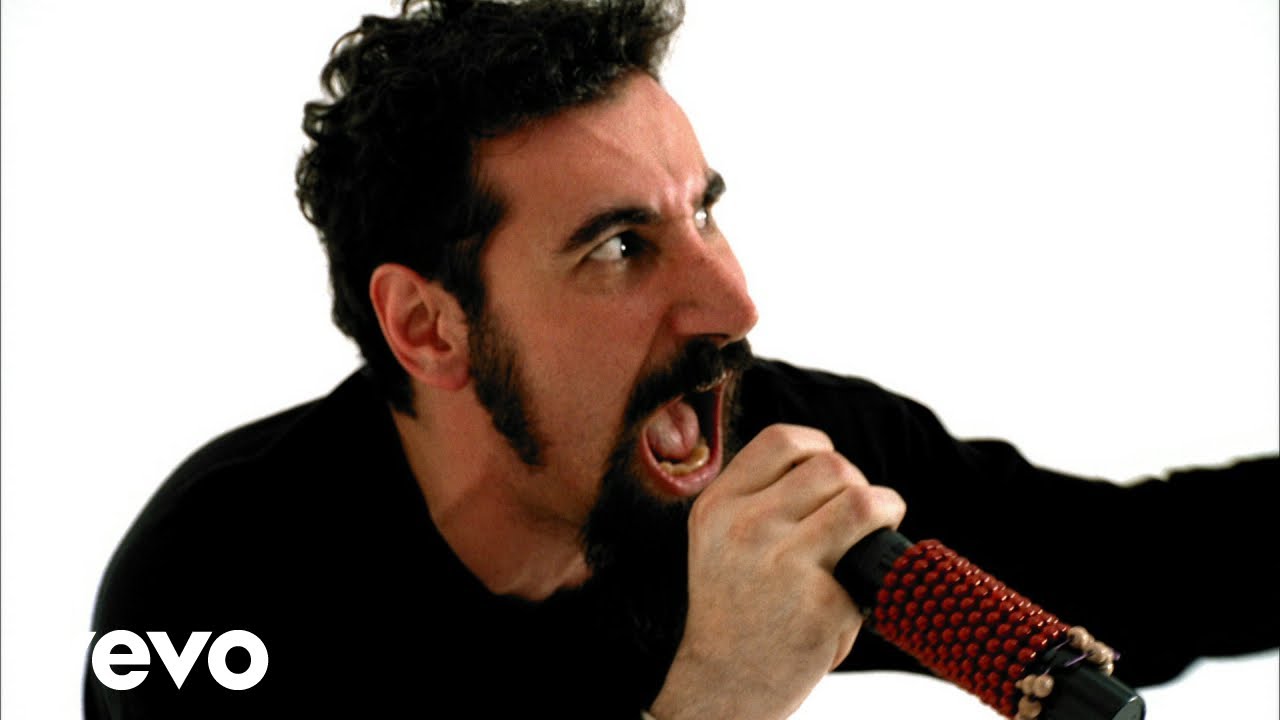
System Of A Down opens ‘Toxicity’ not with a roar but with a hum, a synthetic version marker buried in the first line like a serial number stamped on the underside of something mass-produced. The song is about ordinary urban life turned corrosive, and it has spent more than two decades finding new listeners who recognize exactly what it is describing. That opening detail, ‘conversion software version 7.0,’ is either a glitch in the caption or a deliberate lyrical provocation, and either way it works.
Life seen through the eyes of a tire hub
The imagery in ‘Toxicity’ is precise in the way that only genuinely strange writing can be. Eating seeds as a pastime activity. Flashlight reveries caught in the headlights of a truck. Loud neighbors and more wood for their fires. These are not metaphors reaching for profundity. They are the texture of a city that does not slow down for anyone inside it. The song circles back to its central question twice, the chorus arriving like a car that keeps passing the same intersection: ‘You, what do you own the world? How do you own disorder?’
The structure is itself disorderly in a disciplined way. System Of A Down builds the verses from street-level grit, then pulls the chorus open into something almost philosophical. The bridge lands in a completely different register. ‘When I became the sun, I shone life into the man’s hearts’ is not the sentiment you expect from a song that spent three minutes cataloguing urban noise and numbness. That pivot is the emotional mechanic the track depends on, the moment where the person inside the city stops describing it and briefly imagines escaping it.
The gap between sacred silence and sleep
What gives ‘Toxicity’ its staying power is that it refuses to resolve the tension it names. The chorus does not offer a diagnosis or a solution. It asks who could possibly own something as formless as disorder, and then it moves on without answering. The phrase ‘somewhere between the sacred silence and sleep’ repeats until it starts to feel like a place rather than a lyric, a specific geography of exhaustion that a lot of people apparently know how to find.
The band put it plainly in the song’s own terms: ‘the toxicity of our city, our city.’ The repetition is not emphasis. It is the sound of something that does not stop.
A version number that never quite resolved
That opening line, ‘conversion software version 7.0,’ sits at the top of the song like a label on a file nobody has opened in years.
The rest of the track went on to become one of the most recognized rock songs of its era. The version number stayed right where it was, unexplained, at the start.