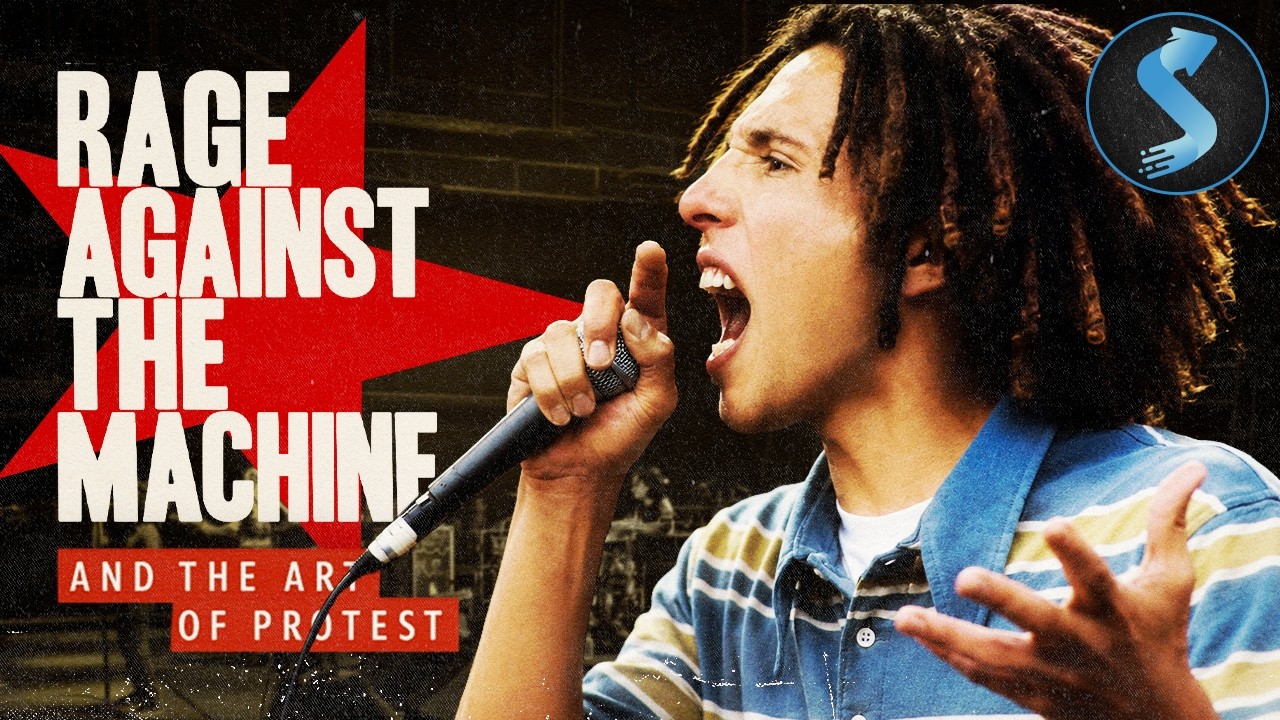
The New York Stock Exchange shut down an hour early. Not because of a market crash or a regulatory emergency, but because four musicians had set up on the street outside and started playing. When Rage Against the Machine arrived on Wall Street in 1999 to film the video for Sleep Now in the Fire with director Michael Moore, they created the kind of media event that no amount of press releases could engineer. For a generation of young Americans who had grown up hearing their fury on MTV and in sold-out stadiums, it felt less like a stunt and more like an inevitability.
Born angry in Orange County
Rage Against the Machine formed in Los Angeles in 1991, but the rage itself was older. Vocalist Zack de la Rocha and guitarist Tom Morello were, as one observer put it in the documentary, ‘very clearly the children of 70s political and artistic radicals.’ Morello’s mother Mary had lived in Kenya and instilled activism in him from an early age. De la Rocha’s father Beto de la Rocha was a member of Los 4, a Latino artists’ collective that mounted major shows in early 1970s Los Angeles and was deeply conscious of the politics of the moment. Both men grew up as children of color in predominantly white suburbs, where they encountered racism from classmates and were told by their mothers, in the words of one commentator, ‘you don’t have to put up with this.’
The specific moment that radicalized de la Rocha came during a biology class at University High School in Irvine. His teacher referred to an immigration checkpoint at the southern tip of Orange County with a slur, and the class laughed. De la Rocha did not. ‘From that day on,’ the documentary recounts, ‘he was really angry.’ That anger, fused with Morello’s more academic political formation and his deep knowledge of hip-hop, folk, and hard rock, became the raw material for what the band would build.
Their self-titled debut arrived in November 1992, produced by Garth Richardson using a full concert PA system set up inside the recording room so the band could play live off the floor. The result sounded, as one producer who witnessed an early rehearsal put it: ‘I said this is one of the greatest bands I’ve ever seen in my life 45 seconds into the first song.’ Epic Records signed them and, crucially, handed them full creative control over lyrics, visuals, and artwork.
The Trojan horse that sold out stadiums
Killing in the Name, the debut’s first single, arrived with somewhere between 20 and 30 expletives embedded in its runtime. The band refused to edit it. Radio stations made their own cuts. The song became enormous anyway. Public Enemy had already shown what politically charged, guitar-driven hip-hop could accomplish, and Rage absorbed that lesson completely. Tom Morello’s guitar was deliberately modeled on the Bomb Squad production style, built to invoke, as one contributor described it, ‘sirens and bottles breaking.’ Combined with de la Rocha’s voice, which another observer compared to ‘a scream from your neighbor’s window, you have to go see what’s happening,’ the sound was designed to pull listeners in before they had fully registered what they were agreeing to.
The band understood that being on Sony, a subsidiary of a multinational corporation, invited the charge of hypocrisy. They answered it on Bullet in the Head, a track about government control through mass media, delivered via the very media machinery they were critiquing. One commentator framed it precisely: ‘They knew they were in the game, but not of the game.’
At Lollapalooza in Philadelphia in 1993, they walked onstage naked except for electrical tape on their chests spelling out PMRC, the Parents Music Resource Center that had lobbied for censorship warnings on records. Tape covered their mouths. They played 25 minutes of feedback. They were booed. Their former label executive later reflected that the people who attended that show probably felt, looking back, that they had witnessed history.
Their second album Evil Empire, released in May 1996 after a recording process so tense that Tom Morello later recalled a five-month Atlanta writing session that their label representative said lasted less than four weeks, pushed deeper into specific causes. People of the Sun addressed the Zapatista uprising in Chiapas, Mexico, a movement de la Rocha had visited personally and would continue to support for years. Bulls on Parade targeted the corporate arms trade. The band held a benefit concert in Mexico City in 1999 in support of the Zapatista cause.
The third album, The Battle of Los Angeles, arrived in late 1999 in time to become the unofficial soundtrack of the WTO protests in Seattle, where over 40,000 demonstrators flooded the streets. The band played outside the Democratic National Convention in Los Angeles in 2000, and national guardsmen with rubber bullets eventually dispersed the crowd. In October 2000, Rage Against the Machine split up.
The street with tape across its mouth
A photograph from the Philadelphia Lollapalooza stage in 1993: four musicians standing still under the lights, bare chested, electrical tape spelling out four letters across each of them, mouths sealed shut.
After seven years and three studio albums, the band that had helped educate a generation of protesters fell quiet just as the country entered what one contributor called ‘eight years of one of the worst regimes in American history.’ They returned in 2007 for Coachella, timing the reunion to the run-in to the 2008 presidential election. The Wall Street footage still exists. The Stock Exchange still stands. The question that closes the final track on a Public Enemy record de la Rocha and Morello both admired asks: what is the future? And then the record ends.