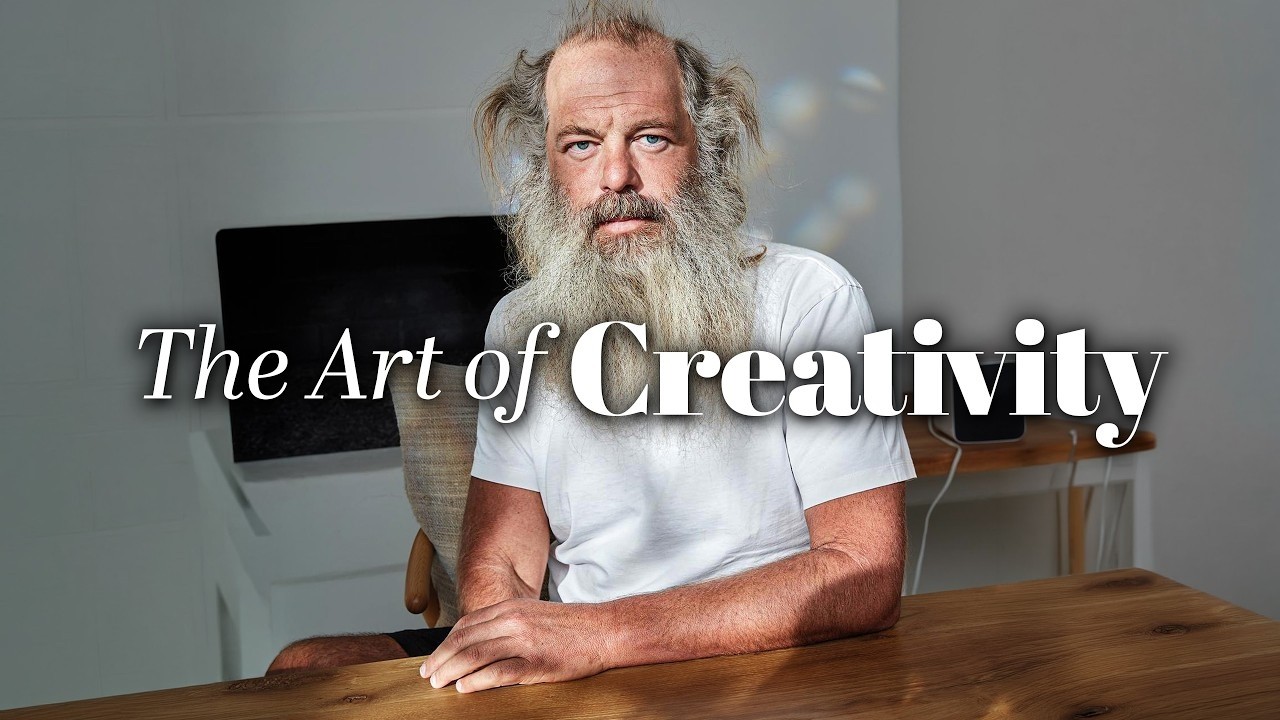
For 33 years, the voice in the back of the mind asking ‘what will people think?’ was enough to stop the work before it started. Rick Rubin, one of the most influential music producers alive, has a direct answer for that voice, and it takes him about ten minutes to dismantle the entire premise. The stakes go beyond any single creative project: Rubin is describing the mechanism that separates people who make things from people who only think about making things. The conversation begins, as the best ones do, with a simple question about what holds people back.
The permission trap nobody talks about
When asked what blocks people from their most creative and best self, Rubin does not hesitate. ‘I think it’s being concerned with what other people will think,’ he says, and then immediately adds the second layer: a belief that the people who make great things are somehow special. His correction is blunt. They are not. ‘We all have the capability to make great things, and none of us are special,’ he says, and the logic that follows is harder to dismiss than it sounds.
The more damaging habit, in Rubin’s view, is waiting for permission. Someone to offer the publishing contract, the stage, the job title that finally makes it legitimate to begin. He argues that almost nothing great gets made that way. The work starts before the credential arrives, not after.
He is equally direct about imitation. When Metallica, in his telling, decided they no longer wanted to be a heavy metal band and reached toward pop because pop was what was popular, it did not go well. ‘They weren’t playing their hand,’ he says. The contrast he reaches for is Lady Gaga choosing to record jazz and blues with Tony Bennett at a moment when that move would almost certainly shrink her audience. She knew it. She did it anyway. That, to Rubin, is the whole point: she was not chasing someone else’s heat. She was being true to herself, and the distinction between those two things is everything.
What you actually are when the noise dies down
The conversation shifts into territory that surprised even the interviewer. Rubin lands on a specific idea about identity: your thoughts are not you. Left alone, the mind fills with repetitive voices that are not working in your best interest, and recognizing that separation is where real creative freedom lives. Asked what remains if thoughts are stripped away, he offers: ‘I suppose you are the unchanging part of yourself that’s always there. It’s not the thinking mind. It’s almost being the observer of the thoughts.’
On the habits he values most in artists, he describes a specific rhythm: start in play, where there are no stakes and nothing is serious, and let something appear out of that freedom. Then commit to the grueling effort of bringing it into condition to share. The catch is that the grueling effort sometimes reveals the first five minutes were already the best version. He puts it plainly: ‘A big part of it is just not screwing up what’s good.’
His definition of greatness, which he says took most of his life to arrive at, is devotional. Making something as a gift to the universe, or to God, removes every smaller question about singles strategy and critical opinion. ‘If you’re making a gift to God,’ he says, ‘you can’t put more into it than that. What about what someone’s going to say? Who has anything to say?’
Asked what three truths he would leave behind, Rubin collapses the list to one: be true to yourself, know yourself as best you can, and allow that person to evolve as conditions change. When the thing you love becomes the thing you do for work, he says, that is the moment to go back to why you started.
The producer who stopped keeping score
Rubin has worked with enough artists across enough decades to have built a reliable certainty about his own methods. He has not. He describes watching something work in a session and genuinely not understanding why, and finding that honest. ‘I know it’s not about me,’ he says, ‘because I do it all the time and I see it.’ When a solution comes from someone else in the room, he is just as satisfied as if it had come from him. The project getting better is the only score that matters.
That framing, project over ego, turns out to be the quiet answer inside the larger answer. The permission nobody was waiting for was never theirs to give.
The same voice that spent 33 years asking what people would think is still there. Rubin’s point is that it always will be, and that it was never the one doing the work.