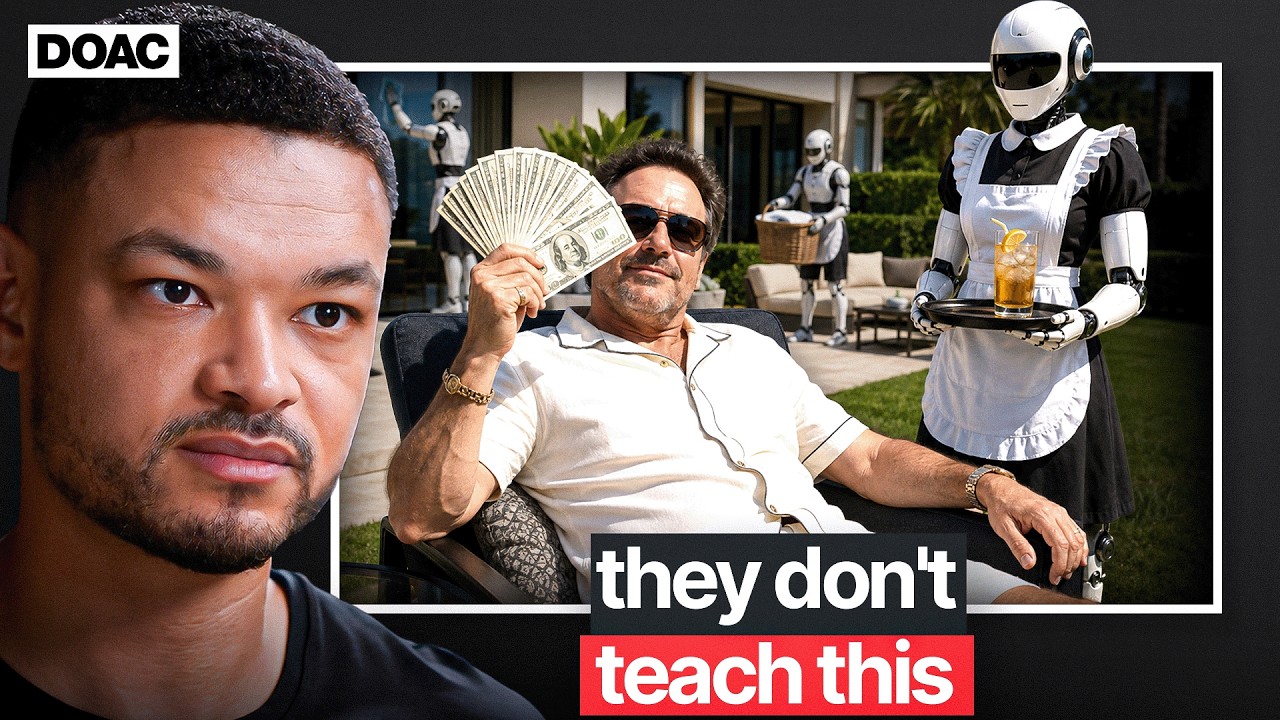
A week after starting the project, the first working version of a custom internal hiring system landed on Steven Bartlett’s screen, and his immediate reaction was that it was significantly better than the tool his companies had been paying tens of thousands of dollars a year to license. That single moment reframed what AI has quietly done to one of the most exclusive categories in business. Software used to require armies of developers, millions in funding, and ten thousand customers just to break even. Now it requires almost none of that, and the people who understand what that shift actually means are already moving.
When software stopped being a moat
For most of the internet era, building a software-as-a-service company was a game for a few hundred thousand founders globally, at most. You needed ten, twenty, maybe thirty developers to ship something genuinely useful. You needed investors willing to absorb years of development costs. The barrier was not the idea; it was the capital and the talent required to execute it.
AI has collapsed all three constraints simultaneously. There are now software companies running profitably on 500 or 1,000 customers, serving tiny specialist niches, built by people who are not professional engineers. The guest on this conversation put the scale of the shift plainly: what Bartlett’s team built in one week would have cost roughly 500,000 dollars and taken around 18 months end to end just a few years ago.
But the same observation that makes this exciting also contains the warning. As Bartlett noted, the moment a tool becomes easy to replicate, it starts losing value at roughly the same rate it becomes accessible. A standalone productivity app is a commodity the day after launch. What holds value is what surrounds it: a community, a training curriculum, a bootcamp, an annual retreat, a funding network attached to the software so that the tool becomes an entry point into something irreplaceable rather than just another download.
What AI genuinely cannot do
The more durable opportunity in the conversation is not software at all. It is what the guest called personal playbooks: the specific, lived, first-person experiences that no AI system has access to because it has never lived them.
The example that landed hardest was a financial planner named Matt Pitcher, who gave a TED talk about what it was actually like to sit face to face with a hundred lottery winners in the week after they discovered they had won. Half a million views in the first few weeks. Not because he explained lottery psychology, but because he was the only person on earth who could describe those specific living rooms, those specific faces. The AI has all the data on lottery winners. It has none of his memory.
Bartlett made the same point from his own feed: his best-performing post this year was his marriage proposal, a moment no AI has ever experienced and no AI can replicate. As the guest framed it, ‘relatable beats impressive,’ and that dynamic only intensifies as informational content gets commoditized. The streamers who sit with their audience for seven hours watching television together and actually talking to them in real time are building something closer to genuine friendship than any algorithm-optimized post ever will.
The practical conclusion is a product ecosystem rather than a single product: personal intellectual property, a community that connects with it, and then a layered set of revenue streams built on top, speaking, courses, software, events, coaching, royalties, all running in parallel because AI makes the overhead of running twenty projects simultaneously manageable for a small team.
For anyone still eyeing the traditional professional path, the conversation offered a pointed counterweight. A legal dispute that a law firm quoted at 50,000 pounds to begin was resolved using Claude at twenty dollars a month, including decision-tree documents and a negotiation script. Meanwhile, the people who work with their hands, plumbers, electricians, concreters, are looking at a supply gap created by decades of universities steering young people away from trades, into degrees with no attached job market.
Matt Pitcher’s living rooms
Somewhere in his client files sits the record of a hundred separate conversations with people who had just won the British lottery, each one in a different house, each one a week after their life changed. Pitcher spent years accumulating those meetings without fully recognizing what they added up to, until he connected the dots and realized no other financial planner in the world had sat in those rooms.
The week he found his blue ocean, he had been carrying it for years without knowing it.
Bartlett’s hiring system is still running on the version his team shipped in its first week, bespoke and better than the expensive licensed alternative it replaced, which is roughly the same story as the living rooms: the thing that already exists, close at hand, turns out to be the opportunity.
 Wake up to Only Happy News!