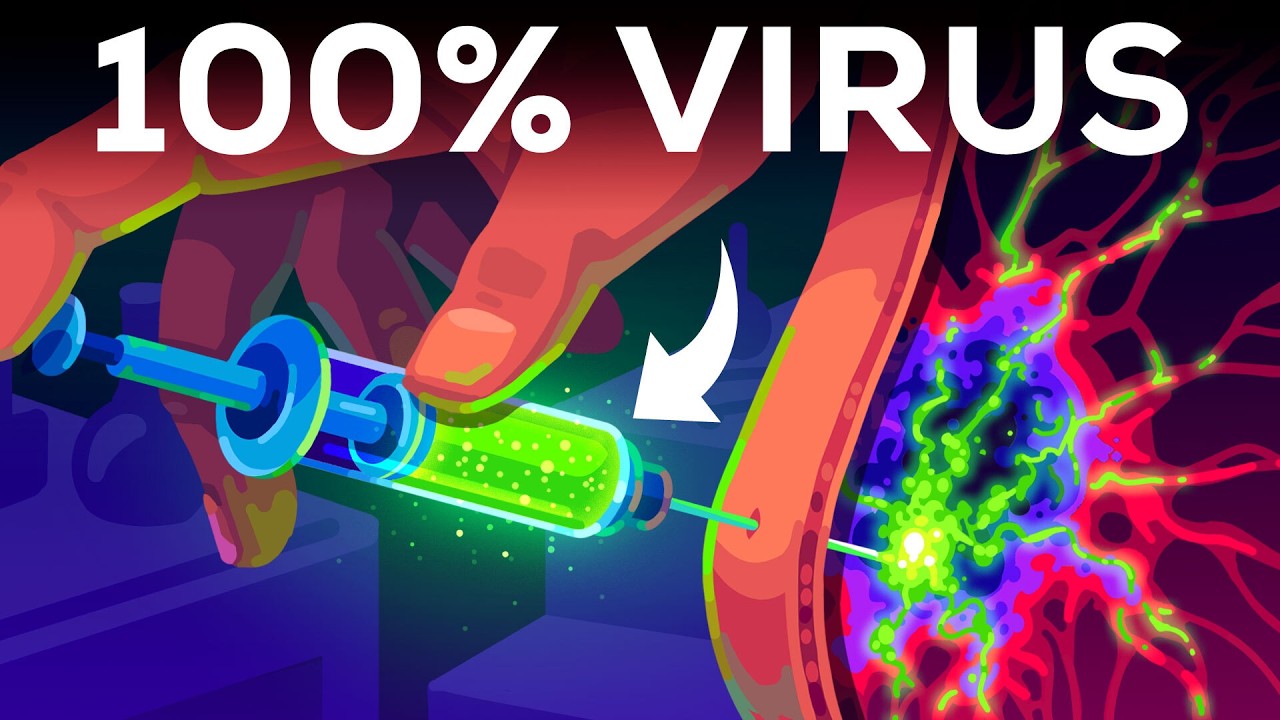
A sharp needle broke skin and pierced a firm, dark tumor growing on Dr. Beata Halassy’s own body. The Croatian virologist had spent years studying the very pathogens she was now deliberately introducing into her own cancer, and what happened next would quietly shake the foundations of how oncologists think about one of medicine’s oldest enemies. For anyone who has watched a loved one cycle through chemotherapy and emerge diminished, her story raises an urgent question: what if there is another weapon, and we have been waiting too long to use it?
Beata’s cancer history was brutal by any measure. A breast cancer diagnosis led to surgery and four cycles of harsh chemotherapy, a treatment she credited with wiping out nearly everything, including most of her immune system, her hair, and the cells lining her digestive tract. She believed, reasonably, that if that regimen could not finish the job, nothing could. At least one cell disagreed. The cancer returned, was removed, then returned again, this time as a hard dark mass actively invading her muscles and skin. Stage 3b. The odds of survival if it continued spreading were very slim.
Why cancer cells are uniquely helpless against a virus
The science behind Beata’s plan stretches back to accidental observations in the early 20th century, when physicians noticed that tumors sometimes shrank in patients who caught influenza or measles. The reason, once understood, is almost elegant in its cruelty toward cancer. Healthy cells infected by a virus have three lines of defense: they slow their own activity to starve the virus of replication machinery, they signal the immune system for reinforcements, and as a last resort they trigger their own self-destruction to take the virus with them. Cancer cells, corrupted by the very mutations that make them dangerous, have lost all three abilities. They cannot slow down, cannot call for immune help (the immune system is already trying to kill them), and their self-destruct mechanism is broken. A virus, as Beata understood perfectly, walks into a tumor the way a predator walks into a pen.
The harder problem is keeping that predator useful inside a living human body without killing the patient in the process. Virotherapy had been an active research field for decades, stumbling on exactly this challenge: three complex, adaptive systems, virus, tumor, and immune response, fighting each other simultaneously inside a person who has to survive all of it.
Eighty million viruses, two months, one decision
Beata made the call to forgo another round of chemotherapy and keep her immune system intact and ready, because without a functional immune response the virus can kill cancer cells all day and achieve very little. She and her colleagues at her lab in Croatia bred two viruses she knew intimately. The first was the weakened measles strain used in vaccines for more than 40 years. Her team produced a syringe containing roughly 600,000 of them and pushed it directly into the tumor.
For a while, nothing visible happened. Then the tumor nearly doubled in size and turned spiky. What looked like disaster was actually the immune system jolting awake. The measles virus had shattered the chemical defense zone the cancer had built around itself to hide from immune cells, and suddenly the body could see what had been lurking there. Millions of immune cells flooded the site. The swelling was them arriving furious and armed.
Beata described the moment the therapy shifted as the immune system having had a hidden archenemy ‘suddenly ripped from the shadows and without protection.’ Over the following weeks, at least 80 million viruses total were injected in rotating doses. When the immune system grew too effective against measles and threatened to clear it before the tumor was finished, she introduced a second virus: VSV, a mild relative of rabies that rarely infects humans and produces, at worst, flu-like symptoms. She developed a fever and chills within a day of that first injection. Those were her only side effects across the entire experiment.
After two months, the tumor had shrunk by 63 percent, gone soft, and completely stopped its advance into surrounding muscle and skin. Surgeons removed what remained. When pathologists examined it, half the remaining mass was immune cells still actively destroying cancer tissue. Six years later, at the time this piece was produced, the cancer has not returned.
A researcher still inside the experiment
Beata’s self-treatment drew both admiration and sharp criticism from medical ethicists, because the viruses and methods she used were not approved for use in humans outside of formal trials. The tension she exposed is real: current clinical rules tend to restrict experimental cancer therapies to late-stage patients who have already exhausted conventional options, which means novel treatments are most often tested in people whose immune systems are already severely weakened and whose cancers are at full strength, the least favorable conditions possible for a therapy that depends on immune response.
Over 100 studies were actively testing viruses against cancer in humans at the time of publication, with a growing number focused on earlier-stage disease, a direct reflection of the conversation her case forced open. In 2026, more than a dozen trials are specifically examining viruses as early-stage cancer therapies.
Virotherapy is not a universal cure. Cancer is hundreds of distinct diseases, and the best approach depends on type, location, and spread. But as Beata demonstrated, it can be a weapon worth reaching for sooner.
The tumor that sat in a lab dish, half full of fighting immune cells
When pathologists opened the removed mass, they found it still warm with activity: immune cells locked in battle with the last cancer cells, doing exactly what Beata had spent two months recruiting them to do.
The needle that started everything was an ordinary lab syringe, loaded with 600,000 weakened measles viruses and pushed by a virologist into her own body. Six years later, there is nothing left to find.