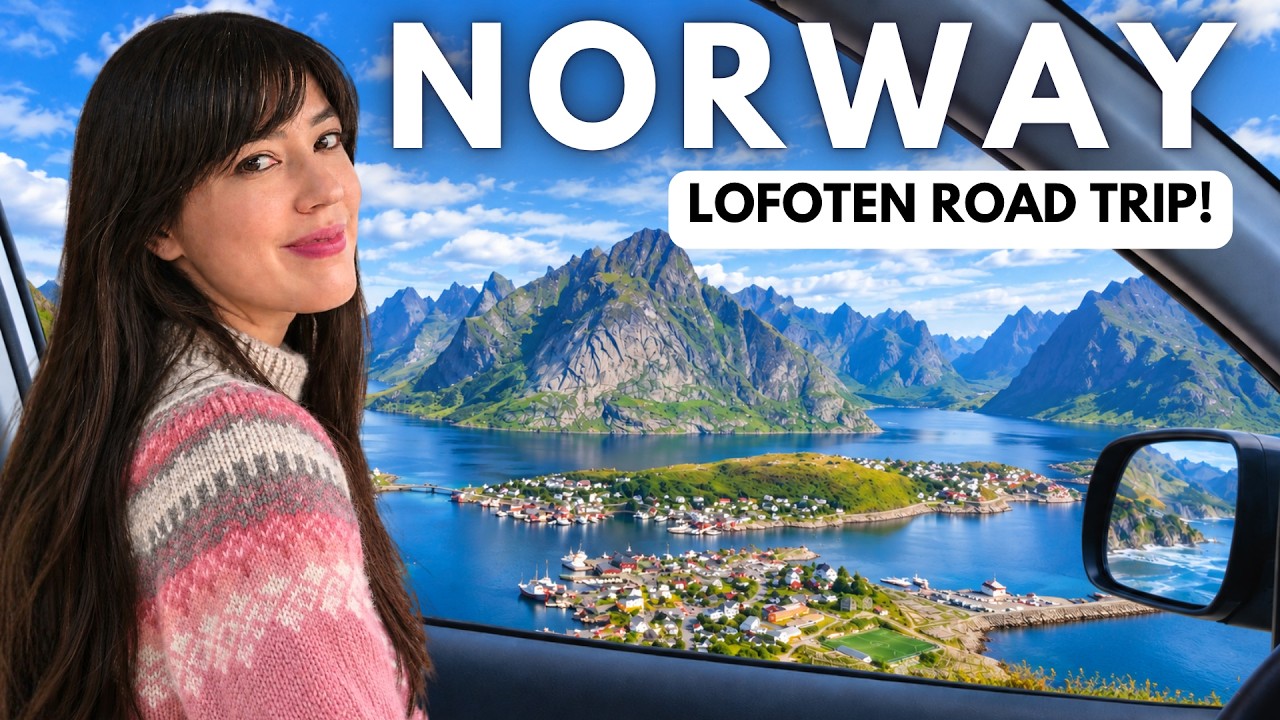
On a cold, rainy afternoon on the Lofoten Islands, a former Oslo chef named Nicholas set three courses on the table inside his apartment and quietly changed the expectations of everyone sitting around it. Lofoten has spent centuries feeding the world dried cod from its windswept racks, but the people choosing to build lives here now are doing something more unexpected: turning one of Europe’s most remote archipelagos into a place worth staying in on purpose. The journey south through northern Norway, from the city of Tromso all the way to Lofoten’s outermost villages, reveals exactly how they are pulling it off.
The trip begins in Tromso, widely called the gateway to the Arctic and the largest city in northern Norway, where the Arctic Church and the city center offer a last taste of urban life before the road narrows and the mountains take over. From there, the route moves to Senja, Norway’s second-largest island, sometimes described as Norway in miniature because nearly every landscape the country is known for, jagged peaks, fjords, forests, and tiny fishing villages, is compressed into a single island. The first hike of the trip climbs to a peak beside the famous Segla, the most iconic summit on Senja. Hail arrives somewhere in the final stretch. The first mile, as the trail description bluntly puts it, is ‘deceptively boring and straight uphill,’ but the panoramic 360-degree views from the top make the effort feel almost unfair in the best possible way.
Where troll mythology meets sustainable tourism
Lofoten opens at Svolvaer, the northeastern gateway to the archipelago, and the first excursion heads straight onto the water toward Trollfjord, one of the region’s most photographed waterways. The boat company running the trip is Brim Explorer, which operates with an explicit commitment to sustainable and responsible tourism and cuts the engine at the fjord entrance so passengers can take in the silence, the eagles circling the cliffs, and the sheer walls of rock dropping into the water. The guide aboard offers the fjord’s origin story with complete sincerity: a troll chieftain named Hin Risen, a dispute over grazing cows near a mountain lake, an axe that slipped during a three-day march, and the resulting split in the rock that formed the fjord. The boat itself has three viewing levels and an indoor area with floor-to-ceiling windows that, as one traveler noted, feels more like a coffee shop than a vessel.
Henningsvær, once one of Lofoten’s most important fishing villages, now carries a reputation for being, in the words of locals, somewhat hip. Its famous football pitch, unremarkable from ground level, becomes extraordinary when seen from above, sitting at the edge of the water surrounded by small islands. The fishing legacy is still physically present, though. Stockfish racks still stand across the archipelago, and at Torgersen Fabrikken, a hotel, cafe, and restaurant built inside a converted old cod steamy, a man named Mutz explains how he arrived 12 years ago by coincidence, fell in love with the place, and ended up buying the building with a group of friends. He put it plainly: ‘When you’re coming here visiting here, you get a different connection to the world and you have a different motivation for life.’
A dinner party above the Arctic Circle
Nicholas, who moved from just outside Oslo three years ago and now runs a food truck using local ingredients, hosted a three-course dinner that began with fresh cod caught ten minutes from shore, prepared ceviche-style with pickled red onions, lime, jalapeno, and pomegranate. The main course was Norwegian duck rendered in its own fat, served with caramelized apricots, a puree, and a balsamic glaze. The final course was a dry-aged steak, aged 30 days by a local butcher who also supplies his food truck, finished with olive oil and salt in a style he described as the Spanish way. The grass-fed flavor was, by unanimous agreement around the table, nothing like a standard steak. The Norwegian word for delicious, which came out sounding roughly like ‘skumdigg,’ got a pronunciation lesson that did not entirely take.
Reine, at the southwestern end of the archipelago, offers the region’s most famous hike, 2,000 stone steps to a peak above the village, steps built by Nepalese Sherpas. Illness and unpredictable weather kept that particular climb off the itinerary this trip. But Reinevagen fjord, the network of waterways behind the village, is accessible by kayak, which offers a perspective no road can match. Somewhere along the paddle, a house becomes visible on the far shore, reachable only by boat. The couple who live there are 75 years old and do it year-round.
And then, almost impossibly, there are surfers. Ramberg is the most popular beach in the region, and a spot called Flakstad draws beginners to gentler breaks fed by consistent swells rolling in from the Norwegian Sea. The Gulf Stream keeps the water warmer than the latitude suggests. Steps from the sand, a beach bar serves hot chocolate with live acoustic music.
The food truck parked beside the mountain
Nicholas’s food truck, which he operates out of Lofoten serving homemade food with local ingredients, is now expanding into a dinner experience for visitors who want to book a seat at the table rather than a window at a restaurant. The cod, the duck, the dry-aged beef, and the view out the apartment window are all part of what he describes as easy living: slow, good-tasting, and occasionally involving a hike at four in the morning because the sun is still up.
The road south through Senja and Lofoten delivers exactly the rugged wilderness it promises, peaks rising straight from the sea, eagles overhead, kayak paddles dipping into fjord water so clear the bottom is visible. But the detail that holds longest is a dinner table in a small apartment, a cod caught ten minutes offshore, and a chef who left Oslo three years ago and has not seriously considered leaving since.