Sam Bentley had eight good news stories to share, and not one of them made the doomscrolling feed. From a Scottish sand dune that survived a second golf course attempt to a device pulling drinking water out of desert air for refugee families, the news cycle had missed all of it. These are the stories that actually happened, quietly, while everyone was looking elsewhere.
When enough people pushed back, the platforms had to move
Etsy opened the week’s good news by banning AI-generated knitting patterns, recipes, and other practical instructions after sellers and buyers pushed back hard against AI slop flooding the marketplace. Sellers must now show a real, made result to prove their guides work. Detection tools for misleading images are also coming. How much it helps will depend on enforcement, but as Bentley put it, ‘it’s proof that when enough people push back, even the big platforms have to listen.’
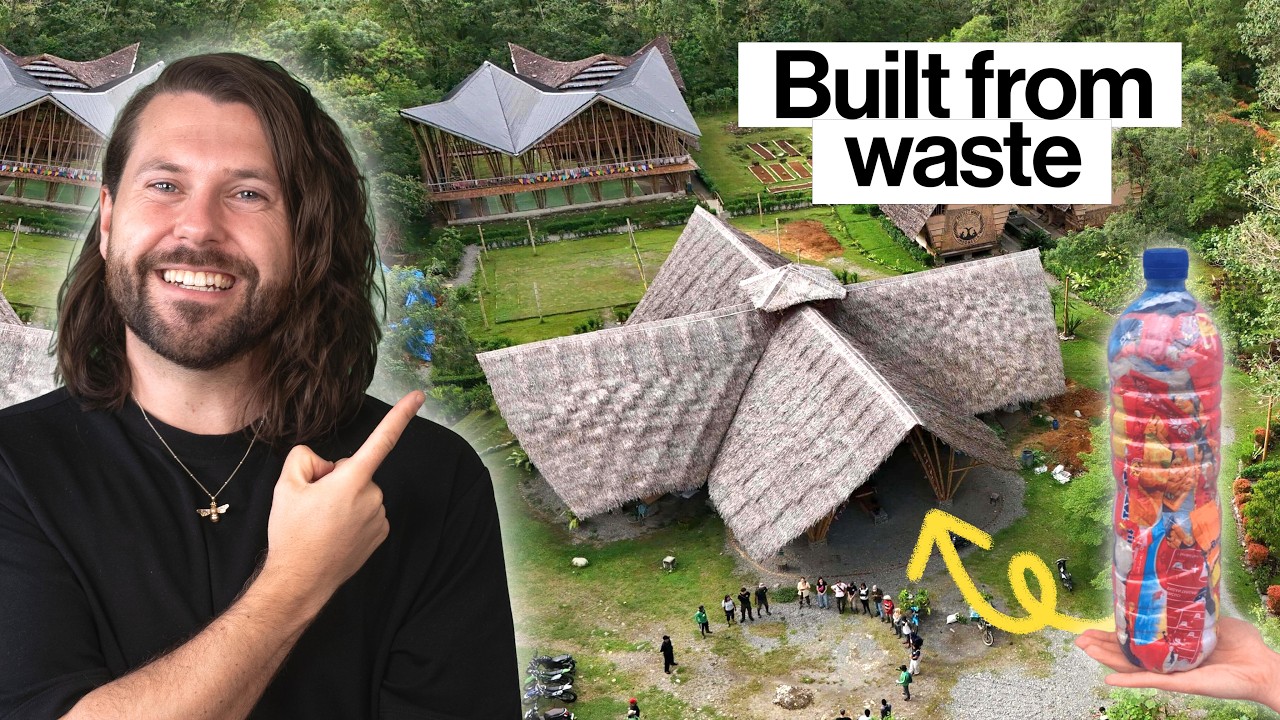
In Indonesia, the charity Project Wings turned that same kind of collective effort into something physical. Starting in 2018, fundraisers travelling through Sumatra watched the island drowning in plastic waste and began paying locals to collect it, clean it, and pack it into bottles called ecobricks. Those bottles, fitted between bamboo supports and covered with clay, became the walls of what Project Wings calls the world’s biggest recycling village. Classrooms, a library, and shared community spaces now bring children and adults together for lessons and environmental workshops, with the long-term aim of full financial self-sufficiency run by local people.
New York City councillors voted to phase out the city’s horse-drawn carriages by June 2028, following decades of campaigning. Carriage rides have been part of Central Park since 1858. Under the new bill, the horses would be protected from slaughter or transfer to another carriage operation, and the city would help find humane retirement options. A transition plan for carriage drivers and stable workers is also required.
Dutch inventors, London streets, and beavers doing the work for free
In the Netherlands, Groasis director Wout Hoff demonstrated the Waterboxx plant cocoon, a device that sits around a sapling, catches rain and dew, and drips that water slowly to the roots with no pumps and no irrigation, using 90 percent less water than conventional methods. More than 90 percent of trees planted with it survive, across 60 countries. In a refugee camp in southern Algeria in 2021, 7,000 of the devices were deployed by the World Food Programme: families who received them grew fig trees, olive trees, and vegetables in makeshift greenhouses and were able to buy fish and meat and genuinely diversify their diets.
Also in the Netherlands, a company called Paebbl is capturing CO2 from industry and mixing it with crushed olivine, a volcanic rock, turning carbon into a powder in an hour that nature would take centuries to process. That powder replaces some of the cement in concrete, locking the carbon away permanently. And in Eindhoven, two designers are 3D printing building materials from living algae and mushroom roots, with one already producing a vase from seaweed and algae starches that can replace plastics.
Back in the UK, almost a kilometre of Oxford Street has been pedestrianised between Great Portland Street and Orchard Street, with cars, buses, and taxis diverted. Producer Anna walked the stretch and confirmed it was a dramatic change from just three weeks prior. Over 50 new trees, two public squares, and clear signage are coming by the end of spring 2027. Barcelona’s experience in the Sant Antoni neighbourhood is an encouraging precedent: local shops feared losing customers but saw business rise by around 30 percent, air pollution dropped, and most residents said life simply felt better.
In Poland, Planet Wild and Rewilding Oder Delta are protecting land at an abandoned fish farm and letting local beavers move in. Beavers had been hunted nearly to extinction by the early 1900s, leaving just 1,200 in Europe. Hunting bans and reintroductions have brought that number back to over 1.5 million. At the Polish site, Planet Wild purchased 20 hectares, planted 9,000 willow trees as a favourite beaver food source, and provided locals with fencing and tree guards. The beavers have already started building dams and turning brown areas green within weeks. The land is expected to benefit around 400 surrounding hectares by holding water, filtering it, and helping prevent wildfires.
In Scotland, plans for a golf course on Coul Links, a stretch of wild Highland sand dunes home to rare butterflies, wintering birds, and an insect that exists nowhere else on Earth, were refused by the Scottish Government. It was the second time this exact stretch had been saved from the same fate.
Finally, at a UN meeting in Vienna, governments backed a proposal led by Brazil and supported by 83 countries to begin work on the world’s first global treaty against environmental crime, targeting the cross-border trafficking of wildlife, timber, minerals, and waste. A draft is expected in 2028.
The sapling drinking morning dew in an Algerian desert camp
Somewhere in the south of Algeria, a fig tree is growing in a makeshift greenhouse beside a family’s tent, watered by nothing more than a plastic box catching overnight dew and feeding it slowly down to the roots.
That image, more than any vote or policy, is the shape of the week’s good news: small, deliberate, and already alive.
 Wake up to Only Happy News!