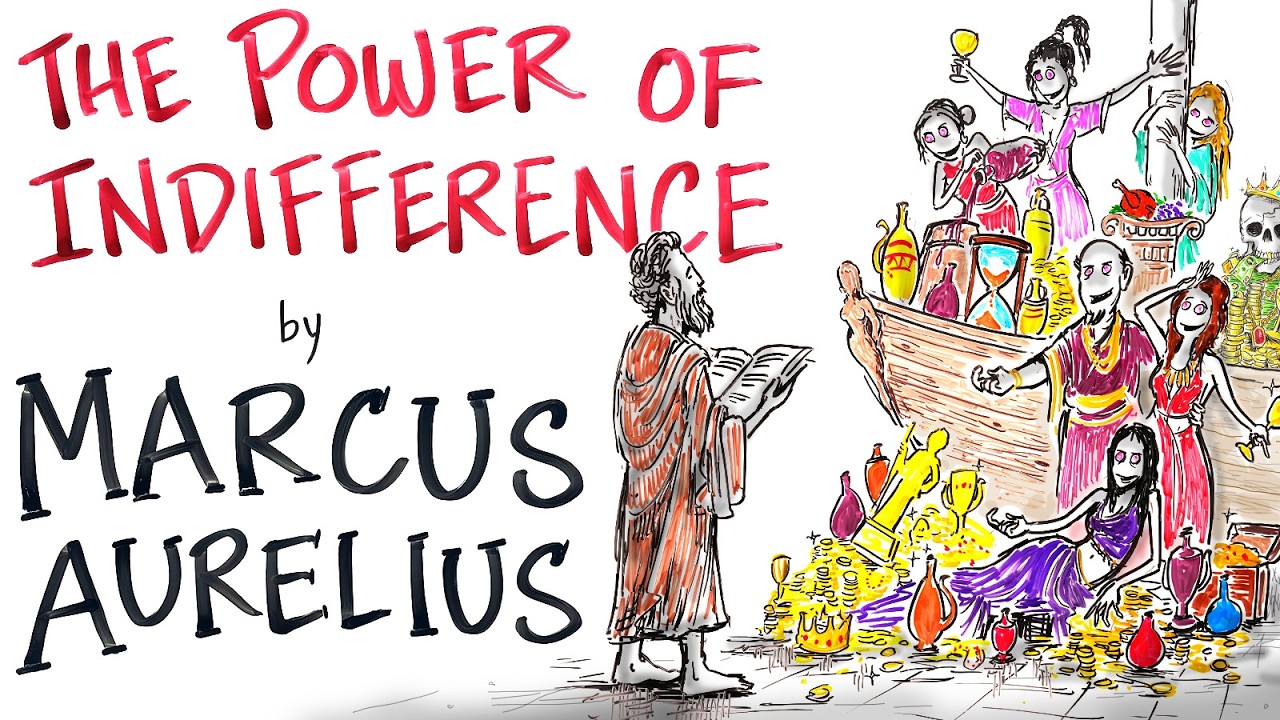
Marcus Aurelius, emperor of Rome from 161 to 180 AD, once put it with disarming simplicity: ‘A bitter cucumber, throw it away. Brambles in the path, go around them. That is all you need.’ No emperor’s flourish, no elaborate decree. Just a private note a man wrote to himself, never intending another soul to read it. That quiet honesty is why his words have survived nearly two thousand years, and why the core idea behind them, what Aurelius called indifference, is worth sitting with right now. He was the most powerful person on Earth for nineteen years, with every earthly temptation available to him, and he spent that time writing philosophy to himself in Greek rather than indulging it.
What indifference actually means and what it doesn’t
The concept trips people up immediately. Indifference, as Aurelius practiced it, is not numbness. It is not the studied cool of someone pretending not to care. It is a deliberate separation of the rational mind from outcomes it cannot control, so that clear thinking becomes possible even when circumstances are ugly. The distinction matters enormously. Much of daily suffering comes not from hard events themselves but from the resistance to them, from the mental insistence that things should be other than they are.
Aurelius used a striking image to make the point. He described a spring of clear, sweet water. A man walks up and curses it. Throws in mud and dung. The spring simply breaks it down, washes it away, and keeps bubbling up clean. ‘How then can you secure an everlasting spring and not a cistern,’ he asked, ‘by keeping yourself at all times intent on freedom and staying kind, simple and decent.’ The spring does not negotiate with the mud. It does not resent it. It processes it and moves on.
He went further, pointing to the natural world as the model. Bread splits open in the oven, and those very cracks catch the eye and sharpen the appetite. A fig bursts at full maturity. An olive ripened to the edge of decay has its own particular beauty. ‘Any man with a feeling and deeper insight for the workings of the whole,’ he wrote, ‘will find some pleasure in almost any aspect of their disposition. He will see a kind of bloom and fresh beauty in an old woman or old man.’ The crack in the loaf is not a flaw in the system. It is the system working exactly as it should.
The difference between what you’re given and what you make of it
Aurelius turned this attitude directly onto his own suffering. Every hardship he faced, he treated as training for something larger. ‘Why see more misfortune in the event than fortune in your ability to bear it?’ he wrote. ‘This is no misfortune, but to bear it true to yourself is good fortune.’ That reframe is not wishful thinking. It is a practical tool for keeping the rational mind in charge instead of being dragged by fear and impulse.
He was equally clear that indifference has a hard limit. It does not mean caring about nothing. It means conserving care for what is genuinely within reach. Every bird, bee, and plant has a role to fulfill, he observed. A tree grows big and powerful not for fame or praise but because that is what it was put on Earth to do. The goal for a human being is the same: reach toward the highest version of the self, not because perfection is achievable in any permanent way, but because the pursuit itself is what keeps a person oriented correctly. As Aurelius put it plainly: ‘Fate is what you were given. Destiny is what you make of it.’
The man who wanted these words burned
Aurelius never intended his meditations to be published. He wanted them destroyed after his death. There was no audience in mind, no reputation to build, no agenda. The writing was a private conversation between what he called his higher self, the conscious rational mind, and his lower self, the impulses and programs running underneath. That context makes every line land differently. He was not performing philosophy. He was doing it, alone, in the margins of an empire.
The words survive anyway, translated into nearly every language, read by millions of people who were never supposed to find them.
A notebook that was never meant to last
Somewhere in the private record of his nineteen years in power, Marcus Aurelius wrote notes to himself about cucumbers and springs and cracked bread, trying to talk his own lower impulses into better behavior.
The notebook he wanted burned is still in print.