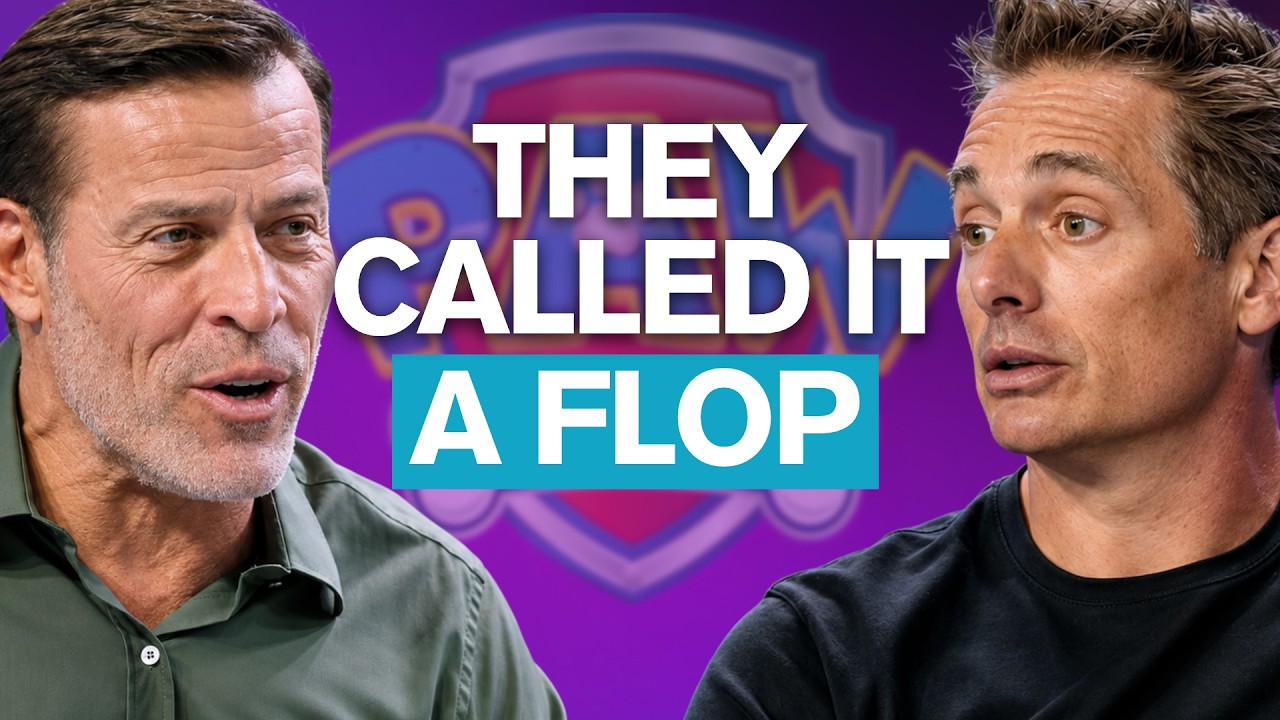
Anton Rabie was selling fertilizer door to door at 13 years old, pocketing the paper route money that bought his first set of weights, and already learning something the toy industry would later pay billions to understand: rejection is just the cost of showing up. That early stubbornness would eventually underwrite PAW Patrol, Bakugan, Rubik’s Cube, and 35 acquisitions, pulling Spin Master from a folding table on Toronto’s Yonge Street to north of two billion dollars in annual revenue. But the most instructive chapter of that story is not the win. It is the eleven million dollars that disappeared without a product ever reaching a shelf.
The failure they turned into a floor display
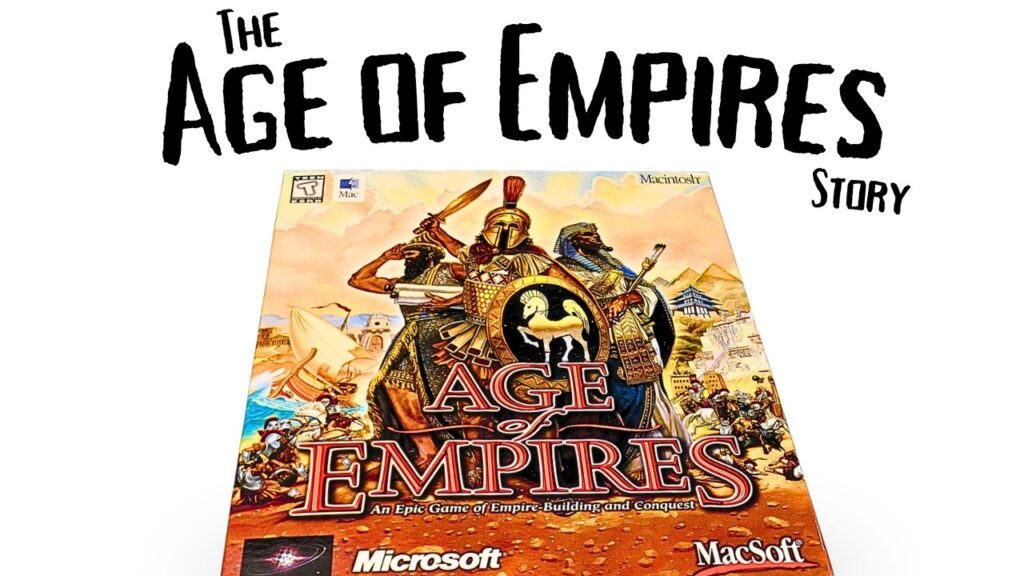
In the early 2000s, Spin Master owned Tech Deck, the miniature finger skateboard line they had scaled from twenty million to roughly seventy million dollars in sales. Confident in the momentum, the company committed two and a half years and eleven million dollars to a mobile digital spinoff called Tech Deck Live. It never launched. The team had pulled experienced designers from Hot Wheels and put them in charge of software code, a discipline they had never worked in. ‘The leaders of Tech Deck Live didn’t have domain mastery,’ Rabie said, and there was no one on the inside with the knowledge to catch the drift before the money ran out. Thirty-six people lost their jobs when the lights went off in the Los Angeles office.
Rather than bury the episode, Rabie enshrined it. On the sixth floor outside the Spin Master boardroom in Toronto, there is now a showcase of every product the company has failed with, each one behind glass with a card beneath it explaining what the team learned. It is, by most accounts, the favorite stop on the tour.
How the learnings from that loss built a fifteen-billion-dollar franchise
A few years after Tech Deck Live collapsed, the partners turned to preschool. They made a list of the five best creators in the space, sent a brief to each of them, and waited. The one who came back was Keith Chapman, the man who created Bob the Builder. Instead of building an internal animation studio, the way they had made software in-house on Tech Deck Live, they contracted a Toronto animation company for production, then structured a partnership with Paramount and Nickelodeon for broadcasting. When Bakugan had worked, it had worked because Spin Master flew to Japan, identified the leading anime company, and aligned every royalty stream so that licensing from Bakugan pajamas to sequels flowed into a shared pool, with each partner holding a proportional stake rather than a flat work-for-hire fee. The same logic carried into PAW Patrol. ‘We shared a percentage of PAW Patrol and we were so aligned with our interests,’ Rabie explained. ‘It’s the partnerships that scaled our company into the billions.’
The show itself came from an internal experiment that had not been tried before: Spin Master put toy designers, whose entire careers had been spent thinking in plastic and metal, in the same room as storytellers before a single script existed. The question they were told to answer together was how to build magical transformation into five rescue dogs. The answer was that each pup’s home would convert into a vehicle, so the transformation the toy designers could see on a workbench was the same transformation a child would watch on screen.
The napkin deal and the 360
At 28, with Spin Master doubling revenue every year and roughly sixty people on staff, Rabie received a 360-degree leadership review arranged by his uncle, a certified business coach from Connecticut. The cover read: overall rating, six out of ten. His listening skills scored 5.8. One anonymous respondent wrote ‘shame on him.’ The next morning, Rabie printed his lowest scores and pinned them above his monitor. He hired two coaches and repeated the 360 every three years for the next two decades.
The same instinct that turned a printed failure score into a daily reminder showed up in acquisitions. Sitting across from Joel of Cardinal Games in Arizona, Rabie wrote a company valuation on a napkin and closed the deal at the table. Over half of Spin Master’s revenue today traces back to its 35 acquisitions, with the smallest deals consistently returning the best margins. Erno Rubik, inventor of the Rubik’s Cube and a man approached by larger competitors, chose Spin Master based on what he described as the goodwill of the organization.
The shrine on the sixth floor
Somewhere on that sixth-floor corridor in Toronto, behind glass, sits the Tech Deck Live entry: a product that cost eleven million dollars and never found a customer, with a small card beneath it explaining what broke and what the team wrote down before moving on.
Rabie puts the full ledger plainly: ‘We lost eleven million dollars in Tech Deck Live. We’ve done over fifteen billion in PAW Patrol. You want to know why I love failures?’
 Wake up to Only Happy News!