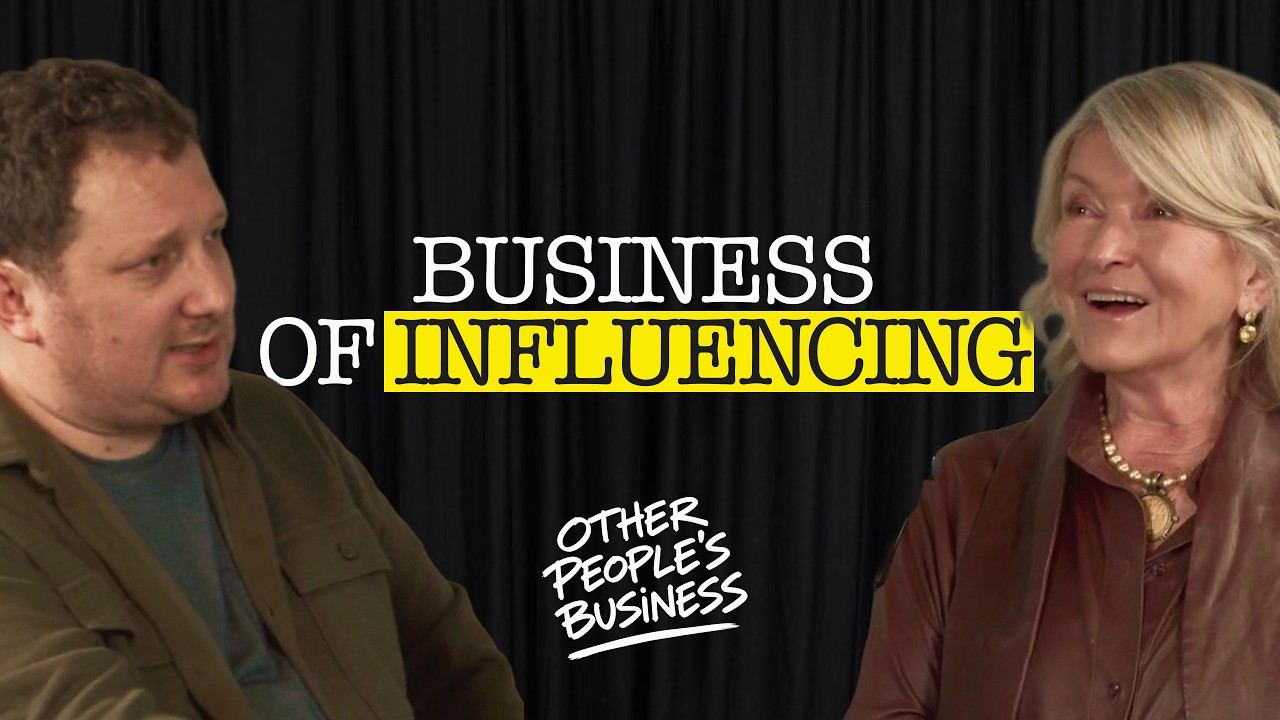
Martha Stewart walked into the MasterClass studio at 84 years old with a single operating principle she has never once abandoned: if she is going to work hard, she is going to get paid. That philosophy, applied without apology across four decades and every category of the American home, turned a catering business grossing just over a million dollars into a publicly traded empire that made her the first woman in America worth a billion dollars. The mechanics of how she got there, and where the money actually came from at each stage, are rarely discussed with this kind of precision. They were here.
The Kmart deal that changed what a brand could be worth
Before the internet, before Amazon, before anyone had invented the word ‘influencer,’ Kmart approached Stewart in the 1980s with a proposition: become their lifestyle authority and design product across bed, bath, kitchen, garden, and hardware. Her then-husband, an antitrust lawyer who had spent his career in book publishing, helped negotiate the contract. The structure was unusual for its time: a royalty on every sale, with Kmart absorbing all inventory risk and funding the advertising budget itself. That first-year advertising commitment was $20 million, a figure that stunned even Kmart’s own leadership. They did not yet understand what they had signed.
In the first year alone, hundreds of millions of dollars of product moved. Stewart cleared $65 million a year in royalties, against close to $2 billion in merchandise sales. That income funded the early development of what would become Martha Stewart Living magazine.
The product itself was not without argument. Kmart’s buyers told Stewart that their customers, whom they described explicitly as poor people, did not wash their laundry as often, and so towels needed to come in dark colors. Stewart pushed back directly: ‘Everybody wants beautiful things in their home. Everybody. People are watching Dynasty. Those same people want to emulate the rich.’ She got her white towels made. The white towel became Kmart’s number-one bestselling towel that year.
How the magazine, the TV show, and the Snoop friendship each multiplied the whole thing
Books came next, beginning with a first advance of around $100,000, but the real leverage was the magazine. Three major publishers passed before Time agreed. Conde Nast’s Si Newhouse declined because Stewart wanted her name on the cover and he would not allow it. Rupert Murdoch was already exiting the magazine business entirely. Time signed the deal. Martha Stewart Living became the financial spine of the whole operation, eventually going public at a valuation that made her that first female billionaire.
The television show came over internal objection. Executives worried it would cannibalize magazine readership. Stewart argued the audiences did not overlap, that 160 million Americans broke into distinct groups of readers and viewers. She was right. Television then functioned less as its own profit center and more as the most powerful merchandise accelerator she had. ‘It sends people like crazy to the stores to buy the product,’ she said plainly. ‘It’s public relations.’
The partnership with Snoop Dogg operated on the same amplification logic but with an unexpected demographic result. As Stewart put it, ‘black people liked Martha than white people like Snoop. More white friends ask me about Snoop than black people.’ The collaboration, built around their shared dinner party show, quadrupled her audience and quadrupled his.
Today she is five years into developing a skincare line called Elm Biosciences, created with a dermatologist she named as Dr. Bonosali. She is also building a home intelligence app called HINT, which she describes as drawing on 44 years of original content she has been accumulating since her first book in 1982. She bought her first IBM computer in 1982 as well, walked into their showroom on Madison Avenue and 57th Street, and has been an early adopter of whatever comes next ever since.
One tree in the org chart that nobody pronounces the same way twice
In her MasterClass, Stewart presents an organizational chart she designed in the shape of a tree. Every role and every person gets a tree name. Hers is the beech. She chose it because the beech, she explained, is the mother of all trees. She noted, with evident amusement, that people sometimes mispronounce it on purpose.
The beech tree, labeled and centered at the top of a chart she built to run one of the most complex lifestyle businesses in American history, sitting in a file somewhere between 44 years of cookbooks and a new AI-powered home app.