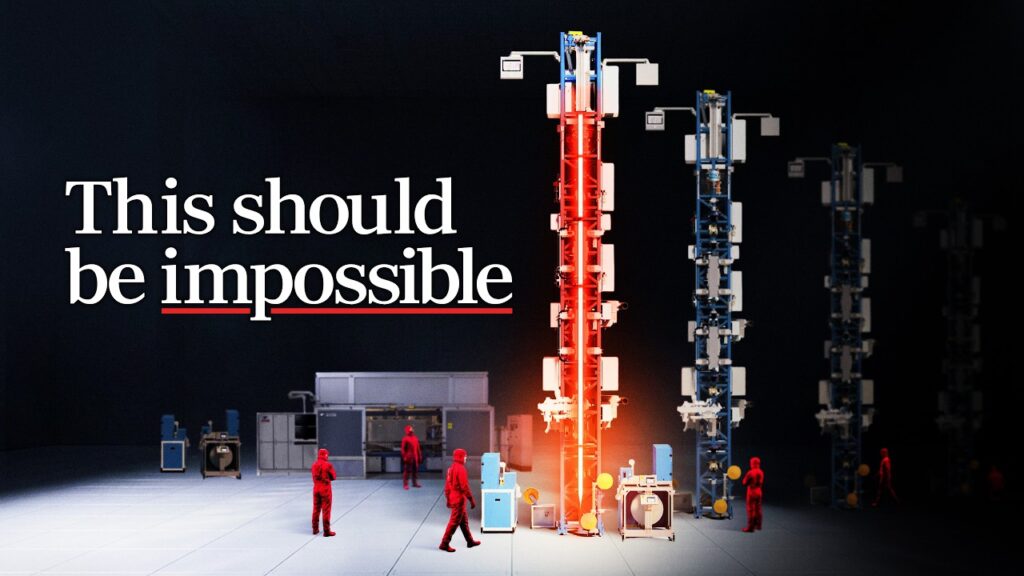
At a factory in New Hampshire that has been connecting continents since 1953, machines run around the clock unwinding thousands of miles of glass thinner than a human hair. SubCom is the only company in the United States that can both manufacture and install the undersea cables that carry nearly every photo, text, and video call sent between continents, and right now its backlog is growing faster than it can ship product out the door. The factory’s roots stretch back to the first transatlantic telephone cable, but today its customers are Google, Meta, Amazon, and Microsoft, four companies that together account for roughly 75 percent of the world’s data and are racing to wire their data centers across every ocean.
Glass, steel, copper, and 55-mile repeaters
The cable itself is a feat of layered engineering. At the center sit hair-thin glass fibers, each one a data superhighway capable of carrying hundreds of terabytes of information every second. A single pair of those fibers can carry enough traffic for half of the humans on Earth to be talking to the other half simultaneously. But the fibers are almost impossibly fragile: a bend too sharp snaps them, and the slightest scratch can cripple a light pulse’s ability to travel thousands of miles.
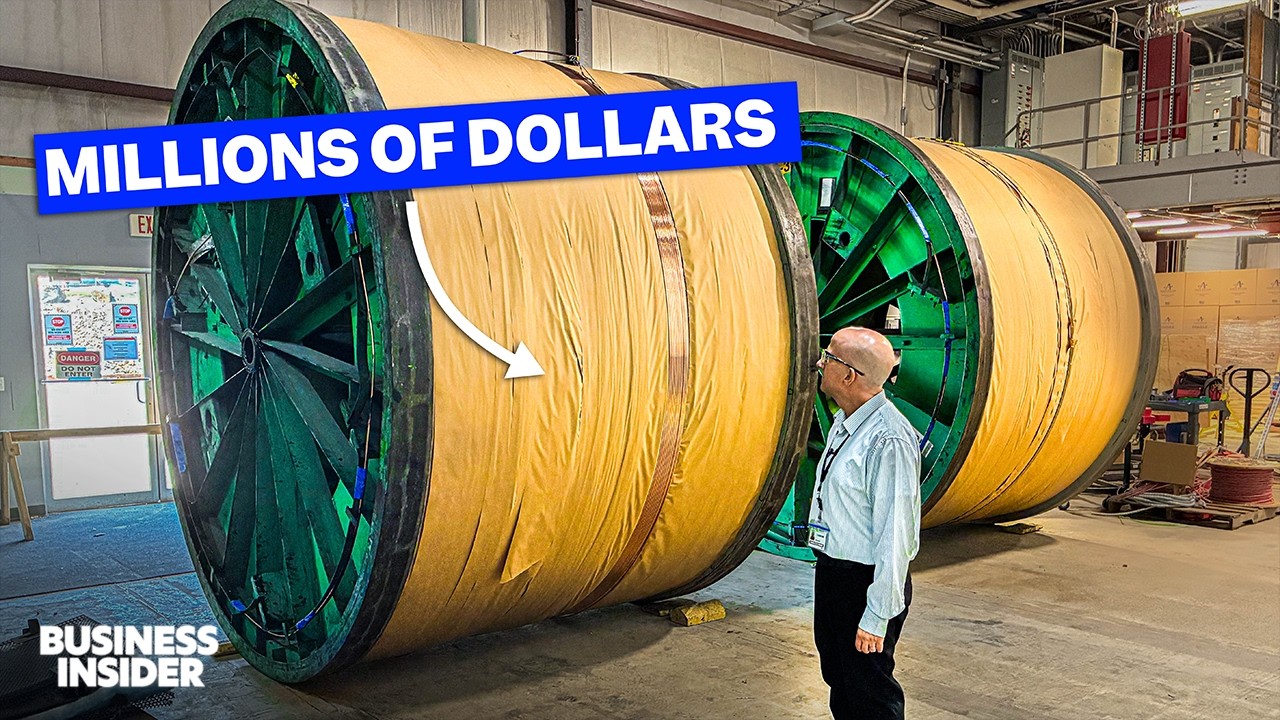
Workers wear protective gear to keep hair and dust off the glass. A machine then wraps the cable in high-tensile steel wire, the same grade of material used to suspend the Golden Gate Bridge. Next comes a copper layer, seam-welded without a gap for the cable’s entire length, because even a pinhole flaw means an immediate repair. That copper sleeve carries electricity down to a device called a repeater, spaced roughly every 55 miles along the cable, which amplifies light pulses as they cross the seafloor. Finished spools, each weighing about 70 tons, are submerged in water and tested with electrical current before anyone signs off on them.
In shallow coastal zones where anchors, fishing trawlers, and rocky seabeds pose the greatest danger, SubCom adds another steel layer plus a coating of nylon thread and tar. The factory now produces over 40,000 miles of cable a year, nearly enough to wrap twice around the Earth, and has doubled output since 2018. Even so, as one senior figure at the company put it: ‘Our backlog is growing faster than we’re getting it out the door.’
Loading a ship and laying the line
Once cable is finished, it feeds directly from the factory to one of SubCom’s eight cable-laying ships, because trucks or rail would take too long and risk damage. Repeaters arrive pre-attached to the cable; each one weighs 800 pounds, and dropping one could cost the company millions of dollars. Below deck, workers do 12-hour shifts in the cable tank, hand-stacking the line in a technique called flaking, leaving no gaps, because a loose section can pull cable from below and cause damage. Loading a single ship can take up to a month.
Captain Emad Eboli and his crew then spend roughly two months at sea laying the line, charting routes on paper as a backup in case GPS fails, skirting earthquake zones and busy shipping lanes. In nearshore areas, a machine using high-pressure water jets buries the cable to protect it from anchors. Beyond the shallow-water threat zone, the cable simply rests on the ocean floor. From start to finish, a single cable project typically takes about a year, though some of SubCom’s current projects are running twice that long. Attacks on commercial ships in the Red Sea have made certain routes more dangerous, and securing permits from every country along a route can take up to five years.
Roughly 100 cables are cut accidentally every year, usually by ship anchors. Repairs require a remotely operated vehicle, a grappling hook to raise the cable, and a fusion splicer that aligns the broken glass fiber ends within microns before melting them together. Workers remove all watches and jewelry before touching the fibers. A single repair can take weeks and cost more than a million dollars.
The worker still stacking cable at midnight
Somewhere in the tank of one of those ships, a worker on a 12-hour flaking shift is laying cable in tight concentric rings, checking for gaps between each pass.
The factory that helped build the first transatlantic telephone cable in 1956 is now building infrastructure for an AI-driven world. Meta’s Project Wolverine, a planned cable connecting the US, Brazil, South Africa, India, Malaysia, and Australia, is expected to cost 10 billion dollars. No technology currently comes close to replacing what SubCom makes: fiber carries thousands of times more data than satellites, and the machines in that New Hampshire factory are still running, one spool at a time.