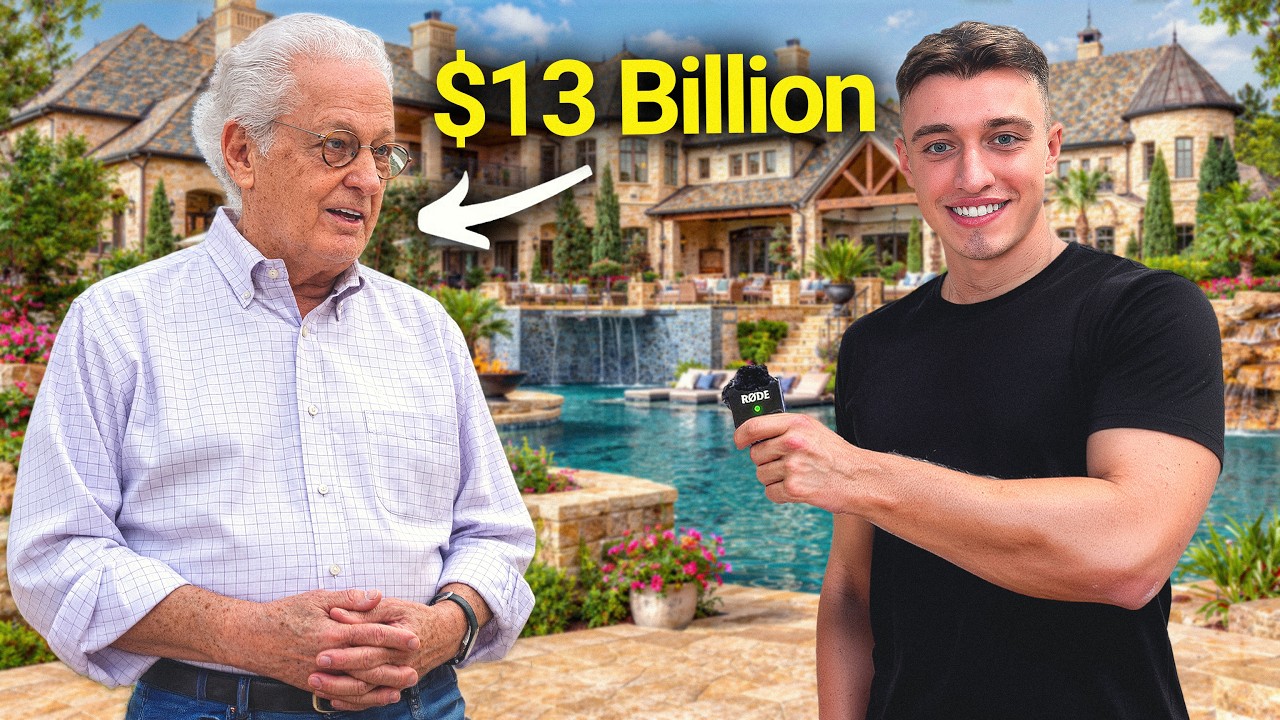
David Green pulled a foot-operated wood chopper from storage and set it on the table. The blades had been removed years ago, but the machine still looked exactly like what it was: a $450 piece of equipment that a young father bought with borrowed money to cut tiny molding strips inside his garage. That chopper, and the $150 left over for glue and raw materials, was the entire starting capital of what would become Hobby Lobby, a company now on track to generate $10 billion in a single year. Green is 84 years old, worth over $13 billion, and still shows up to a campus of 10 to 15 buildings in Oklahoma City that he built one brick at a time.
From a garage in Oklahoma City to over a thousand stores
Green grew up in a family of eight where his father pastored small churches that never drew more than a hundred congregants. Money was tight, but as he recalled, everybody around them was in the same position, so the family never thought of themselves as poor. When he was old enough to work, he took a job as a supervisor for a retail chain called TGNY, and that experience planted something in him. Retail was his instinct, but he had no capital to act on it.
The $600 came from a loan. He spent $450 on the wood chopper, then used the rest on glue, molding stock, and a hand-drawn catalog he paid an artist to illustrate. A salesman went door to door selling the miniature frames to arts and crafts stores. One of those stores was called Hobby Lobby. Green’s operation grew until he could afford to borrow the name, and in 1970 he opened his first retail location in Oklahoma City, roughly 600 square feet of selling floor, stocked almost entirely with craft supplies.
Over the following 55 years, he added departments one category at a time. Art supplies came after crafts. Then more. The company now operates over a thousand stores across 48 states and carries roughly 70,000 items per location. At headquarters, there are dedicated layout rooms where every shelf position and product count is mapped before it reaches a store floor. Standing inside one of those rooms, Green pointed to a data tag on a roll of Gorilla Glue. ‘We sell $84,000 a month’ of that one product, he said, which works out to roughly $3 million in annual profit from a single SKU.
The mistake that nearly ended everything
Green is direct about the lowest point. The company borrowed heavily during an expansion push, ran into losses, and found itself staring at a bank foreclosure. The experience reshaped how Hobby Lobby handles debt permanently. Today the company borrows only to stock Christmas inventory, then returns to zero debt once the holiday season clears. ‘We just feel like we should work on our own profits and our own sales,’ he said.
The same discipline shapes decisions that have cost the company real revenue. Hobby Lobby closes every location on Sunday, foregoing a full day of sales its competitors collect. It stopped carrying Halloween merchandise entirely. Green is matter-of-fact about the short-term losses those calls created, and equally matter-of-fact about his reasoning: those decisions came from his reading of what was right, not from a spreadsheet. The company gives away 60 percent of its profits to ministries, a figure that has added up to billions of dollars over the years.
A wall inside the headquarters campus carries a short list of operating principles: ask the Lord for guidance, have a plan with few exceptions, study constantly, and keep it simple. Green pointed to that last one as the practical key to running a business with 1,100 stores and 70,000 items per location. ‘That’s 77 million different decisions,’ he said. ‘So you better find an easy way to do business.’
The chopper with the blades taken off
The original $450 wood chopper sits in the Hobby Lobby headquarters, its cutting blades removed for safety, one foot pedal still attached where the molding used to feed through.
The catalog Green commissioned that first year, a simple hand-drawn booklet, sits nearby. Between them, they account for $150 of a $600 loan that is now the origin story of one of the largest privately held retailers in America. Green said what he is most proud of has nothing to do with any of it. When asked directly, he answered without pausing: his family. Hobby Lobby, he noted, would not be his first answer.