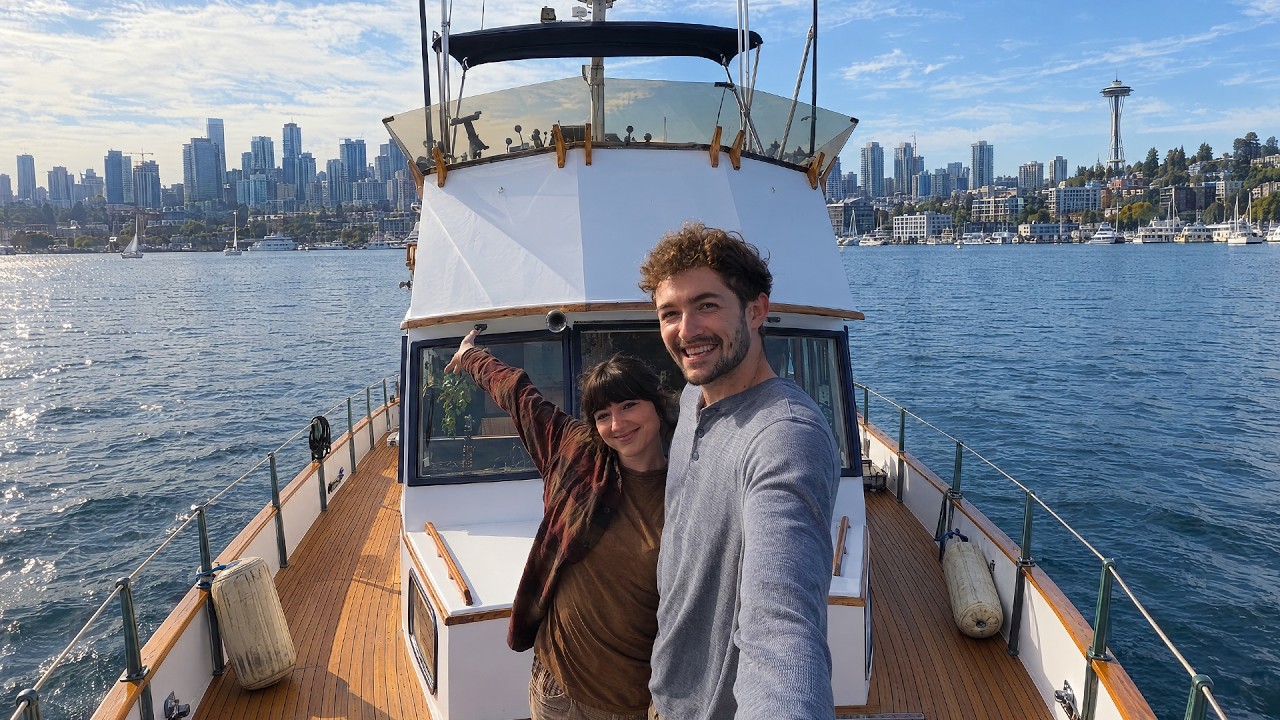
The bilge was full of water when they first climbed aboard Galatea, a 1964 Grand Banks trawler sitting in downtown Seattle in a state of serious disrepair. For most buyers, that image signals a fast exit. For the pair behind Traveler’s Tale, it was exactly the signal they were looking for. Over the following year, they transformed an abandoned vessel into a full-time floating home, and then found a way to make the mortgage effectively disappear.
A motivated seller and a boat full of problems
When the purchase closed, the seller was, as the couple put it, ‘highly motivated.’ That phrase, familiar to anyone who has browsed distressed-property listings, translated in practice to a bargain price and an immediate to-do list. The cabin needed fresh paint. The deck seam gaps required black epoxy, sanding, and a fresh coat of teak sealer. On the starboard engine, the water pump housing was leaking. The floor panel boards had to come out and be replaced. A dinghy winch remote was swapped for an embedded reverse polarity switch rated to handle wet conditions. Then there was the port side hull, which needed fairing and paint work that required the crew to turn the entire boat around using ropes to access the right angle.
The couple had documented the original restoration the previous summer and fall, blending old-fashioned woodwork and brass fittings with the comforts of a modern live-aboard. One full winter later, they were back on deck assessing what the Seattle weather had undone.
Going off-grid on the water at eight dollars a gallon
With diesel running at roughly eight dollars a gallon in the Seattle area, the motivation to cut engine hours was real. The off-grid power overhaul started with a pair of 200-watt flexible Renogy solar panels mounted on the bimini using grommets and heavy-duty zip ties, then wired in parallel down through the center console stack to a combined MPPT solar and DC-to-DC charge controller installed in the engine room. That single unit replaced the need for two separate devices and connected to a new Renogy 300-amp-hour lithium battery, chosen partly because its bolt pattern matched the old battery exactly.
During a test cruise out of the marina and across Lake Washington toward the 520 bridge, a route the two had never taken before with Galatea, the system registered 600 watts of charge at cruising speed. ‘Finally, we’re going to have legitimate charging when we’re cruising out there and we’re not going to have to worry about power,’ one of them said, watching the numbers climb on the app.
They anchored overnight at one of the two designated anchorage bays in the greater Lake Washington network, a spot they had not visited before. That evening produced a long-awaited vegetable stew, a slow oven, and a pair of local ducks still getting comfortable with their new neighbors on the water.
The accidental free home
The couple noted that Facebook Marketplace carries hundreds of boats in similar condition to what Galatea once was, some listed for free to anyone willing to take over the outstanding mortgage and maintenance costs. Their own bargain purchase followed that same logic. Because they documented every stage of the restoration publicly and built an audience along the way, ad revenue from the project has covered the mortgage in full, making the live-aboard life on the water in downtown Seattle functionally free.
A croc and a question about size
Near the end of the anchorage stay, a fishing line came taut and the debate turned immediately to whether the catch was large enough to be legal. One of the two had called it before the pull: it was a big one.
Winter was already pressing in by the time Galatea was back at her slip, and the couple acknowledged they would need to step away from the boat until the following season. The bilge that had once been full of water sat dry, and the 1964 Grand Banks that nobody else wanted held her place in the marina.
 Wake up to Only Happy News!