When Alex Hormozi‘s team set out to launch ‘Money Models,’ they did not just release a book. They broke the Guinness World Record for the fastest-selling non-fiction book of all time, moving $106 million in sales inside 72 hours. For anyone trying to understand how a personal brand actually compounds into something real, that number is a useful place to start. Hormozi argues the result did not come from a clever posting strategy. It came from a framework he built across more than a decade, one that most aspiring creators skip entirely because the first step is genuinely hard.
Do something worth talking about first
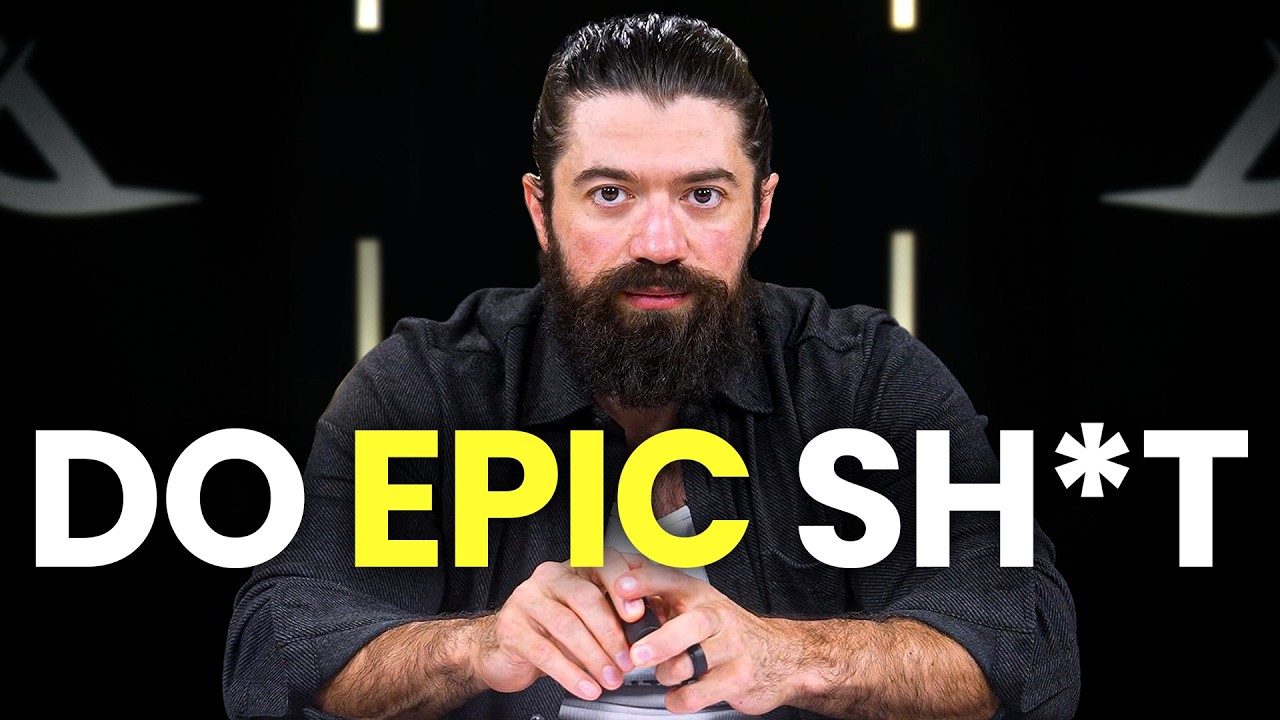
The opening move in Hormozi’s framework is deceptively simple: do epic before you make content about it. He is direct about why most early personal brands fail. ‘No one cares about your opinion until they know it’s worth something,’ he said, pointing out that a 23-year-old who posts for ten years with only six months of real experience will always lose to someone who spends a decade building genuine expertise and then makes content for six months.
The cred, he explains, does not have to come from a single headline accomplishment. Volume of documented work counts just as much. His example is blunt: go on a hundred dates, make a twelve-minute video about all of them, and you hand the audience two seasons of The Bachelor in the time it takes to eat lunch. People do not want the five-year entrepreneurship grind. They want the cliff notes. But, as he puts it, you still have to write the book before the cliff notes exist.
His portfolio companies generating over $250 million a year annually is the evidence stack behind the advice. The credibility comes first. The content is just the delivery mechanism.
Stack associations until the pairing becomes the brand
Once the credibility exists, stage two is association: appear repeatedly alongside the people, aesthetics, and ideas that the target audience already finds cool. Hormozi has paired himself so consistently with a beard, a hat, an Acquisition.com tank top, and a flannel that Halloween costumes now exist in that exact outfit. He did not design a logo. He just wore the same thing every day until the combination owned a slot in people’s memory, the same mechanism that put a black turtleneck and New Balances on Steve Jobs and a red S on Superman.
The non-visual version of this is more strategic. He uses the Budweiser-Bud Light situation as a case study in mismatched pairing: an association that was genuinely positive for a different audience turned toxic for the core one. The recovery play, Budweiser’s heavy partnership with UFC, is equally instructive. Neither association was inherently right or wrong. The only question is whether the pairing lands with the specific customer the brand is trying to reach. Coca-Cola’s AI Christmas ad gets the same treatment: an AI brand moment that worked perfectly for Nvidia would have worked perfectly for Microsoft was a misread of Coca-Cola’s mass-market, open-happiness identity.
The loop closes when the product fulfills the promise. Hormozi compares it to a movie trailer: a friend’s recommendation gets someone into the theater, but the moment the credits roll, the only thing that matters is what the viewer personally thinks. A good product generates the next association automatically.
The empty flannel on the rack
Somewhere in a costume shop, a plain black flannel and a plain black tank top sit on adjacent hangers, tagged for Halloween. There is no name on the label.
Stage three is what Hormozi calls defending the belt, and it is the step that separates brands that last from brands that fade. Big players do not lose to a head-on competitor. They get nibbled into irrelevance at the edges, the way Rome was worn down by barbarians rather than defeated in a single battle. Red Bull‘s jump from the stratosphere is his favorite example: an energy drink company financing a freefall from near-outer space has no rational product connection, but it signals to anyone watching that if a person can do that, the drink in the can might actually do something. The spectacle is the message.
Hormozi applies the same logic to his own brand moments: the leads book launch, the ‘Money Models’ launch, and the sale of a company for just under $50 million, each treated as a public stake-setting event with real consequences if it fails. The public commitment, he argues, is not just marketing. It aligns the team internally in a way that a private goal never can. Sports leagues figured this out long ago: a championship every year keeps the audience, and the moment the season ends, the conversation has already moved to next season’s roster moves. The belt has to be defended on a schedule, or eventually someone hungrier takes it.
 Wake up to Only Happy News!