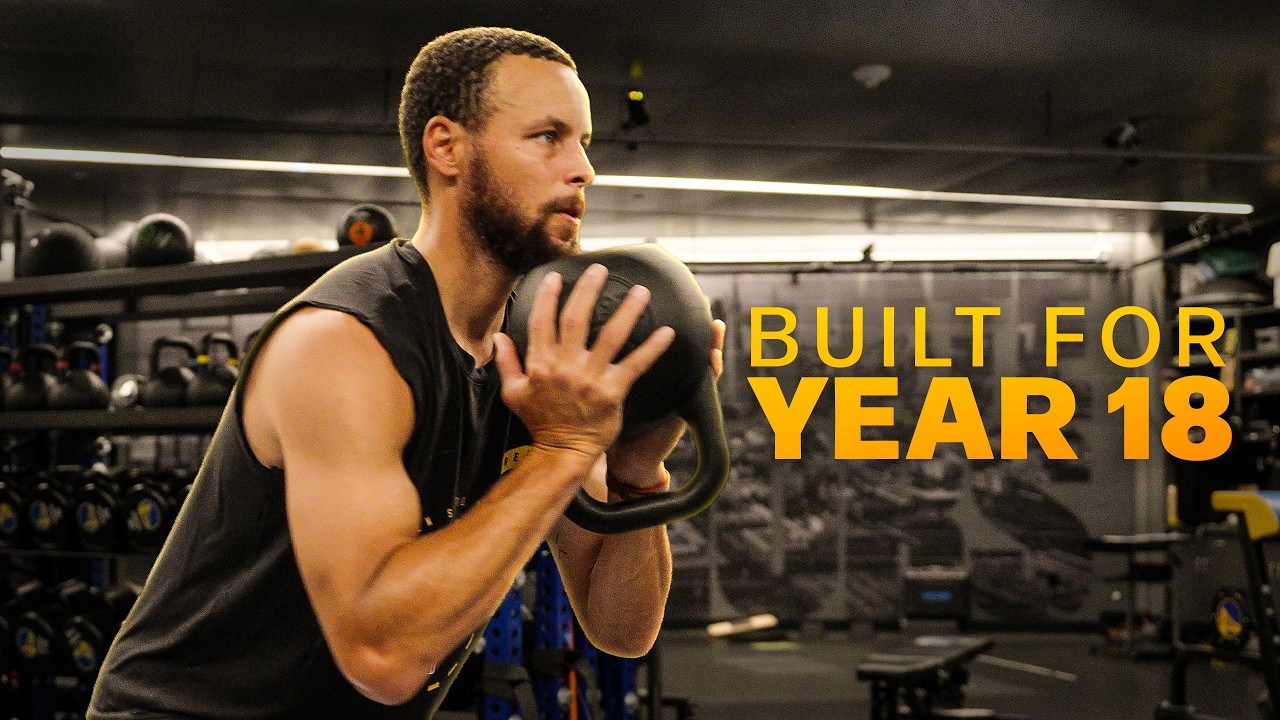
Stephen Curry climbed into an underwater treadmill after finishing his court work, and the science behind why he was there says more about elite longevity than any highlight reel could. For an athlete 17 years into a punishing professional career, the difference between playing and sitting out often comes down to decisions made in sessions exactly like this one, where nothing looks glamorous and everything is deliberate. His performance team walked through the logic in real time, and what emerged was a portrait of a training approach built around one principle above all others: control the variables.
Why the water comes before the weights
The underwater treadmill is not a recovery tool here, it is a conditioning tool with a specific mechanical advantage. As his trainer explained, submerging the body reduces pressure on the joints, which means Curry can keep accumulating fitness work without the pounding that 17 years of professional basketball has already put through his frame. The protocol that day was identical to the previous week’s, by design. His court work had been increased by roughly 10 to 15 percent, so the aquatic session stayed constant. The reasoning is precise: change one variable at a time, so you can actually read the response.
Heart rate data ran alongside every interval. During the work sets, the expectation was a spike into the 150 to 165 range near the end. But the number that matters most to his team is what happens in the minute to 90 seconds after the rep ends. How fast does the heart rate drop? How close does he get back to a recoverable zone before the next effort begins? His trainer put it plainly about Curry’s recovery capacity: ‘His ability to respond, get back to a zone two or below compared to most humans or athletes, he’s astronomical. It’s one of his best attributes.’ The bluntness landed, and Curry, still moving in the water, did not want to hear it. ‘He doesn’t like compliments,’ his trainer added.
The eccentric work nobody sees
The strength session that followed targeted something specific: eccentric loading across five muscle groups, hip flexor, adductor, calf, hamstring, and quad. Eccentric training means the muscle is contracting while it is lengthening, which creates significantly more soreness than conventional strength work but also builds the kind of structural resilience that prevents soft-tissue injuries. A slide board and a high-speed treadmill were the primary tools. On the treadmill, Curry was driving his toe down and trying to resist the belt’s pull with his left leg, a losing effort against the machine that was entirely the point.
The session was scheduled before a day off for a deliberate reason. That level of eccentric loading leaves the body beaten up, and sending an athlete onto the court in that state creates vulnerability. So the team stacks this work at the back end of the week, lets the body absorb it overnight, and builds the resiliency across months rather than days.
Curry noted mid-session that posting up on the left side with the slide board felt harder than the right. His trainer acknowledged the asymmetry, connecting it to relative mobility differences that eccentric loading on that side is specifically designed to address over time.
A thermos on the equipment rack
Near the end of the strength block, a coffee conversation broke out. Curry is a self-described coffee drinker, though his trainer raised an eyebrow at his preference. ‘I like the sweet stuff,’ Curry said. His trainer’s verdict was immediate: ‘Ah, it’s not coffee.’
Curry wrapped the session and reflected on where he is in his career. ‘Year 18 loading,’ he said, almost to himself. Then, quietly: ‘That don’t even sound right.’
 Wake up to Only Happy News!