Earl Nightingale once watched a hundred men set off at age 25 with identical ambition, identical spark in their eyes, and identical certainty that life was an adventure worth chasing. By the time those men reached 65, only one would be rich, four would be financially independent, five would still be working, and 54 would be flat broke. That single statistic, drawn from the most prosperous country in human history, became the foundation of one of the most quietly devastating questions in self-development: why, surrounded by opportunity, do so many people end up with almost nothing?
The definition that changes what ‘success’ even means
Nightingale’s answer begins with a definition most people never bother with. ‘Success is the progressive realization of a worthy ideal,’ he said, and that reframing cuts immediately. Under that definition, the teacher who chose teaching, the person who built the life of a parent and partner because that was genuinely what they wanted, the person running the corner gas station because that was their dream: all of them are successful. The executive grinding toward someone else’s version of a career is not. The gap between the five percent who make it and the ninety-five who do not is not talent, not luck, and not connections. It is the presence or absence of a deliberately chosen goal.
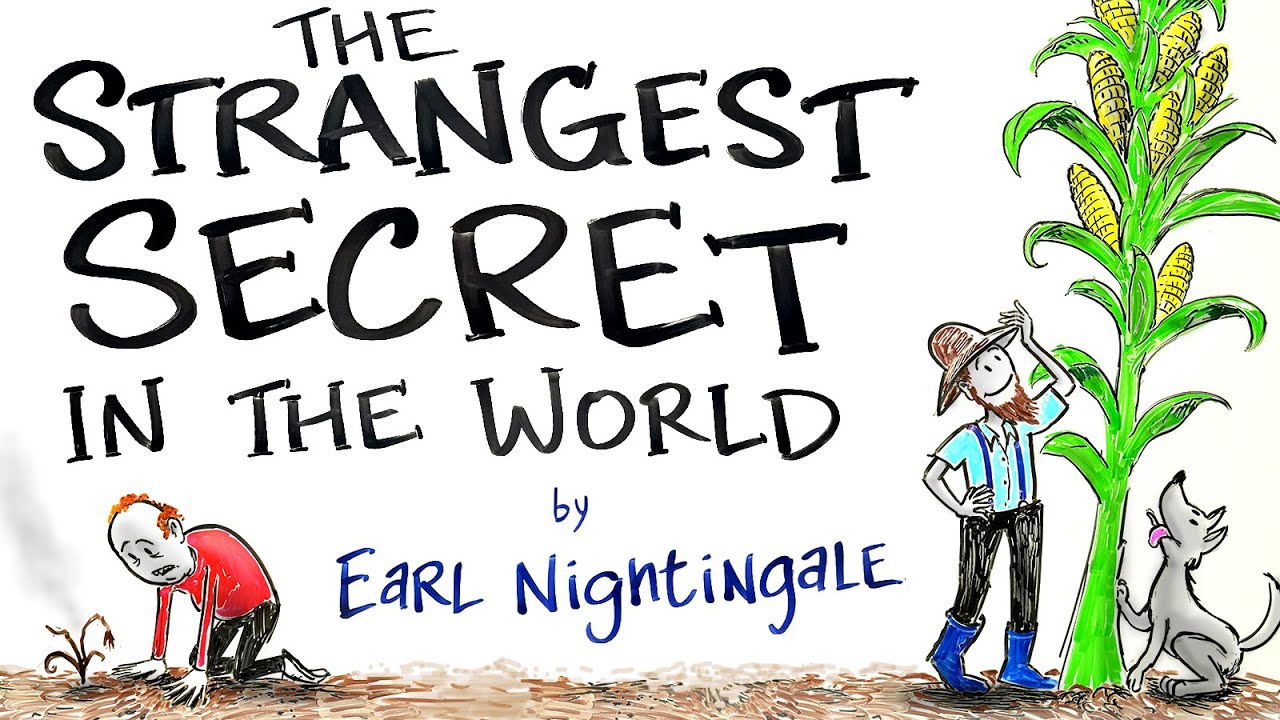
To illustrate how the mind processes that goal, Nightingale returned to a farmer standing over two seeds: one corn, one nightshade. The land does not care which one gets planted. It returns whatever is sown, in equal abundance, without judgment. The human mind, he argued, operates by the same principle. Plant a concrete, worthwhile goal and it will work toward that outcome. Plant confusion, fear, and anxiety, and those will compound just as reliably. The mechanism is neutral. The farmer decides what grows.
Why most people hand the wheel to no one
What makes the whole thing strange is not the principle itself; every major philosophical tradition seems to have arrived at some version of it independently. Marcus Aurelius, Emerson, William James, Shaw, Schweitzer: Nightingale assembled them into a single chorus pointing at the same truth. What makes it strange is how few people act on it. A survey he cited found that 19 out of 20 working men, when asked why they got up and went to work every morning, had no clear answer. The honest answer, he suggested, was simply: because everyone else does.
That conformity, the psychiatrist Rollo May called its opposite not cowardice but conformity itself, is the real mechanism of failure. People drift toward the ninety-five percent not because they are weak or lazy but because they are outer-directed, waiting for circumstances to shape them rather than deciding what to plant.
Nightingale put it plainly near the close: ‘We become what we think about.’ He described a man perched at the controls of a massive earth-moving machine, thirty tons of raw capability roaring along at 35 miles an hour, and asked whether you fold your arms and let it run itself into a ditch or keep both hands on the wheel. The machine does not care. Neither does the land. That part is always up to the farmer.
The man who spent 20 years looking for the key
Nightingale himself described searching for two decades for a single organizing principle that could predict what would happen to a human life. He found it not in formal research but in the convergence of voices across centuries, all landing on the same sentence.
A hundred men at 25
That group of a hundred men, eager and sparkling at 25, still feels uncomfortable to sit with. Most of them did not fail because they stopped caring. They failed, Nightingale argued, because they never decided clearly enough what they were working toward. The machine kept running. Nobody was steering.
The seed of corn and the seed of nightshade are both still sitting in the farmer’s hand.
 Wake up to Only Happy News!