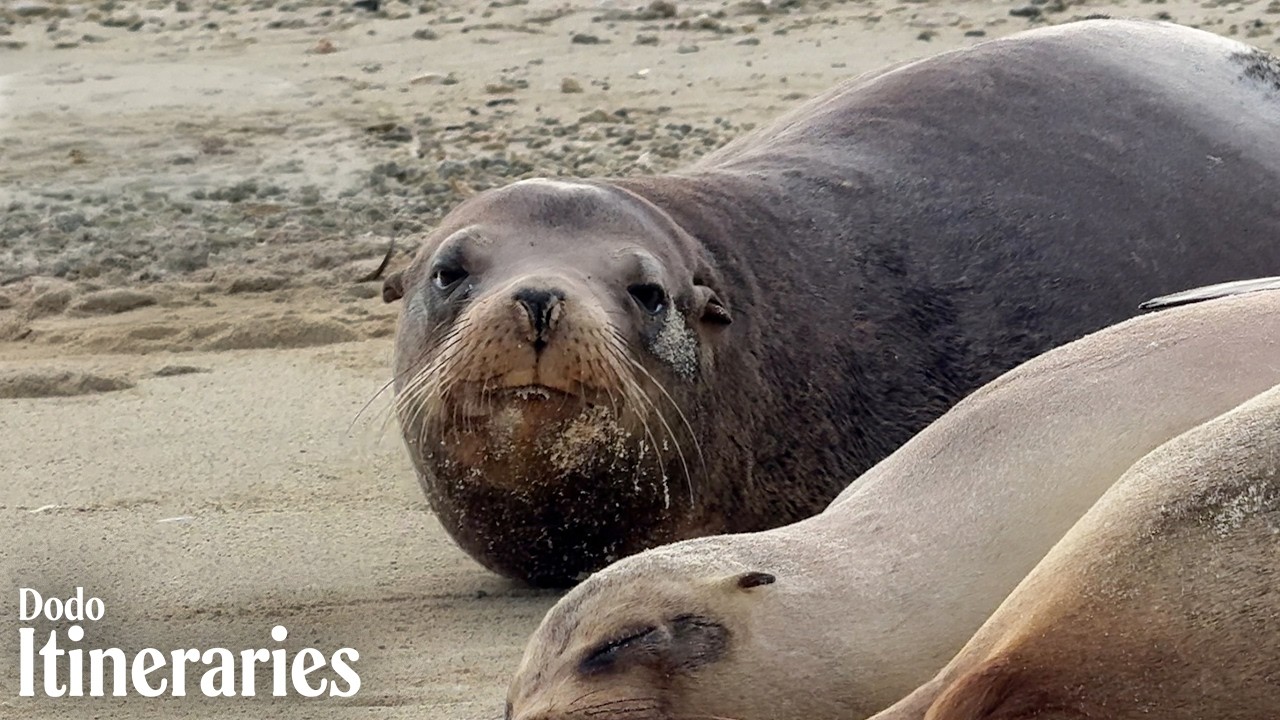
Three sea lion mothers were nursing their pups on the black volcanic sand of Española Island in the Galapagos when a large alpha male began making his rounds. He moved from one mother to the next with the slow, deliberate confidence of an animal that rarely hears the word no. He was about to hear it three times.
A naturalist guide on the beach watched the scene unfold and offered a quick read of the situation. The females available for mating had already left for the water to feed. The mothers still on shore were occupied, and that occupation, in sea lion terms, is a full-time commitment. Pups nurse for extended periods, and a mother will generally not abandon a feeding session without good reason. The alpha, it turned out, did not qualify as good reason.
Why the Galapagos feels like a different planet the moment you land
Visitors to Española Island walk a marked path that keeps them close to the animals without crowding them. The sea lions do not flinch, do not scatter, and do not adjust their behavior. According to the naturalist guide present during the encounter, this is because humans have never been a threat on these islands. The animals have no learned fear response tied to human presence. Centuries of that arrangement have produced a wildlife experience that most travelers struggle to describe until they are standing in the middle of it.
The nursing mothers remained flat on the sand, their pups latched on, entirely unbothered by the people watching from a few feet away. What disrupted the calm was not the visitors but the alpha male working the shoreline like he owned it. He is what biologists call a bull, the dominant male of a local group, and his physical size alone communicates his status. Even from a distance, observers noted the way his posture shifted when he moved toward the mothers.
What the guide said about energy and easy targets
The naturalist explained the male’s strategy in blunt ecological terms: everything in nature is a calculation of energy spent versus benefit gained. The females who were not nursing had already gone to sea. The mothers on the beach were, in his words, the first easy target. Each one refused him. Each rejection sent him circling back toward the water before he returned, unsuccessful from that direction too.
The guide also noted the darker potential outcome. Alpha males in the Galapagos sea lion population have been observed killing pups when frustration tips into aggression, a behavior documented in the species. The group on the beach understood what that meant for the pups still feeding. The male stood at the waterline, chest out, apparently weighing his options.
He chose a nap instead. He settled onto the sand, his confrontational energy spent, and within minutes was asleep among the other animals on the beach. The pups kept nursing. The mothers did not move.
The moment nobody wanted to look away from
The naturalist guide stood at the edge of the group, watching the alpha male flatten himself against the warm sand, three rejections behind him and no pups harmed. He said nothing for a moment. Then he pointed out that the male would not be gone for long, that the dynamics on a beach like this shift with the tide and the mood of a single animal. But for now, the mothers had what they needed.
Back at the start of the encounter, three pups had been feeding quietly while a large male made his approach. By the end, those same three pups were still going. The alpha was asleep ten feet away. The beach looked exactly as it had an hour before.
Source: Watch original
This article was reported in November 2026.
OHN Editorial Note: This article is based on publicly available sources. If you spot an error or have updated information, contact us at editorial@onlyhappynews.com. We correct mistakes promptly.
 Wake up to Only Happy News!