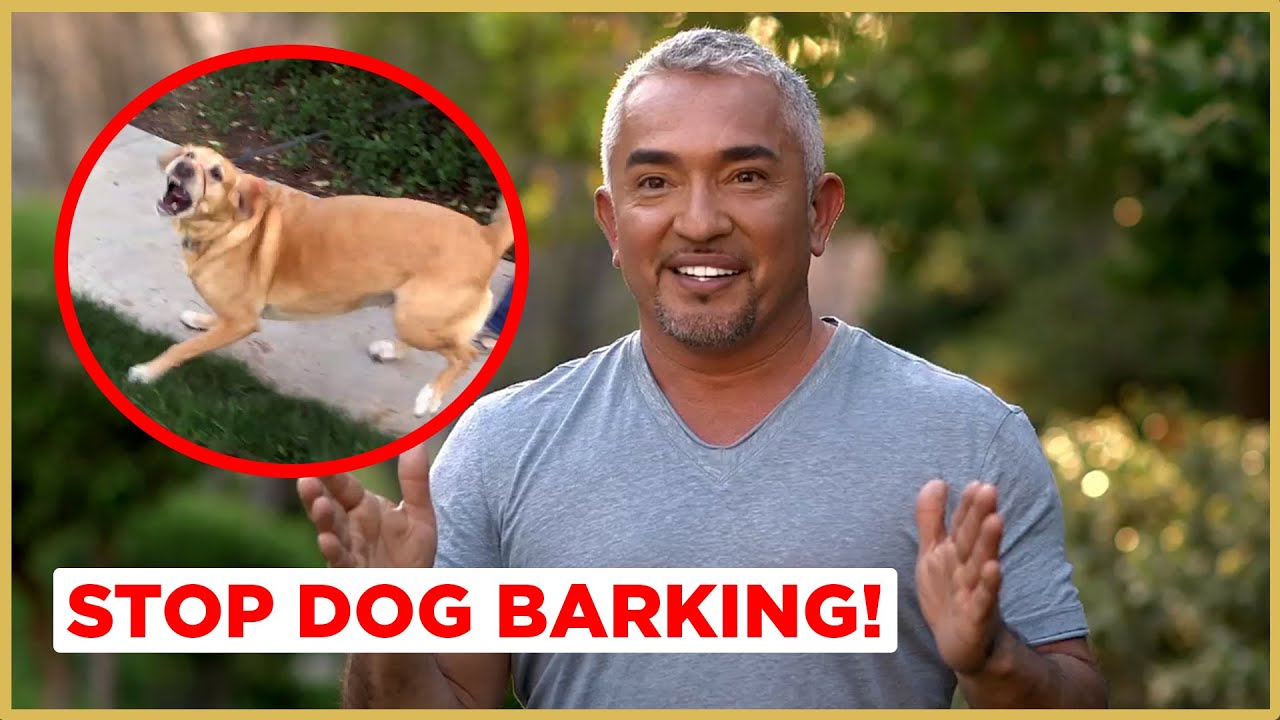
Leslie Wenke’s yellow lab Buddy had never once relaxed while a stranger stood inside her California home. Anyone who was not Leslie counted as a stranger, and that included her own grandson. Mason, nearly 10, had stopped wanting to visit altogether, backing toward the door each time Buddy erupted into barking, teeth showing, spit flying. His grandmother understood why, and that understanding was quietly breaking her heart.
The clock on this problem is tighter than it looks. Mason is approaching the age where sleepovers at grandma’s house start to feel uncool on their own terms, which means the window for building those memories is already closing. Leslie’s daughter Elisa reached out to Cesar Millan, and when Millan arrived, the shape of the problem came into focus fast.
A dog hiding behind his own bark
When Elisa and Mason knocked and Buddy charged the door, Millan was watching from inside with the dog on a leash. He saw something Elisa had missed: Buddy bolted for the couch the moment the knock landed. That detail told Millan everything. ‘He’s using it as a hiding place,’ Millan explained. The barking, the circling, the frantic energy at the door were not aggression so much as fear performing as aggression. Buddy was terrified, and the couch was his only safe place.
That diagnosis shifted the entire approach. Leslie had been trying to soothe Buddy through every episode, repeating ‘it’s okay, it’s okay’ while he barked in circles around her. Millan was direct about why that was making things worse: by offering affection during the outburst, Leslie was reinforcing the behavior she most wanted to stop. ‘The more you cater to him,’ he told her, ‘the more you go to the back of the pack.’
What Leslie had to unlearn first
Millan’s practical fix was a sharp physical correction, a snapping touch that interrupted Buddy’s spiral at the moment it started. He demonstrated the knock-and-correct sequence several times himself, and with each repetition Buddy got measurably calmer. Then he handed the leash to Leslie.
She struggled, not with the technique but with the instinct behind it. Every time she looked at Buddy’s frightened face, she wanted to pull him close. Millan put it plainly: ‘When a human lives by himself, the dog becomes a soul mate. But a dog needs calm, confident energy. It doesn’t need someone to feel sorry for it.’ That reframe, treating Buddy like a dog rather than a grieving companion, was the harder ask. Leslie had adopted Buddy during her husband’s illness, and the bond had deepened after she lost him and relocated from her longtime home to be near Elisa’s family in California.
By the end of the session, the correction was landing. One bark, then quiet.
Mason, waiting on the front step
Mason stood outside through most of the session, rehearsing the knock each time Millan asked, saying he was ‘ready’ and that he wanted the stress gone. He had told Millan directly that he knew Buddy was afraid because the dog always backed away when he got close. That observation, from a child still months from turning 10, was the clearest read of the situation anyone offered all day.
If Leslie holds the new approach every time her front door opens, Mason gets his grandmother back. The lab gets a life outside his own fear. And Leslie gets the grandson memories she came to California to build, before the window closes on its own.